



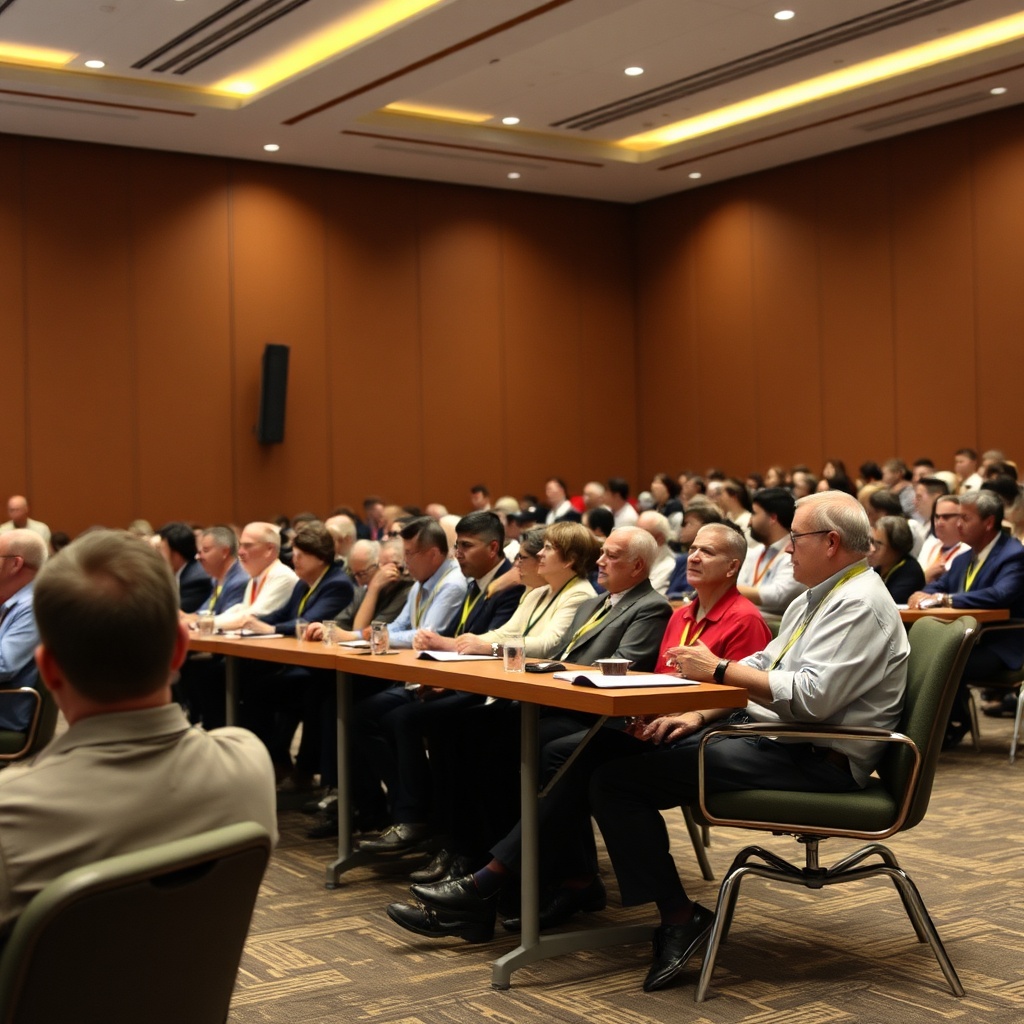
The Plenary constitutes the highest body and the ultimate expression of collegiality in Brazilian courts, situated at the core of Procedural Law and Constitutional Law. Its primary purpose is the collective deliberation on matters of high relevance, jurisprudential standardization, and the exercise of incidental constitutional review, ensuring the unity of the legal system through the participation of the entirety, or the absolute majority, of the court's members.
1. Definition, Concept, and Legal Nature
The Plenary is the sovereign deliberative body of a court, composed of all its constituent members. In strictly legal terms, its nature is that of a collegial unit of superior jurisdiction. It differs from Panels, Chambers, or Sections, which are internal subdivisions intended for procedural speed. In the Plenary, the jurisdictional will is manifested fully, representing the definitive institutional position of the Court.
The legal nature of the Plenary is linked to the Principle of Collegiality, ensuring that decisions of transcendent impact are not restricted to monocratic perception or small groups, but are instead subjected to the dialogical scrutiny of the court's full composition.
2. Historical Origin and Evolution
The genesis of collective judgment dates back to Antiquity, with the Areopagus in Athens and the Roman Senate; however, the modern structure of the Plenary as we know it stems from the model of European superior courts and the influence of North American constitutionalism. In Brazil, the Supreme Federal Court (STF), since the Constitution of 1891, has consolidated the figure of the Plenary as the guardian of the Supreme Law.
Significant evolution occurred with the increasing complexity of procedural volume, which forced the creation of fractional bodies. However, the 1988 Constitution reaffirmed the supremacy of the Plenary, especially through Article 97, which established the Plenary Reservation Clause, requiring an absolute majority for the declaration of unconstitutionality of laws or normative acts.
3. Legal Provision and Normative Framework
The foundation of the Plenary is distributed across several legal instruments, with emphasis on:
- Federal Constitution (Art. 97): Establishes that only by the vote of the absolute majority of its members or the members of the respective special body may courts declare the unconstitutionality of a law or normative act of the Public Power.
- Federal Constitution (Art. 93, XI): In courts with more than twenty-five judges, a special body may be constituted, with a minimum of eleven and a maximum of twenty-five members, to exercise administrative and jurisdictional duties delegated from the full court's competence.
- Code of Civil Procedure (Art. 948 to 950): Regulates the Incident of Allegation of Unconstitutionality, which mandates the referral of the issue to the Plenary or Special Body.
- Internal Regulations (RISTF and RISTJ): Define specific competencies, voting quorums, and the rite of plenary sessions.
4. Practical Application and Jurisprudential Understanding
The practical application of the Plenary is governed by formal rigor. The consolidated understanding of the STF, crystallized in Binding Precedent (Súmula Vinculante) No. 10, determines that "a decision by a fractional body of a court that, although not expressly declaring the unconstitutionality of a law or normative act of the Public Power, excludes its application, in whole or in part, violates the plenary reservation clause (CF, article 97)".
In contemporary times, the Virtual Plenary stands out. Initially instituted for the analysis of General Repercussion, its competence was expanded (STF Resolutions 642/2019 and 724/2024) to allow for the judgment of the merits of concentrated control processes and extraordinary appeals, provided there is no opposition from the parties or a need for in-person oral argument ("destaque"). The Superior Court of Justice (STJ) and the Superior Labor Court (TST) adopt analogous systems to optimize the flow of judgments.
5. Related Principles and Doctrinal Divergences
The institution of the Plenary interacts with fundamental principles:
- Principle of the Natural Judge: Ensures that the judgment occurs by the body previously designated by the Constitution and Regulations.
- Principle of Publicity: Plenary sessions must be public, except in cases of legal secrecy.
- Legal Certainty: The Plenary is the appropriate locus for the overruling or modulation of the effects of legal theses.
The main current doctrinal divergence lies in the dematerialization of sessions. Critics argue that the Virtual Plenary mitigates real-time debate and the dialectical process among magistrates, while defenders point to efficiency and the reduction of the procedural backlog as pragmatic justifications for its maintenance and expansion.
6. Contemporary Relevance and Practical Impacts
The relevance of the Plenary in the Brazilian legal system is absolute. It acts as the final filter for constitutionality and legality. Without the rigor of the Plenary, the interpretation of the law would be fragmented among various panels, generating social and economic instability. The recent digitalization of plenary procedures has allowed the Judiciary to maintain its primary function even during periods of crisis, although it imposes the constant challenge of preserving the right to defense and the transparency of electronic voting.
Legal and Jurisprudential References
- BRAZIL. Constitution of the Federative Republic of Brazil of 1988. Articles 93, 97, and 102.
- BRAZIL. Law No. 13,105, of March 16, 2015. Code of Civil Procedure.
- SUPREME FEDERAL COURT. Binding Precedent No. 10. Brasília, DF.
- SUPREME FEDERAL COURT. Resolution No. 724, of 2024. Amends the Internal Regulations of the STF to regulate judgment in an electronic environment.
- MARINONI, Luiz Guilherme; MITIDIERO, Daniel. Comments on the Code of Civil Procedure. São Paulo: Revista dos Tribunais, 2023.





