




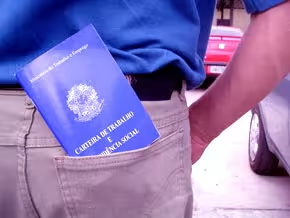
 Workers receiving sick leave or work-accident sick leave from the INSS (National Social Security Institute) cannot be dismissed by their company while they are away from their duties and receiving the benefit. After being cleared by the INSS, a policyholder who received work-accident sick leave retains job stability for an additional 12 months, according to labor laws. However, this does not apply to individuals receiving common sick leave. In such cases, they may be dismissed by the company after their return to work.
Common sick leave is paid by Social Security to workers who, due to illness or injury not related to work, are unable to perform their professional activities for more than 15 consecutive days. The first 15 days of absence are paid by the company. From the 16th day onwards, the INSS assumes this responsibility.
In addition to formally employed workers, self-employed individuals, employers, domestic employees, voluntary contributors, and special category insured individuals are also entitled to sick leave. To qualify, the insured individual must have been contributing to Social Security for at least 12 months. This waiting period is only waived in cases of serious illnesses such as severe heart disease, cancer, and AIDS.
Work-accident sick leave is granted to insured employees who become incapacitated for work due to a workplace accident or occupational disease. Unlike common sick leave, work-accident benefits do not require a waiting period (minimum contribution time) to be granted. The INSS considers an accident that occurs to the insured individual at their workplace or during their commute to and from work as a work accident.
Workplace accidents must be reported by the company to the INSS by the first business day after the occurrence, using a form called Communication of Work Accident (CAT). If the company refuses to do so, the communication can be made by the injured worker themselves, their dependents, or the category's union. (GOB/JEF)
Source: http://www.inss.gov.br/
Read also, exclusively, you will only find it on this site! Sick leave due to moral harassment at work, job stability for depression, and legal effects regarding job stability.
Workers receiving sick leave or work-accident sick leave from the INSS (National Social Security Institute) cannot be dismissed by their company while they are away from their duties and receiving the benefit. After being cleared by the INSS, a policyholder who received work-accident sick leave retains job stability for an additional 12 months, according to labor laws. However, this does not apply to individuals receiving common sick leave. In such cases, they may be dismissed by the company after their return to work.
Common sick leave is paid by Social Security to workers who, due to illness or injury not related to work, are unable to perform their professional activities for more than 15 consecutive days. The first 15 days of absence are paid by the company. From the 16th day onwards, the INSS assumes this responsibility.
In addition to formally employed workers, self-employed individuals, employers, domestic employees, voluntary contributors, and special category insured individuals are also entitled to sick leave. To qualify, the insured individual must have been contributing to Social Security for at least 12 months. This waiting period is only waived in cases of serious illnesses such as severe heart disease, cancer, and AIDS.
Work-accident sick leave is granted to insured employees who become incapacitated for work due to a workplace accident or occupational disease. Unlike common sick leave, work-accident benefits do not require a waiting period (minimum contribution time) to be granted. The INSS considers an accident that occurs to the insured individual at their workplace or during their commute to and from work as a work accident.
Workplace accidents must be reported by the company to the INSS by the first business day after the occurrence, using a form called Communication of Work Accident (CAT). If the company refuses to do so, the communication can be made by the injured worker themselves, their dependents, or the category's union. (GOB/JEF)
Source: http://www.inss.gov.br/
Read also, exclusively, you will only find it on this site! Sick leave due to moral harassment at work, job stability for depression, and legal effects regarding job stability.





