



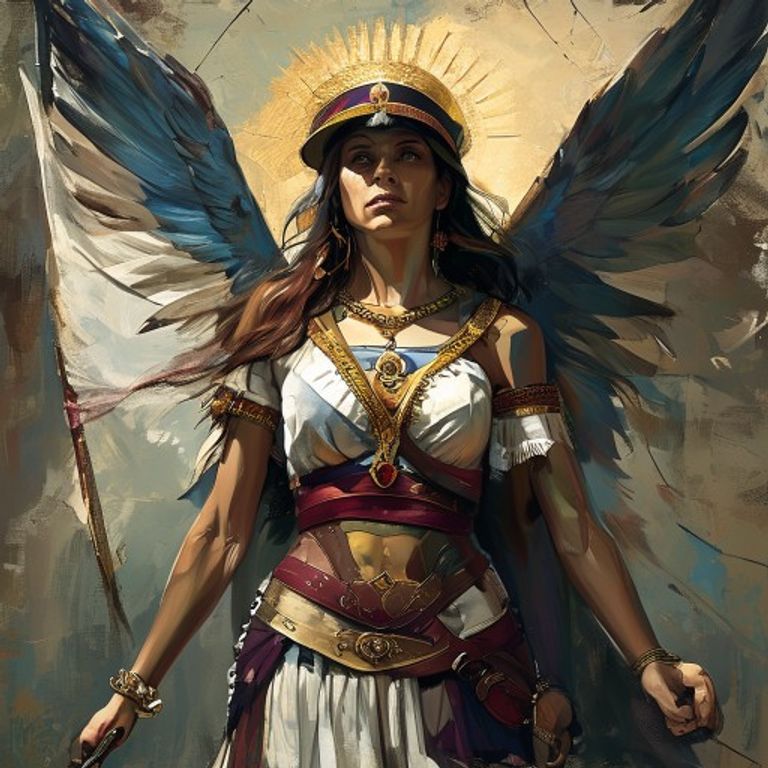
The Club Social y Deportivo Defensa y Justicia, popularly known as "El Halcón de Varela" (The Hawk of Varela), has established itself as one of the most fascinating phenomena in contemporary South American football. Playing in the prestigious Liga Profesional de Fútbol (the Argentine first division), the club from Florencio Varela is currently experiencing a moment of international consolidation, challenging the traditional hegemony of the country's "big five" with modern sports management, offensive football, and a surprising ability to reinvent itself every season.
Club History: From the Origins of Varela to the National Stage
The history of Defensa y Justicia is a narrative of suburban persistence, deeply linked to the identity of Florencio Varela, in the heart of the southern zone of Greater Buenos Aires. Founded on December 12, 1935, the club was born from the initiative of a group of friends led by Arturo J. Berutti. Initially, the association did not prioritize professional football, functioning as a social club focused on recreational activities, neighborhood dances, and amateur tournaments.
For over four decades, Defensa remained on the fringes of the Argentine Football Association (AFA) league system. It was only in 1977 that, under the presidency of Norberto "Tito" Tomaghello, the club formally began its transition to professionalism. Affiliation with the AFA was approved for the 1978 season, debuting in the Primera D (then the last division of Argentine football) on March 4 of that year, with a 2-1 victory over Cañuelas.
The Metamorphosis of Colors and the Legend of the "Halcón"
One of the most curious and identity-defining facts about the club lies in the change of its colors and its famous nickname. Originally, Defensa y Justicia played in a sky-blue shirt and white shorts. However, in the early 1980s, the club faced severe financial difficulties that threatened its continuity in professional football.
Salvation came through a sponsorship with the local public transport company "El Halcón" (Line 148), whose owners took over the management of the club. To seal the partnership and honor the company that financed the team's travel and salaries, Defensa y Justicia adopted the green and yellow colors of the bus company and incorporated the hawk (halcón) as its ultimate symbol. What began as a commercial necessity for survival became one of the most striking visual identities in Argentine football.
"Defensa y Justicia does not wear colors inherited from European coats of arms, but rather the colors of a suburban bus line that transported the workers of Varela to the capital every day." — Historical record from the Florencio Varela municipal archive.
The Silent Climb and the Golden Era
Defensa y Justicia's trajectory in the lower divisions of Argentina was meteoric. The club reached the Primera C in 1982, the Primera B in 1985, and the following year, in 1986, it earned promotion to the newly created Primera B Nacional (the second division).
After nearly three decades of consolidation and resistance in the demanding second division—a period during which the club nearly went bankrupt and flirted with relegation—the major turning point occurred in the 2013/2014 season. Under the technical command of Diego Cocca, Defensa y Justicia displayed attractive and offensive football, securing an unprecedented promotion to the Primera División on May 14, 2014, after defeating San Martín de San Juan 1-0.
The Holan and Beccacece Revolution: The Birth of the "Giant Killer"
In the elite, the club chose not to adopt the conservative stance typical of newly promoted teams. Under the tactical direction of Ariel Holan (2015-2016) and, subsequently, Sebastián Beccacece, Defensa y Justicia developed a playing philosophy based on ball possession, high pressing, and ultra-fast transitions. This tactical identity allowed the club to qualify for its first continental competition, the 2017 Copa Sudamericana, where it eliminated the Brazilian giant São Paulo FC at the Morumbi Stadium.
Eternal Glory: Champion of the Americas
The pinnacle of the club's history was written in two golden chapters between 2020 and 2021:
- 2020 Copa Sudamericana: Under the technical leadership of Hernán Crespo, Defensa y Justicia followed an impeccable path in the tournament. On January 23, 2021, in an all-Argentine final played in Córdoba, the Halcón thrashed Lanús 3-0 (goals by Adonis Frías, Walter Bou, and Washington Camacho), winning the first international title in its history.
- 2021 Recopa Sudamericana: With the return of Sebastián Beccacece to the bench, the club faced the powerful Palmeiras (Copa Libertadores champion). After losing the first leg 2-1 in Buenos Aires, Defensa defeated Palmeiras in Brasília by the same score in regulation time and won the trophy on penalties (4-3), staging one of the biggest upsets and feats in the recent history of South American football.
Current Context and the "Bragarnik Model" Investigation
The current moment for Defensa y Justicia is one of institutional consolidation, though not without controversy and structural challenges. The club continues to feature in international competitions (having reached the semifinals of the Copa Sudamericana in 2023 and the runner-up spot in the Copa Argentina in the same year), cementing its status as an emerging force.
The Business Model Debate: Sports Management or "Businessman's Club"?
From an investigative standpoint, it is impossible to understand the success of Defensa y Justicia without analyzing the figure of Christian Bragarnik, the most influential businessman and player agent in Argentine football. Bragarnik acts as a football advisor and de facto resource provider for the club.
This relationship generates intense debate in the Argentine sports environment:
- The Defensive View (Efficiency): Points out that the partnership transformed a neighborhood club with no resources into a continental powerhouse. Bragarnik uses his vast network to bring in young talents who lack space at big clubs (like River Plate and Boca Juniors) and promising coaches who need a showcase to develop modern tactical proposals. The club profits from the appreciation and sale of these athletes, keeping finances healthy.
- The Critical View (Lack of Transparency): Critics and investigative journalists argue that Defensa y Justicia functions as a "luxury showcase" or a hub for the triangulation of players owned by Bragarnik, which could compromise the club's autonomy in the long term and distort the traditional model of non-profit civil associations in Argentina.
Recently, in 2024, the club underwent important technical transitions following the departure of coach Julio Vaccari, seeking to restructure its squad after the sale of key figures like Nicolás "Uvita" Fernández. The board continues to invest in the modernization of the Norberto "Tito" Tomaghello Stadium and its center of excellence, the Bosques training complex, considered one of the best in the country.
Main Idols and Coaches Who Defined an Era
The rise of Defensa y Justicia was built by characters who understood the symbiosis between pragmatism and suburban passion:
Great Coaches
- Sebastián Beccacece: The coach most identified with the fans. He had three memorable stints at the club. He was the architect of the 2018/19 Argentine runner-up finish and the commander during the historic 2021 Recopa Sudamericana conquest.
- Hernán Crespo: Gave the club unique tactical elegance and led the team to the 2020 Copa Sudamericana title, putting Defensa on the world football map.
- Diego Cocca: The man who broke the historic promotion barrier in 2014, professionalizing the club's mentality in the elite.
- Ariel Holan: Implemented training methodology with drones, technology applied to football, and an offensive style of play that became the institution's trademark.
Historical Players
- Nicolás "Uvita" Fernández: One of the greatest scorers in the club's history in the professional era, a symbol of grit, speed, and identification with the Varela fans.
- Ezequiel Unsain: Goalkeeper and captain during the club's most glorious years (2017-2023). His leadership and miraculous saves in the Recopa turned him into a living legend of the club.
- Braian Romero: Relentless scorer of the 2020 Copa Sudamericana, netting decisive goals in the semifinal and the grand final.
- Adonis Frías: Defender developed in the club's youth divisions, author of the first goal in the 2020 Sudamericana final against Lanús.
- Nelson "Chino" Acevedo: The engine of the midfield in the main national and international campaigns, offering balance and technical experience.
The Rivalries of Florencio Varela
Defensa y Justicia has rivalries shaped by territory and disputes in the lower divisions of Buenos Aires football.
1. The Southern Derby (against Quilmes Atlético Club)
The biggest and most traditional rivalry of Defensa y Justicia is against Quilmes. It is a geographical and historical dispute between two neighboring cities in the southern zone of Greater Buenos Aires (Florencio Varela belonged to the Quilmes district until its emancipation in 1891). The clashes, known for the strong tension between the fans, became more frequent starting in the 1980s in the lower divisions. Although Quilmes has a longer history in the first division, the recent growth of Defensa has shifted the balance of power in the region.
2. The Rivalry with Asociación Deportiva Berazategui
During the 1970s, 1980s, and 1990s, the regional derby against Berazategui mobilized crowds in the C and D divisions. The clash has a strictly territorial and neighborhood character. Due to Defensa's meteoric rise to the top divisions and Berazategui's stagnation in the lower divisions, the teams have not faced each other officially for decades, but the rivalry remains alive in the memory of older fans and in stadium chants.
3. The Modern Confrontation with Arsenal de Sarandí
With the consolidation of Defensa in the first division, the duels against Arsenal de Sarandí gained the contours of a modern derby. Both clubs share similar characteristics: they are neighborhood associations from the southern zone of Buenos Aires, have smaller stadiums, and managed to surprise the continent with Copa Sudamericana titles.
Gallery of Titles and Notable Achievements
Below is the official honors list of Defensa y Justicia, highlighting its transition from a lower-division club to an international champion:
| Competition/Category | Level | Titles / Achievements | Seasons / Years |
|---|---|---|---|
| Recopa Sudamericana | Continental (CONMEBOL) | Champion (1) | 2021 |
| Copa Sudamericana | Continental (CONMEBOL) | Champion (1) | 2020 |
| Primera División (Argentina) | National (First Division) | Runner-up (2) | 2018/19, 2021 |
| Copa Argentina | National (Cup) | Runner-up (1) | 2023 |
| Primera B Nacional | National (Second Division) | Runner-up (Promotion) | 2013/14 |
| Primera B Metropolitana | National (Third Division) | Champion (1) | 1996/97 |
| Primera C | National (Fourth Division) | Champion (1) | 1985 |
| Primera D | National (Fifth Division) | Champion (1) | 1982 |
Researched Sources
- Asociación del Fútbol Argentino (AFA): Historical archives of affiliations and lower-division tournaments (1978-2014).
- CONMEBOL: Official reports of the 2020 Copa Sudamericana and 2021 Recopa Sudamericana campaigns.
- El Gráfico Magazine: Special reports on the transformation of Defensa y Justicia and the impact of the tactical model of Ariel Holan and Sebastián Beccacece.
- Diario Olé and Clarín (Sports): Investigative coverage on the influence of Christian Bragarnik in assembling the Florencio Varela squad.
- Florencio Varela Municipal Historical Archive: Data on the club's foundation and the history of the "El Halcón" bus line.





