



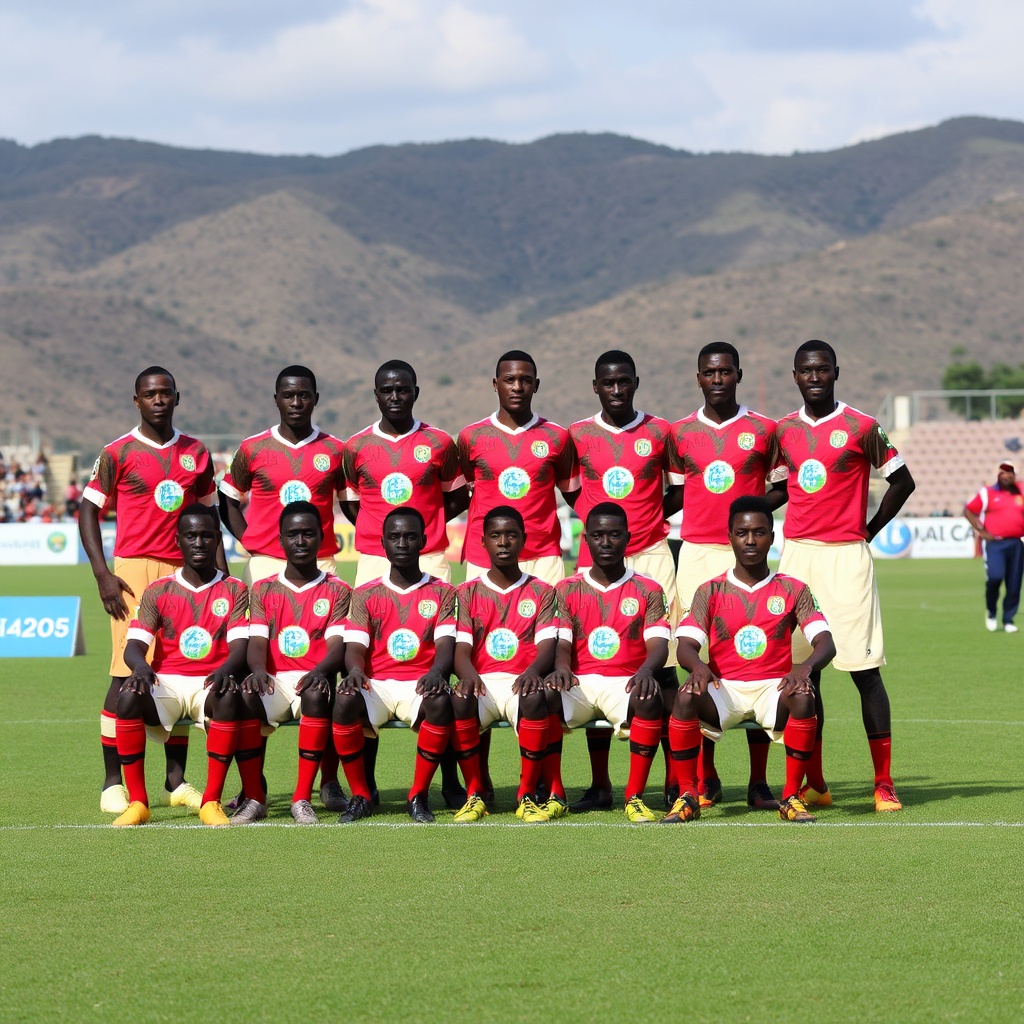
In the vast and complex mosaic of African football, where economic powerhouses and demographic giants usually dictate the rules of the game, the Malawi national team — affectionately nicknamed "The Flames" — emerges as one of the most fascinating, resilient, and dramatically underrated case studies on the continent. Representing a landlocked nation in Southeast Africa, historically plagued by severe socioeconomic and infrastructure limitations, Malawian football is not just a mass sport; it is a mirror of its own history of emancipation, resistance, and the search for identity. From the dusty improvised pitches on the shores of Lake Malawi to the modern and imposing stages of the Africa Cup of Nations (AFCON), the trajectory of this team is a testament to how unconditional passion and raw talent can, at times, defy the logic of structural scarcity. This dossier proposes a deep dive into the bowels of Malawian football, analyzing its colonial origins, its golden eras neglected by Eurocentric historiography, its geopolitical rivalries in the Zambezi basin, the behind-the-scenes of its administrative crises, and the complex tactical machinery attempting to shape the future of the Flames amidst a global transition scenario.
1. Origins and the Formation of National Identity
The genesis of football in Malawi is intrinsically linked to the British colonization process in the late 19th and early 20th centuries, when the territory was still known as the Nyasaland Protectorate. Introduced by Presbyterian missionaries, colonial officials, and British merchants, the sport initially served as a tool for social control and the "civilization" of local populations. However, what began as a cultural imposition was quickly appropriated by young Malawians, who saw in the leather ball a form of collective expression and, eventually, silent resistance against colonial domination.
Football in Colonial Nyasaland
During the 1930s and 1940s, football in Nyasaland was strictly segregated. British colonizers organized their own exclusive leagues and clubs in urban centers like Blantyre and Zomba, while the Black population played on dirt pitches, often crafting their own balls from plant fibers and local tree rubber. Despite social barriers, the talent of local players began to assert itself. The founding of the Nyasaland African Football Association (NAFA) in the late 1940s marked the first step toward the formal organization of the sport among Africans, paving the way for football to become a catalyst for the nationalist sentiment simmering in the country.
Independence and the Birth of the "Flames"
With the achievement of independence on July 6, 1964, under the leadership of Dr. Hastings Kamuzu Banda, the country was renamed Malawi — a word derived from the term Maravi, which evokes the reflections of sunlight on the immense Lake Malawi, resembling flames of fire. It was from this rich visual and cultural metaphor that the national team's nickname was born: The Flames. The newly created Football Association of Malawi (FAM), founded in 1966 and affiliated with FIFA in 1967 and CAF in 1968, received from Kamuzu Banda's autocratic regime the mission to use football as an instrument of national unification and international projection for the new State.
Banda, known for his paternalistic and highly centralized style of government, understood the mobilizing power of football. The Kamuzu Stadium, located in Blantyre, became the nation's sacred temple, where the team not only played its matches but where the regime celebrated its own narrative of progress and stability. The red and black kit, colors that refer to the national flag and symbolize the blood shed for freedom and the fertile land of the homeland, consolidated itself as the armor of a team that carried on its shoulders the pride of a people seeking their place on the geopolitical map of African football.
2. Golden Era, Great Campaigns, and Eternal Idols
Although the history of African football is often told through the achievements of West or North African nations, Malawi had moments of intense brilliance that deserve to be rescued with the rigor and reverence they are due. The late 1970s and the entire 1980s represented the true "Golden Era" of Malawian football, a period in which the team not only competed on equal terms with regional powers but established an unquestionable hegemony in East and Central Africa.
Hegemony in the CECAFA Cup
The CECAFA Cup (Council for East and Central Africa Football Associations) was, at that time, one of the most prestigious and contested regional tournaments on the continent. It was on this stage that Malawi wrote its most glorious pages. Under the command of coaches who knew how to blend European tactical discipline with the natural creativity of local athletes, the Flames won the CECAFA title on two consecutive occasions: 1978 and 1979, in addition to a third title in 1988.
- The 1978-1979 Double: In 1978, playing at home under an electrifying atmosphere at Kamuzu Stadium, Malawi defeated the feared Zambia national team in the final, consolidating a golden generation. The following year, in Nairobi, Kenya, the team defended its title with a flawless campaign, beating the hosts in the grand final and proving that their success was not merely a product of the home-field advantage.
- The Glory of 1988: Almost a decade later, a new generation of athletes proved the value of Malawian football by winning the CECAFA again, defeating Zambia in the final 3-1, in a match that is still remembered today as one of the most complete performances in the history of the national team.
The 1984 Africa Cup of Nations Debut
The peak of this golden era occurred with the historic qualification for the 1984 Africa Cup of Nations, held in Ivory Coast. At a time when the tournament had only eight participants, qualifying for the final phase was a Herculean feat. Malawi overcame regional giants in the qualifying rounds to stamp their passport to Bouaké, where they faced a group of death composed of Algeria, Nigeria, and Ghana.
Although the Flames were eliminated in the first round, the campaign was worthy of pride. The 2-2 draw against Nigeria (which featured stars of the caliber of Stephen Keshi) showed the continent that Malawi possessed competitive substance. The goals by Clifton Msiya and Harry Waya in that match remain etched in the collective memory as symbols of an era when the country dared to challenge the aristocracy of African football.
Eternal Idols and the Kinnah Phiri Phenomenon
No account of Malawian football is complete without honorable mention of Kinnah Phiri. Unanimously considered the greatest player in the country's history, Phiri was a forward gifted with refined technique, uncommon tactical intelligence, and a devastating nose for goal. He was the heart and mind of the team during the golden era of the 70s and 80s, accumulating over 110 caps and scoring dozens of decisive goals. Phiri was not just an athlete; he was a cultural icon whose influence transcended the four lines.
Alongside Phiri, other names shone brightly. Defender Jack Chamangwana, known for his leadership and elegance in playing the ball out from the back, and midfielder Ernest Mtawali, who would later have a successful career in South African football and in Argentina (where he played for Newell's Old Boys), helped pave the way for Malawian players to be viewed with respect and admiration beyond their borders.
The Triumphant Return in 2010 and the 2021 Epic
After decades of ostracism and financial crises that undermined the team's competitiveness, Malawi experienced two remarkable renaissances in the 21st century:
- Angola 2010: Under the technical command of Kinnah Phiri himself, the Flames shocked the continent by qualifying for the 2010 AFCON after a 26-year absence. In the opening match in Luanda, Malawi delivered a historic 3-0 thrashing of the powerful Algeria, which months later would compete in the FIFA World Cup in South Africa. Goals by Russell Mwafulirwa, Elvis Kafoteka, and Davi Banda sealed what is considered the greatest single victory in the team's history.
- Cameroon 2021 (held in 2022): Led by star Gabadinho Mhango and under the tactical direction of Romanian Mario Marinica, Malawi achieved the unprecedented feat of qualifying for the AFCON Round of 16. The team displayed vertical, courageous, and extremely competitive football, falling with dignity against Morocco (2-1) in a match where Mhango scored an anthological goal from outside the box that went around the world.
3. Rivalries, Crises, and Behind-the-Scenes Power
Football in Malawi does not develop in a social or political vacuum. It is deeply influenced by the geopolitical dynamics of Southern Africa and the constant administrative turbulence that plagues the Football Association of Malawi (FAM). To understand the real dimension of the challenges faced by the Flames, one must analyze the intense regional rivalries and the behind-the-scenes of a federation often suffocated by a lack of resources and power struggles.
The Geopolitics of Football in Southern Africa
Malawi's greatest rivalries are fueled by geographic proximity, historical ties of labor migration, and fierce sporting disputes. The country's main historical rival is Zambia. The clashes between the Flames and the "Chipolopolo" (The Copper Bullets) transcend the sporting aspect; they reflect the struggle for prestige in the Zambezi region. For decades, matches between the two teams brought the capitals Lilongwe and Lusaka to a standstill, characterized by impressive physical and technical intensity.
Another rivalry with great popular appeal is against Zimbabwe. The duels against the "Warriors" are marked by a strong sense of national pride, often exacerbated by the fact that many Malawians live and work in Zimbabwe, turning the matches into true diaspora classics. More recently, clashes against Mozambique (the Mambas) have also taken on the contours of a regional classic, fueled by the proximity of the borders and the competition for space in COSAFA (Council of Southern Africa Football Associations) tournaments.
The Walter Nyamilandu Era and the Search for Stability
The administration of football in Malawi was dominated for nearly two decades by the polarizing figure of Walter Nyamilandu. A former national team player, Nyamilandu took over the presidency of the FAM in 2004 and remained in office until December 2023. His tenure was a period of intense contrasts. On one hand, he was credited with professionalizing certain aspects of the federation, attracting corporate sponsors (such as telecommunications giant TNM), and securing FIFA development funds for the construction of basic infrastructure, such as the Chiwembe Technical Centre.
On the other hand, Nyamilandu's long stay in power generated accusations of excessive centralization, lack of transparency in resource allocation, and an inability to create a financially sustainable national league. The almost absolute dependence on government funding for the national team's travel and operational costs often put the FAM on a collision course with the Ministry of Sports, resulting in public crises where the team almost had to cancel participation in international tournaments due to a lack of funds for airfare.
The Power Transition and the Challenges of Fleetwood Haiya
In December 2023, the Malawian football political landscape underwent a tectonic shift with the election of Fleetwood Haiya to the FAM presidency, defeating Nyamilandu in a historic vote. Haiya took office with the promise of decentralizing management, focusing on youth development, and eradicating the amateurism that still prevails in several clubs of the Malawi Super League.
However, the new administration inherited a delicate financial scenario and the chronic challenge of modernizing the country's infrastructure. The greatest symbol of this structural crisis is the state of the stadiums. The legendary Kamuzu Stadium in Blantyre, with its worn-out synthetic turf and stands condemned by structural engineers on several occasions, is frequently banned by CAF for international matches. This forces the national team to host its games at the Bingu National Stadium (BNS) in Lilongwe, a modern stadium built with Chinese government aid, but which also faces constant problems with pitch maintenance and security logistics.
4. The Current Moment: Tactics, Generation, and Challenges
Modern football requires a level of physical, tactical, and technological preparation that often clashes with Malawi's financial reality. Under the technical leadership of local and foreign coaches in recent years, the Flames have sought to find a balance between their historical identity — characterized by speed, agility, and improvisation — and the need for rigorous tactical organization to compete on the contemporary international stage.
Mario Marinica's "Fast and Furious" Revolution
Malawi's participation in the 2021 AFCON represented a significant tactical rupture in the team's recent history. Romanian coach Mario Marinica, initially hired as technical director and later promoted to head coach for the tournament, implemented a philosophy of play he dubbed "Fast and Furious."
Marinica identified that Malawian players possessed excellent physical endurance and speed but faltered in ball retention under pressure and slow defensive transition. His solution was radical:
- End of sterile possession play: The Romanian prohibited excessive lateral passes in their own half, demanding extremely fast vertical transitions as soon as the ball was recovered.
- High press and compact mid-block: The team defended in a very compact mid-low block, closing central passing lanes and inducing the opponent into errors on the flanks, where Malawian wingers would initiate the counterattack in a devastating manner.
- Utilization of directed long balls: The tactic consisted of launching precise long balls behind the opposing defenders, taking advantage of the explosive speed of forwards like Gabadinho Mhango and Khuda Muyaba.
Although criticized by purists who preferred a more attractive style of play based on passing, Marinica's pragmatism proved highly effective in the Cameroon tournament, taking the team to a competitive level never before reached.
The Transition to Patrick Mabedi
After Marinica's departure, the FAM bet on a local legend to lead the team: Patrick Mabedi, former captain of the Flames and a historical idol of South Africa's Kaizer Chiefs. Mabedi brought a more balanced tactical approach, seeking to rescue ball possession and supported build-up play from the defense, without losing the verticality that became the team's trademark.
Mabedi has faced the challenge of managing a delicate generational transition. The team that shone in 2021 has aged or lost space due to inactivity at their clubs, forcing the coach to scout for new talent in the local Super League to build the backbone of the team competing in the 2026 World Cup qualifiers and future editions of the AFCON.
Analysis of the Current Squad and Key Pieces
The current Malawi squad is a mix of experienced athletes playing abroad (mainly in South Africa and regional leagues) and young prospects still seeking affirmation:
- Gabadinho Mhango: Even in the mature phase of his career, the forward remains the main technical reference and the team's greatest goal threat. His ability to decide matches with individual plays and his international experience are vital for the dressing room.
- Chimwemwe Idana: A dynamic midfielder gifted with excellent vision, Idana is the engine of the Flames' midfield. He dictates the rhythm of the game and is fundamental in the offensive transition.
- Stanley Sanudi: The experienced right-back is one of the team's defensive pillars. Known for his physical commitment and precision in crossing, Sanudi leads the defensive line with authority.
- Lanjesi Nkhoma: A young forward with extreme speed and one-on-one ability, representing the new generation that should take on the offensive leadership in the coming years.
5. Talent Development, Structure, and Future
For Malawi to stop being a sporadic surprise and become a constant competitive force in African football, the country needs to solve its biggest bottleneck: the transition from grassroots football to professionalism. In a nation where private investment in sports is scarce and public policies face other urgent humanitarian priorities, the development of athletes in Malawi is a process that borders on a daily miracle.
The Blantyre Duopoly and the Strength of the Super League
The club football ecosystem in Malawi is largely dominated by two historical institutions based in the commercial capital, Blantyre: FCB Nyasa Big Bullets and Mighty Mukuru Wanderers. The classic between Bullets and Wanderers is one of the most fervent and passionate in all of Africa, dividing families, neighborhoods, and entire cities.
Nyasa Big Bullets, under the command of Zimbabwean coach Kalisto Pasuwa, has established an unprecedented dynasty in the Malawi Super League (TNM Super League), winning multiple consecutive titles and serving as the main base for national team call-ups. The structure of the Bullets, although still modest compared to the giants of South Africa or North Africa, is the model to be followed in the country, investing in youth categories and more responsible financial management.
However, the dependence on this duopoly reveals the fragility of the rest of the league. Clubs from the center and north of the country, such as those belonging to the armed forces (e.g., Silver Strikers, Mafco, Moyale Barracks), operate in semi-professional or amateur regimes, where athletes often have to balance their sporting career with military service or other professions to ensure their family's livelihood.
The Absence of Structured Academies and Street Football
In Malawi, the vast majority of professional players do not go through structured youth categories. The "dirt pitch" and school football remain the country's true academies. Although this environment develops athletes with excellent improvisation, close dribbling, and physical endurance, the absence of tactical and nutritional training in childhood and adolescence takes its toll when these players face European opponents or more developed African schools (such as Senegal or Morocco).
Initiatives like the Surestream Academy, which operated in the country in the early 2010s, showed the potential of private training projects, but the lack of long-term financial sustainability caused many of these initiatives to close their doors. The challenge for Fleetwood Haiya's management at the FAM is to create a national network of scouts and regional training centers that can capture raw talent before it is too late to correct basic technical and tactical gaps.
The Export Market and the South African Route
Due to the financial fragility of the local Super League, where average salaries are extremely low, the greatest desire of any young Malawian footballer is to be exported. Historically, the South African Premier Soccer League (PSL) has been the natural destination and the "Eldorado" for Malawi's top talents.
South African clubs view Malawian players as low-cost athletes with excellent work ethics and quick adaptation. Names like Ernest Mtawali, Essau Kanyenda, Limbikani Mzava, and Gabadinho Mhango built solid and lucrative careers in South Africa, serving as inspiration for new generations. However, the almost exclusive dependence on the South African market also limits the exposure of athletes to more demanding competitive contexts, such as European or Asian football, where very few Malawians have historically managed to establish themselves.
Perspectives for the Future: 2026 World Cup and Beyond
With the expansion of the FIFA World Cup to 48 teams starting in 2026, which guaranteed Africa nine direct spots (plus one in the playoffs), the dream of playing in a World Cup is no longer a complete utopia for mid-sized nations like Malawi. Although the competition remains fierce, the real possibility of fighting for a spot has ignited a new flame of hope in the country.
To turn this dream into reality, Malawian football needs a national pact involving the government, the federation, and the private sector. It is imperative to invest in the modernization of stadiums, the training of local grassroots coaches through CAF licenses, and the financial strengthening of Super League clubs. Only then, by structuring the foundations of their passion, can Malawi ensure that the "Flames" are not just a fleeting glimmer in the firmament of African football, but a constant, warm, and feared force by any opponent who dares to cross their path.





