



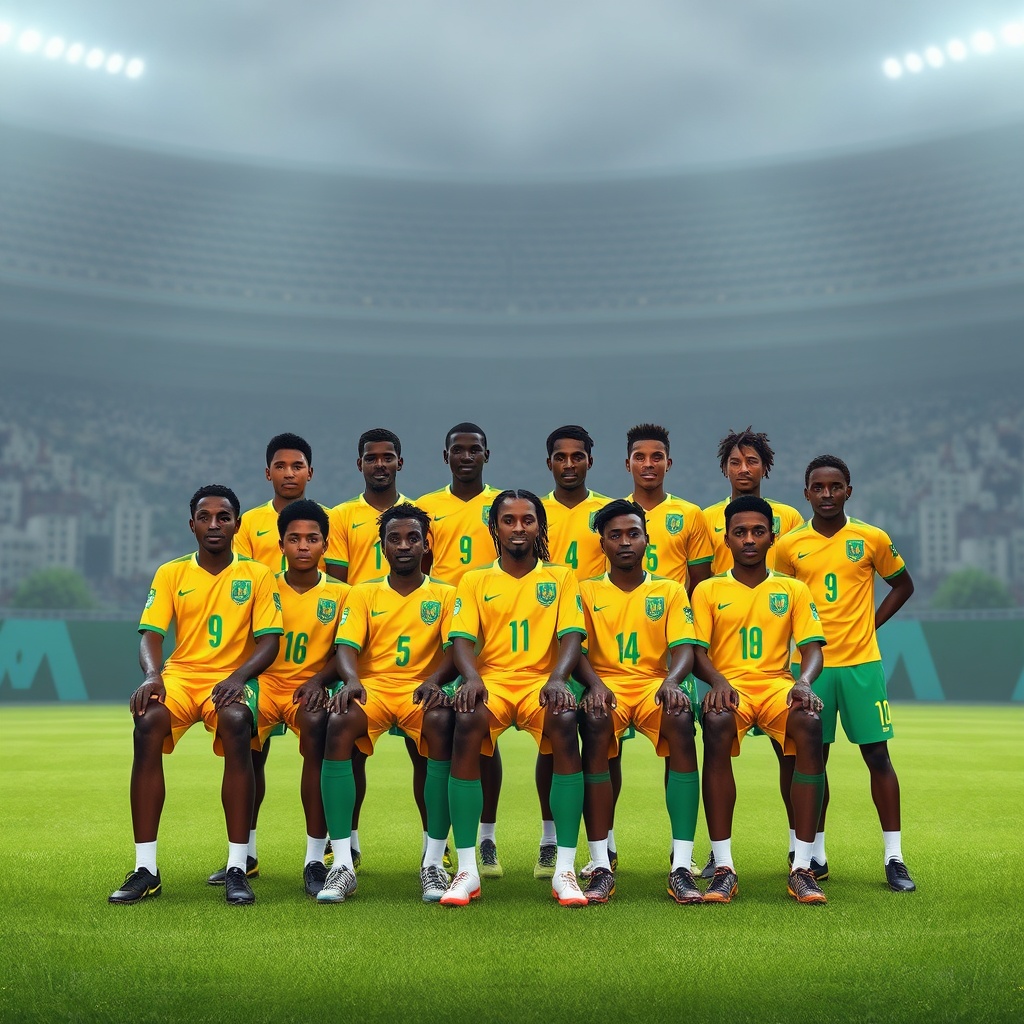
Drifting in the southwest Indian Ocean, isolated by geography and, for decades, by sporting irrelevance, Madagascar has always been viewed by the world as a sanctuary of exotic biodiversity, oblivious to the feverish passions of continental African football. However, beneath the surface of this apparent apathy lies a footballing narrative that is rich, complex, and deeply intertwined with the nation's post-colonial identity, regional geopolitical tensions, and an often-underestimated popular passion. Known as the Barea — named after the imposing and resilient wild zebu that symbolizes the strength and sovereignty of the Malagasy people — the Madagascar national team has experienced one of the most unique trajectories in modern football, transitioning from absolute anonymity to continental stardom at the historic 2019 Africa Cup of Nations (AFCON), only to plunge back into a cycle of administrative crises, tactical challenges, and the eternal search for a sustainable professional structure.
This dossier analyzes the inner workings of Malagasy football, from its colonial origins under French administration to the complex dynamics of talent scouting within the European diaspora. We investigate how the national team's meteoric rise in the last decade exposed the fragilities of a federation historically plagued by political scandals, corruption, and infrastructure tragedies at its sacred temple, the Mahamasina Municipal Stadium. Through a tactical, sociological, and economic lens, we uncover what football means to this island nation of over 30 million inhabitants, where the sport serves simultaneously as a mirror of its social fractures and as the most powerful tool for national cohesion.
1. Origins and Formation of National Identity
Football arrived on the shores of Madagascar in the late 19th century, brought by French colonizers and Anglican missionaries who saw the sport as a tool for "civilization" and social discipline. Under the government of General Joseph Gallieni, the colony's first governor-general, the introduction of structured physical activities aimed to channel the energy of local youth and promote the assimilation of French republican values. However, what the colonial administration planned as a mechanism for social control quickly transformed into a space of resistance and identity affirmation for the Malagasy population.
In the early decades of the 20th century, football clubs began to emerge in the capital, Antananarivo, and in major port cities like Toamasina and Mahajanga. These clubs were initially divided along class and ethnic lines. The aristocracy of the former Merina Kingdom, which inhabited the island's central highlands, founded their own associations, while the coastal populations (the so-called côtiers) created teams that reflected their own demographic composition. Football thus became a stage where the internal tensions of Malagasy society — historically divided between the highland elite and coastal communities — could be expressed and mediated under the rules of the game. Historic clubs like the Stade Olympique de l'Emyrne (SOE) and the Union Sportive de Double Cerveau became symbols of local pride, frequently challenging teams formed exclusively by French settlers and colonial garrison soldiers.
With the achievement of independence on June 26, 1960, football was immediately instrumentalized by the new government of President Philibert Tsiranana as a vector for national unification. The Malagasy Football Federation (FMF) was founded in 1961, gaining FIFA affiliation in 1963 and joining the Confederation of African Football (CAF) the same year. It was during this period of nationalist fervor that the national team officially adopted the nickname Barea. The wild zebu of Madagascar is not just an animal of crucial economic importance to the island; in Malagasy cosmology, it represents the spiritual connection with ancestors (the Razana), wealth, virility, and the ability to endure the most adverse conditions without breaking. Wearing the red and white jersey with the zebu effigy was a declaration of sovereignty before the former colonizer and the rest of the African continent.
Despite the initial enthusiasm, the transition to professionalism was severely hindered by the political instability that followed the fall of Tsiranana in 1972 and the subsequent establishment of the socialist-oriented Democratic Republic of Madagascar under Didier Ratsiraka. During the so-called "socialist era," sport was nationalized, and football clubs were managed by state enterprises and ministries. Although this structure guaranteed some basic funding, it also stifled private initiative and isolated Malagasy football from the currents of tactical and technical innovation that were beginning to transform football in West and North Africa. The Barea remained confined to regional competitions in the Indian Ocean, rarely venturing successfully into AFCON or World Cup qualifiers, limited by meager travel budgets and a lack of international exchange.
2. Golden Era, Great Campaigns, and Eternal Idols
For nearly six decades, Madagascar was a footnote in African football, a team labeled as "sympathetic losers" that rarely survived preliminary qualifying rounds. Everything changed, however, in the second half of the 2010s. The catalyst for this silent revolution was the hiring of French coach Nicolas Dupuis in 2016. With a pragmatic approach, Dupuis realized that local talent, while abundant in technical aspects, lacked tactical rigor and competitive depth. His strategy consisted of meticulously mapping the Malagasy diaspora in Europe, especially in the lower divisions of France, Belgium, and Bulgaria, merging these seasoned professionals with the best talents from the local league.
The pinnacle of this strategy occurred at the 2019 Africa Cup of Nations, held in Egypt. Madagascar qualified for the final tournament for the first time, a feat that was celebrated as a national holiday in Antananarivo. However, what followed in Cairo and Alexandria defied all projections from international analysts. Drawn into Group B alongside giants Nigeria, Guinea, and Burundi, the Barea were pegged as the perfect victims. Instead, they opened with a bold 2-2 draw against Guinea, defeated Burundi 1-0 with a historic goal by Marco Ilaimaharitra, and staged one of the biggest upsets in the tournament's history by defeating the powerful Nigeria 2-0, with goals from Lalaina Nomenjanahary and Carolus Andriamatsinoro, finishing the group stage undefeated at the top of the table.
In the Round of 16, Madagascar faced the Democratic Republic of the Congo in an epic duel that ended 2-2 after extra time, with Ibrahim Amada scoring one of the most beautiful goals of the tournament with a strike from outside the box that found the top corner. In the penalty shootout, the composure of the Malagasy kickers and the heroics of goalkeeper Melvin Adrien secured a 4-2 victory, catapulting the debutant team into the quarterfinals. Although the dream run was interrupted by Tunisia with a 3-0 defeat, the impact of that campaign was seismic. The President of the Republic, Andry Rajoelina, chartered planes to take fans to Egypt and, after the tournament, decorated the entire delegation with the National Order of Madagascar, elevating the players to the status of national heroes.
From this golden generation, several names were indelibly inscribed in the pantheon of Malagasy sport. Captain Faneva Imà Andriatsima, a forward of physical strength and unquestionable leadership who built a solid career in French football, was the soul of that team, announcing his international retirement shortly after the tournament as the greatest symbol of the Barea's resilience. Alongside him, Carolus Andriamatsinoro brought the speed and cunning acquired in Algerian and Saudi football, while midfielder Anicet Abel, who shone for Ludogorets of Bulgaria in the UEFA Champions League, offered the class, vision, and calm necessary to dictate the pace in midfield against physically superior opponents. These players proved that, with the right organization, the barrier of geographical and economic isolation could be overcome.
3. Rivalries, Crises, and Power Struggles
Behind the veneer of success of the 2019 campaign, football in Madagascar has always been a reflection of the country's complex and often obscure political dynamics. The greatest example of this intersection between football and political power is the figure of Ahmad Ahmad. A former Minister of Sports and president of the Malagasy Football Federation for over a decade, Ahmad used the FMF as a platform for regional political and sporting projection. In 2017, in a historic turnaround that ended the 29-year reign of Cameroonian Issa Hayatou, Ahmad was elected president of the Confederation of African Football (CAF). His rise was initially celebrated as a victory for Madagascar and the continent's smaller federations.
However, Ahmad's presidency at CAF was quickly marred by serious accusations of corruption, bribery, embezzlement, and sexual harassment. In 2020, the FIFA Ethics Committee banned Ahmad from all football-related activities for five years (a sentence later reduced to two years by the Court of Arbitration for Sport), after investigations revealed he had used CAF funds for personal benefit and to finance the campaigns of political allies. The scandal deeply destabilized the FMF, which found itself stripped of political influence and plunged into a crisis of internal governance, with factional disputes over the control of financial resources sent by FIFA for the development of grassroots sport on the island.
Beyond office crises, Malagasy football is periodically haunted by human tragedies that expose the extreme precariousness of the country's sports infrastructure. The Mahamasina Municipal Stadium (renamed Kianja Barea Stadium), located in the heart of Antananarivo, has been the scene of multiple disasters caused by overcrowding and a lack of crowd control. In September 2018, before an AFCON qualifier against Senegal, a stampede at the stadium gates resulted in one death and left over 40 injured. Five years later, in August 2023, during the opening ceremony of the Indian Ocean Island Games, an even greater tragedy occurred at the same location: at least 12 people were crushed to death and about 80 were injured in a stampede caused by poor management of public entry flows. These recurring tragedies highlight the State's negligence in modernizing infrastructure and ensuring the safety of sporting events.
On the strictly sporting front, Madagascar's main rivalry develops in the microcosm of the southwest Indian Ocean. Clashes in the Indian Ocean Island Games (JIOI) against Mauritius, Seychelles, Comoros, and Reunion Island (the latter a team not affiliated with FIFA, but extremely competitive due to its link with the French Football Federation) are played with dramatic intensity. Although Madagascar is the largest and most populous island in the region, regional dominance has been frequently contested. In recent years, the rivalry with Comoros has taken on broader geopolitical contours, as the Comorian team also began recruiting massively from its diaspora in France, temporarily surpassing Madagascar in the FIFA rankings and generating heated debates about which island development model is more sustainable in the long term.
4. Current Moment: Tactics, Generation, and Challenges
Following the departure of Nicolas Dupuis and the natural aging of the generation that shone in Egypt, the Madagascar national team entered a delicate period of tactical and generational transition. Under the command of local coaches, notably Romuald Rakotondrabe (popularly known as "Roro"), the Barea have sought to redefine their playing identity. While the Dupuis era built its foundations on a low, compact defensive block, exploring fast offensive transitions down the flanks in a 4-3-3 or 4-2-3-1 system, the new approach attempts to balance this defensive solidity with a greater capacity for ball retention and built-up play from the back.
This tactical evolution was visible in Madagascar's surprising campaign at the 2022 African Nations Championship (CHAN), held in early 2023 in Algeria. This competition, reserved exclusively for players who play in their respective domestic leagues, served as the ultimate test for local Malagasy talent. Under the leadership of Roro Rakotondrabe, the team played vertical, dynamic, and technically refined football, winning a historic bronze medal after defeating Niger 1-0 in the third-place match. Players like winger Koloina Razafindranaivo (known as Rakool), whose speed and one-on-one dribbling ability enchanted international observers, were fundamental to this campaign, securing transfers to clubs in North Africa and Europe shortly after the tournament.
Currently, the major tactical challenge for the coaching staff is the harmonious integration of two distinct blocks of athletes:
- The diaspora professionals: Players based in Europe, who bring with them a rigorous tactical culture, physical intensity, and experience in competitive leagues, but who often suffer from the fatigue of long travel and a lack of joint training time.
- The local talents: Athletes playing in the Malagasy Orange Pro League, who possess an excellent technical relationship with the ball and unwavering motivation, but who often lack tactical maturity in moments of high international pressure.
In the current tactical plan, the team relies heavily on the leadership of Rayan Raveloson, an Auxerre midfielder who has become the team's true engine. Raveloson offers precious versatility, capable of acting as a defensive anchor in front of the backline or as a "box-to-box" midfielder who enters the opponent's area with danger. In the defensive line, the experience of Thomas Fontaine remains the anchor of a sector that is trying to rejuvenate itself with young talents like Kenji-Van Boto. However, the lack of a reference striker and a goal-scoring instinct comparable to the peak of Faneva Imà Andriatsima remains the Barea's main Achilles' heel, often resulting in aesthetically pleasing performances that do not translate into goals and victories in the qualifiers for the 2025 AFCON and the 2026 World Cup.
5. Talent Development, Structure, and Future
To understand the future of football in Madagascar, it is necessary to examine the deep structural asymmetries that characterize the sport in the country. For decades, player development on the island was informal, depending almost exclusively on street football and school tournaments on dirt pitches (the so-called tany malemy). The turning point began with the founding of branches of the prestigious JMG Academy (Jean-Marc Guillou) in Madagascar. This academy was responsible for polishing the refined technique of several players who would later form the backbone of the national team, teaching them the fundamentals of ball control, spatial positioning, and collective play from childhood, often training barefoot to maximize technical sensitivity.
However, the sustainability of this model was tested by the country's chronic economic crisis. Madagascar remains one of the most economically vulnerable nations in the world, with over 75% of its population living below the poverty line. This economic reality is directly reflected in domestic football. In 2019, in an attempt at modernization, the federation launched the Orange Pro League (OPL), a professionalized league that aimed to replace the old and chaotic national championship. Although the OPL brought greater organization, formal contracts for players, and some media coverage, most clubs continue to struggle for basic financial survival. The lack of robust corporate sponsorships, negligible television broadcasting rights, and the impossibility of charging high ticket prices to an impoverished population drastically limit the ability of local clubs to invest in modern training infrastructure, medical departments, and sports nutrition programs.
Added to this financial fragility is a colossal logistical challenge. Madagascar is the fourth largest island in the world, but its road network is in an advanced state of degradation. Trips for away games that would be short in a straight line often turn into odysseys of more than 24 hours on dangerous, potholed dirt roads. To circumvent this situation, clubs are forced to rely on domestic flights operated by the national airline, whose fares are prohibitive and schedules notoriously unstable. These logistical difficulties not only deplete team budgets but also cause severe physical fatigue in athletes, compromising the technical quality of the spectacle and sporting performance.
The medium and long-term future of Malagasy football will therefore depend on a dual strategic approach. On one hand, the FMF needs to restructure its internal governance, ensuring that development funds allocated by FIFA and CAF are channeled transparently into the construction of synthetic grass pitches in provinces further from the capital, such as Antsiranana and Toliara, where raw talent is abundant but completely invisible to national observers. On the other hand, the country must continue to nurture and professionalize its recruitment network in Europe, establishing formal partnerships with lower-division French clubs to facilitate the transition of young local prospects to European football.
Madagascar proved in 2019 that the country's football possesses the technical raw material and popular passion necessary to compete on equal terms with the powers of the African continent. However, for that historic campaign in Egypt not to be remembered only as a beautiful and unrepeatable historical accident, the Barea need to build an institutional structure as solid and resilient as the zebu they proudly display on their chests. Only then will the island be able to definitively claim its rightful place on the international football map.





