



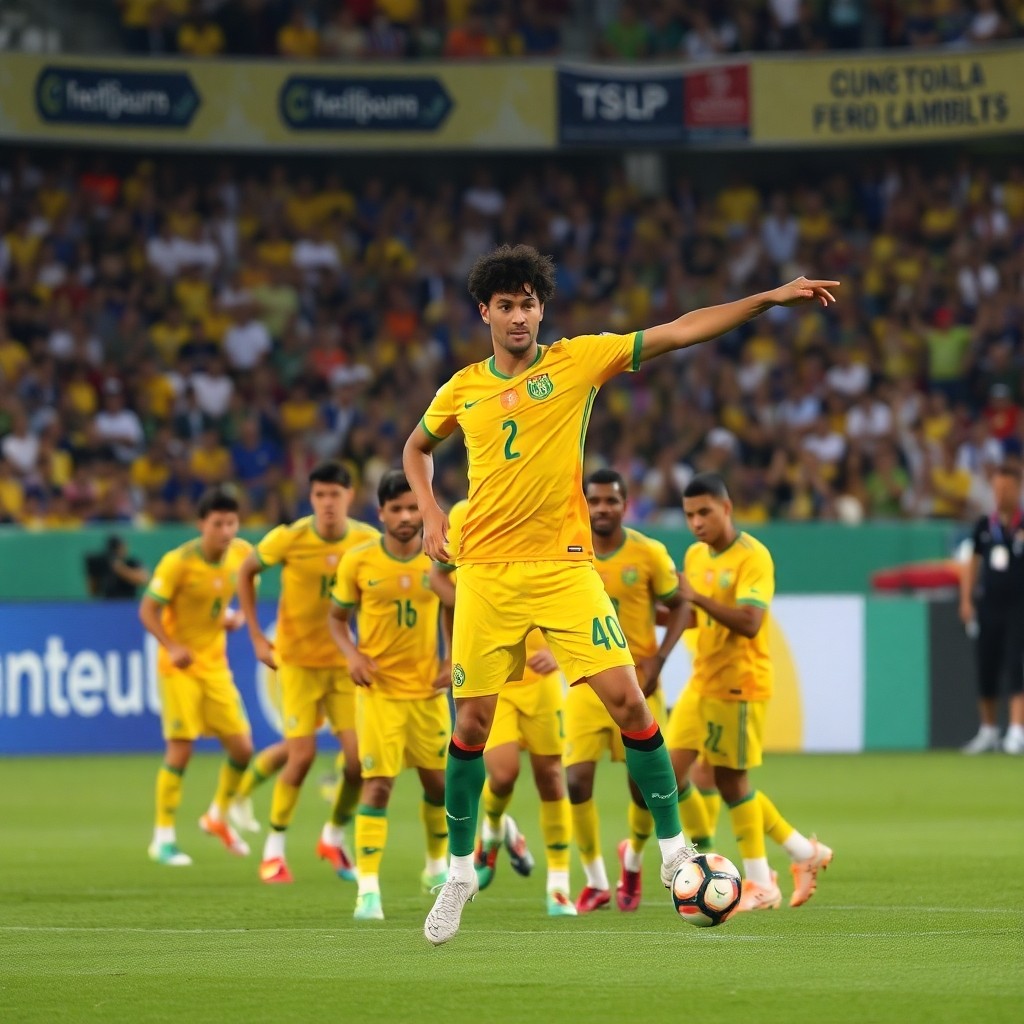
In the heart of the Middle East, where geopolitics and popular passion collide almost daily, football is not just a sport; it is a three-dimensional mirror of the Persian soul. The Iran national football team, affectionately nicknamed Team Melli, carries on its shoulders one of the heaviest and most fascinating burdens in the global sports landscape. Far from being just a team that competes in qualifiers and World Cups, the Iranian squad is an institution that breathes the tensions of a nation divided between theocratic tradition and its youth's yearning for modernity. Within the four lines, Iran has established itself as an undisputed Asian powerhouse, a defensive fortress of extreme competitiveness, and a breeding ground for technical talents who, despite their country's economic and diplomatic isolation, manage to break barriers and shine on the most demanding stages in Europe. This dossier dives into the depths of one of the most resilient national teams on the planet, analyzing its historical genesis, its golden and decadent eras, the impact of international sanctions on its development, its complex geopolitical rivalries, and the tactical design of a generation that refuses to be silenced.
1. Origins and the Formation of National Identity
The introduction of football in Iran follows the classic script of British economic imperialism in the early 20th century. It was on the arid plains of Khuzestan province, in the southwest of the country, that the first kicks were taken. British workers from the then Anglo-Persian Oil Company (which would later become BP) brought leather balls and marked out the first improvised pitches in cities like Masjed Soleyman and Abadan. What began as a distraction for foreign engineers quickly captured the imagination of the local population. Football offered a universal language of confrontation and dexterity that resonated with the rich tradition of physical strength and strategy in Persian culture.
In the 1920s and 1930s, under the reign of Reza Shah Pahlavi, the Iranian state began to see the sport as a vital tool for modernization and national centralization. Clubs began to emerge in the capital, Tehran, initially linked to schools and government ministries. The Iran Football Federation was formally founded in 1920, but its affiliation with FIFA only occurred in 1948, reflecting the initial isolation and the turmoil of World War II, a period during which the country was occupied by Allied forces. The national team made its official international debut in 1941 against Afghanistan in Kabul, a goalless draw that marked the modest birth of a giant.
As the century progressed, the regime of Mohammad Reza Pahlavi, the last Shah of Iran, intensified the use of football as a showcase for his project of Westernization and dynastic power. Football became the sport of the urban masses, surpassing the traditional koshti (wrestling). The pinnacle of this state prestige policy materialized in the construction of the monumental Aryamehr Stadium (later renamed Azadi Stadium), a colossal concrete arena designed to hold over 100,000 spectators, conceived for the 1974 Asian Games. The stadium became the temple of Persian football, an intimidating cauldron where the altitude of Tehran and the deafening noise of the crowd created an almost insurmountable atmosphere for any foreign opponent.
However, the relationship between football and power suffered a seismic fracture with the 1979 Islamic Revolution. The rise of Ayatollah Ruhollah Khomeini and the establishment of a Shiite theocracy placed the sport under suspicion. For the most conservative clerics, football was a "harmful Western distraction," a byproduct of imperialism that diverted youth from religious duties. Clubs suffered direct state intervention: Taj (Crown Club), historically associated with the monarchy, was renamed Esteghlal (Independence), while Shahin, another giant of the capital, transformed into Persepolis under the control of the Ministry of Physical Education. Women's football was summarily banned, and women were barred from stadiums, a social wound that would remain open for over four decades.
Despite the initial hostility of the new regime, football proved too popular to be eradicated. During the bloody Iran-Iraq War (1980-1988), the sport served as a rare element of social cohesion and an escape from the brutal reality of the front. The Islamic regime, realizing it could not defeat the national passion, opted to co-opt it. Football began to be used as a platform for nationalist propaganda, albeit under strict moral surveillance. The identity of Iranian football, therefore, was shaped in this constant tension: a sport born of British influence, adopted by the secularizing monarchy, repressed and then instrumentalized by the Islamic theocracy, but always kept alive by the indomitable fervor of its people.
2. Golden Era, Great Campaigns, and Eternal Idols
The period between the late 1960s and the late 1970s is unanimously considered the first "Golden Era" of Iranian football. Under the technical guidance of figures like the Yugoslav Zdravko Rajkov and, later, the legendary local coach Heshmat Mohajerani, Team Melli established unprecedented hegemony on the Asian continent. Iran won three consecutive Asian Cup titles in 1968, 1972, and 1976. The 1968 victory, on home soil, was particularly emblematic, culminating in a 2-1 win over Israel in Tehran, a match loaded with geopolitical tensions that transcended the pitch.
This continental dynasty paved the way for the historic qualification for the 1978 World Cup, held in Argentina. At a time when Asia and Oceania shared only one spot in the tournament, Iran's qualification was an extraordinary feat. Led by players such as the refined midfielder Ali Parvin and the prolific striker Ghafour Jahani, Iran was no mere participant in Argentina. Despite losses to the Netherlands (future runners-up) and Peru's Teófilo Cubillas, Team Melli snatched a heroic 1-1 draw against Scotland, with a goal by Iraj Danaeifard, etching the country's name into World Cup history.
After the hiatus imposed by the revolution and the war, Iranian football re-emerged with full force in the second half of the 1990s, driven by a generation of extraordinary individual talents. The peak of this renaissance occurred in the qualification campaign for the 1998 World Cup in France. The intercontinental playoff against Australia became one of the greatest legends of the sport in the country. After a 1-1 draw in Tehran, Iran seemed doomed to failure in Melbourne, trailing 2-0 until the 75th minute. In a spectacular comeback, goals by Karim Bagheri and Khodadad Azizi secured a 2-2 draw and the spot via the away goals rule, bringing the country to a standstill in a spontaneous celebration that defied the regime's strict public behavior laws.
In France, Iran starred in what the international press labeled "the most politically charged football match in history." On June 21, 1998, in Lyon, Team Melli faced the United States. In a gesture of enormous symbolism, the Iranian players handed white roses to their American opponents before kickoff, posing for a joint photo that went around the world. When the ball rolled, Persian determination prevailed: Hamid Estili, with a spectacular header, and the young Mehdi Mahdavikia, on a swift counter-attack, secured a 2-1 victory, Iran's first in World Cup history, sparking scenes of collective hysteria on the streets of Tehran.
This golden generation produced idols who transcended Asian borders. No name shines more brightly than that of Ali Daei. The lean, lethal-headed center-forward became the top scorer in the history of international football, reaching the mark of 109 goals, a record that remained intact for 15 years until it was surpassed by Cristiano Ronaldo. Daei, who shone at Bayern Munich and Hertha Berlin, paved the way for other talents in the Bundesliga, such as Ali Karimi, known as the "Magician of Tehran" for his baffling dribbling ability, and Mehdi Mahdavikia, a Hamburg icon elected Asian Footballer of the Year in 2003. Later, Javad Nekounam established himself as the engine of the midfield, accumulating over 150 caps for the national team and shining at Osasuna in Spain's La Liga.
- Ali Daei: 149 caps, 109 goals. The greatest symbol of obstinacy and penalty-box presence in Persian football.
- Ali Karimi: The creative midfielder who combined technical irreverence with off-field rebellion, adored by all generations.
- Mehdi Mahdavikia: A right-back and winger with impressive speed, elected one of the best players in Asian history.
- Javad Nekounam: The cerebral captain who dictated the rhythm of the Iranian midfield in two World Cups (2006 and 2014).
3. Rivalries, Crises, and Behind-the-Scenes Power
Football in Iran is inseparable from the geopolitical currents that cross the Persian Gulf and the rest of the globe. The country's biggest regional rivalry is with Saudi Arabia, a confrontation that mirrors the struggle for hegemony in the Middle East between Shiite Iran and the Sunni Saudi kingdom. The duels between the two teams, often played under high security tension, are nicknamed the "Persian Gulf Derby." During periods of broken diplomatic relations, matches had to be held on neutral ground, such as Oman or the United Arab Emirates. Each victory over the Saudis is celebrated in Tehran not just as a sporting triumph, but as an assertion of cultural and political sovereignty.
Another rivalry loaded with historical symbolism is with neighbor Iraq. The scars of the 1980s war are still felt when the two teams face each other. The clash in the 2015 Asian Cup in Australia is considered one of the most dramatic matches in the tournament's history. After a 3-3 draw in a tense game full of twists and turns, Iraq eliminated Iran on penalties, sparking heated debates about refereeing and the historical rivalry that lasted for months in the press of both countries. On a purely sporting level, the rivalry with South Korea also stands out as the technical classic of Asian football, a duel of styles between the physical discipline and speed of the South Koreans and the defensive and technical solidity of the Iranians.
However, the biggest crises in Iranian football often come from within its own borders. Government interference in the Football Federation of the Islamic Republic of Iran (FFIRI) has been a constant source of friction with FIFA. In November 2006, Iran was temporarily suspended from all international competitions due to interference by Mahmoud Ahmadinejad's government in the federation, which had fired officials after the failure in the Germany World Cup. The suspension was lifted after the creation of a transition committee, but the specter of FIFA punishment has always loomed over the country due to the regime's insistence on controlling the direction of the sport.
Economic sanctions imposed by the United States and the international community due to the Iranian nuclear program also stifle the development of football in the country. The FFIRI often finds itself unable to receive millions of dollars in prize money from FIFA and the Asian Football Confederation (AFC), as international banks refuse to process transfers to Tehran. This scarcity of resources prevents the hiring of top-tier foreign coaching staffs, the modernization of training centers, and the holding of high-level international friendlies. During preparations for the 2018 World Cup, global brands like Nike canceled sponsorship contracts with Iranian players at the last minute to comply with sanctions, forcing athletes to buy their own boots.
The most dramatic and recent episode of the intersection between football and politics occurred during the 2022 World Cup in Qatar. The tournament coincided with the largest social protests in Iran in decades, triggered by the death of young Iranian-Kurdish woman Mahsa Amini while in the custody of the "morality police." The Team Melli players found themselves squeezed between the autocratic regime's pressure to demonstrate loyalty and the demands of the population and activists to use the World Cup stage to protest. In the opening match against England in Doha, the Iranian players chose not to sing the national anthem, a deafening silence that was interpreted globally as an act of solidarity with the protesters, resulting in veiled threats of reprisals against their families by government authorities present in Qatar.
4. Current Moment: Tactics, Generation, and Challenges
The contemporary tactical identity of Iran was deeply shaped by the Carlos Queiroz era. The Portuguese coach, who had two notable stints with the national team (2011-2019 and a brief return in 2022), turned Team Melli into one of the most difficult teams to beat in world football. Queiroz implemented an obsessively organized defensive system, characterized by an extremely compact low block, narrow marking lines, and a lightning-fast offensive transition. Under his tutelage, Iran almost shocked the world in the 2014 World Cup, holding Lionel Messi's Argentina until the 91st minute, and in 2018, when they beat Morocco, drew with Portugal, and sold their 1-0 defeat to Spain dearly.
With Queiroz's final departure, the federation opted for a return to local roots with the hiring of Amir Ghalenoei in 2023. Ghalenoei, an experienced coach and multi-champion in domestic football, sought to balance the defensive solidity inherited from the previous period with a more proactive stance and greater ball possession. Under his command, Iran predominantly uses a variation between the 4-2-3-1 and the classic 4-4-2, depending on the caliber of the opponent. The team seeks to exploit the width of the pitch with fast wingers and focus playmaking on the creativity of its central midfielders, always maintaining defensive compactness as a non-negotiable pillar.
The great asset of this generation lies in its attacking duo, one of the most underrated and efficient in international football: Mehdi Taremi and Sardar Azmoun. Taremi, who established himself as a star at Porto before moving to Inter Milan, is a complete striker. He combines physical strength, tactical intelligence to drift to the flanks, and a unique ability to win penalties and serve his teammates. Azmoun, nicknamed the "Iranian Messi" in his youth, but who actually acts as a more classic number 9, stands out for his impressive vertical leap and opportunism in the box, having built a solid career in Russia (Zenit) and with stints at Bayer Leverkusen and Roma.
However, the aging of this "Second Golden Generation" is the main tactical challenge faced by Ghalenoei. Pillars like goalkeeper Alireza Beiranvand (famous for saving a penalty from Cristiano Ronaldo in 2018 and for his record-breaking manual ball distribution), defender Shojae Khalilzadeh, and midfielder Alireza Jahanbakhsh have already passed the 30-year mark. The defensive transition, once the team's strong point, has begun to show signs of slowness against fast-transition opponents. The elimination in the 2024 Asian Cup semifinal to Qatar (3-2) exposed these physical and recovery vulnerabilities of a team that, although still very competitive, lacks young oxygen in crucial sectors.
Analysis of Amir Ghalenoei's Tactical System
- Defensive Organization: Medium-low block in a 4-4-2, prioritizing closing the central corridor and forcing the opponent to cross balls into the box, where the height of Iranian defenders usually prevails.
- Offensive Transition: Fast exit with vertical passes seeking ball retention by Mehdi Taremi, who serves as the "facilitator pivot" for the infiltrations of Azmoun or fast wingers like Mohebi.
- Weaknesses: Exposure to counter-attacks when trying to propose the game more aggressively; slowness in the recovery of central midfielders against high-intensity physical teams.
5. Talent Development, Structure, and Future
The foundation of Iranian football rests on the Persian Gulf Pro League, the country's first division. Despite chronic financial difficulties, the league is extremely competitive and technically rich. The heart of domestic football beats in the "Tehran Derby" (Sorkhabi), the clash between Persepolis and Esteghlal. This classic divides the capital and the country: Persepolis, historically associated with the working class and wearing red, and Esteghlal, in blue, linked to the elites and the former court. The game routinely attracts over 80,000 spectators to Azadi Stadium and is considered one of the most intense and dangerous rivalries in world football, where blind passion often leads to clashes on and off the pitch.
The development of athletes in Iran is a process that mixes the raw talent of "street football" with youth structures that struggle against a scarcity of resources. Unlike wealthy Gulf neighbors like Qatar and Saudi Arabia, which invest billions in ultra-technological academies (like the Aspire Academy), Iran relies on the resilience of its local clubs and community projects. Regions like Khuzestan province and the coastal areas of the Caspian Sea continue to be inexhaustible breeding grounds for technical and physically robust players. However, the lack of quality artificial grass pitches, modern performance analysis equipment, and adequate sports nutrition in youth categories limits the development ceiling of many young talents.
The export of players to European football has become the lifeline for the national team's technical development. Due to visa restrictions and diplomatic barriers, Iranian players rarely manage direct transfers to the five major European leagues early in their careers. The most common path involves transition leagues, such as the Russian Premier League, the Belgian Jupiler Pro League, the Greek Super League, or the Portuguese Primeira Liga. Clubs like Zenit, Club Brugge, and Rio Ave have served as crucial stepping stones where Persian athletes could adapt to the physical and tactical intensity of European football before taking bigger leaps, as demonstrated by the success of Taremi at Porto and Azmoun in German and Italian football.
Looking to the future, Iran faces a generational and structural crossroads. The expansion of the World Cup to 48 teams starting in 2026 practically guarantees Team Melli's constant presence in the tournament, given the abundance of spots allocated to Asia. However, just qualifying no longer satisfies the yearnings of a passionate fanbase that wants to see the country reach the round of 16 for the first time in history. For this qualitative leap to occur, the FFIRI will need to resolve its governance crises, attract private investment to modernize local club infrastructure, and create more fluid technical exchange channels with international football.
In the long run, the greatest asset of Iranian football remains its immense fanbase and the unconditional passion of its youth. Recently, after years of pressure from FIFA and activist protests (such as the "Open Stadiums" movement), the Iranian regime began to allow, in a gradual and controlled manner, the entry of women into selected national league and national team matches at Azadi Stadium. Although restrictions still exist and full equality is far from being achieved, the female presence in the stands blows a breath of renewal and hope. In a country marked by so many divisions and scars, Team Melli remains the only common thread capable of uniting monarchists and revolutionaries, conservatives and reformists, under a single flag, proving that, in Iran, the ball always rolls loaded with history.





