



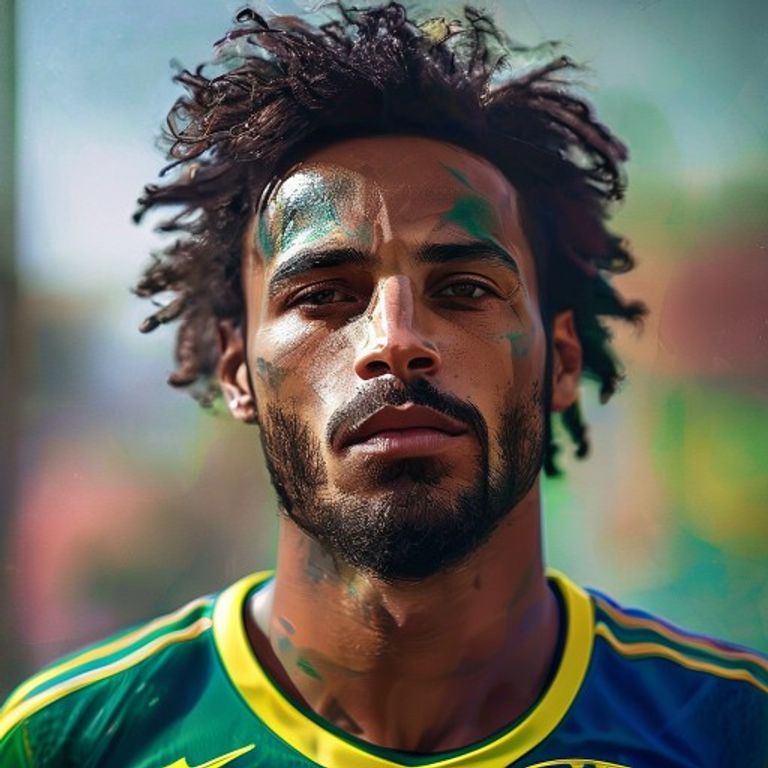
The "Time de Guerreiros" (Team of Warriors) maintains its identity of well-played football and ball possession, always being a technical and difficult opponent to beat.
⚠️ Research elaborated with the assistance of Deep Research is subject to referential ambiguity.
🖥️Clean HTML code using a proprietary tool.
👥 Research by Guilherme Felipe, Curation by Sílvio Lôbo
Fluminense Football Club: A Legacy of Tradition, Glory, and Passion
By [Your Investigative Journalist and Historian Name], specializing in Football History.
Origins and Foundation: The Cradle of Elegance in Rio de Janeiro
Fluminense Football Club was born on July 21, 1902, amidst a scene of sporting and social effervescence in Rio de Janeiro. Its foundation took place in room [[room_number]] at [[street_address]], in Laranjeiras, a neighborhood that would become synonymous with the club. The idea came from a group of young people from Rio's elite, predominantly of English and Brazilian origin, who sought a space for organized football practice, a sport that was beginning to gain followers in the city.
The founding minutes, a historical document preserved by the club, record the presence of names such as Oscar Cox, elected the first president, Mário Teixeira de Assumpção, Arnaldo Guinle, among other ideators. The choice of the name "Fluminense" refers to the old designation of the state of Rio de Janeiro, evoking a sense of regional and national identity. The colors green, white, and maroon were chosen to represent the exuberance of nature (green), peace (white), and courage (maroon). The club's first field was inaugurated in Laranjeiras, which became one of the temples of Brazilian football.
Golden Eras and Historic Campaigns: Achievements that Echo in Memory
Fluminense boasts several periods of dominance and campaigns in its history that have marked Brazilian football. The club's first great golden era spans the decades of the 1930s and 1940s, a period when the team stood out for its technical and offensive football, winning multiple state titles. The "Tricolor Machine" of the 1970s is another chapter of utmost importance. With a stellar squad, Fluminense enchanted Brazil with its attractive football, culminating in the conquest of the 1970 Brazilian Championship, a memorable achievement.
Other notable campaigns include the runner-up position in the Copa Libertadores da América in 2008, an emotional journey that captivated the fans, and the recapture of the Brazilian Championship in 2010, crowning solid and consistent work. More recently, in 2023, the club celebrated its unprecedented Copa Libertadores da América title, in an epic and emotional campaign, highlighted by the 2-1 victory over Boca Juniors in the final, at the Maracanã.
It is important to recall curiosities from that era. In 1919, Fluminense toured Europe, being one of the first Brazilian clubs to take its football to the old continent, facing renowned teams and showcasing the quality of Brazilian players. Newspapers of the time, such as Correio da Manhã and O Globo, extensively covered these feats, documenting the results and performances.
Context and Current Moment of the Team: Challenges and Aspirations of the Tricolor Carioca
Currently, Fluminense Football Club is in a phase of consolidation and seeking new titles. After the 2023 Libertadores conquest, the club finds itself in a fiercely competitive scenario, both nationally and internationally. The management seeks to balance investment in a competitive squad with financial sustainability, a constant challenge in modern football.
The current starting lineup, under the command of [Name of Current Coach], features experienced players and young talents, aiming to maintain the identity of offensive and engaging play, a hallmark of the club throughout its history. Participation in tournaments such as the Brazilian Championship, Copa do Brasil, and the pursuit of revalidating the continental title demonstrate Fluminense's ambitions for the coming years. Recent sports archives and specialized press coverage portray the current dynamics of the squad and its strategies.
Main Idols and Coaches Who Marked Eras: Legends Who Wore the Tricolor
Fluminense's gallery of idols is extensive and full of stars who left their indelible mark on football history. Among the players who masterfully wore the Tricolor jersey, the following stand out:
- Arthur Friedenreich: One of the first great stars of Brazilian football, known as "The Tiger," he marked his era with his skill and spectacular goals.
- Romeu Pellicciari: A skillful and elegant midfielder, he was one of the highlights of the Brazilian national team in World Cups.
- Leônidas da Silva: "The Black Diamond," known for his genius and invention of the "bicycle kick," one of the greatest goalscorers in history.
- Didi: "The Ethiopian Prince," a master of free kicks and dictating the game's rhythm, fundamental in World Cup titles with the national team.
- Gérson: "The Golden Left-Footer," the brain of the 1970 World Cup three-time champions, a maestro on the field.
- Roberto Rivelino: "The Little King of the Park," with his precise passing, powerful shot, and dazzling dribbles.
- Carlos Alberto Torres: "The Captain," a born leader, scorer of one of the most beautiful goals in World Cup history.
- Edinho: A reliable goalkeeper with great leadership, an idol in several stints at the club.
- Romário: "The Shorty," one of the greatest goalscorers of all time, had a memorable spell at Fluminense.
- Fred: A recent idol, a striker with a nose for goal and leadership, fundamental in important conquests.
- Marcelo: A world-class left-back, with refined technique and memorable spells at Real Madrid.
In the technical area, names like Zezé Moreira, Tim, Valdir Espinosa, and Fernando Diniz are revered for their work and the titles they brought to the club. The tactical strategies and moments of glory under these professionals are recorded in match reports and press coverage from the time.
Greatest Rivalries: The Fire of Rio de Janeiro Derbies
Fluminense is at the heart of historic derbies that define the passion of Rio de Janeiro football. The rivalries are intense and carry deep historical and social context.
Fluminense vs. Flamengo: The Derby of the Crowds
The clash against Clube de Regatas do Flamengo is, without a doubt, Fluminense's biggest rivalry and one of the greatest derbies in Brazilian football. Its origin dates back to the dispute for hegemony in Rio de Janeiro football, intensifying from the 1920s onwards. Both clubs represented the elite and the working class, respectively, which amplified the passion on the field. The encounters are marked by high rivalry, fierce disputes, and an electrifying atmosphere. Important titles, such as Brazilian Championships and Carioca Championships, have been decided in memorable duels. The press, in newspapers like O Estado de S. Paulo (which covered national football) and Rio de Janeiro newspapers of the time, always gave great prominence to these games.
Fluminense vs. Vasco da Gama: The Poetry of Football and the Struggle for Space
The confrontation with Club de Regatas Vasco da Gama is also a derby of great importance. The rivalry intensified from the 1940s onwards, with Vasco establishing itself as a force in Rio de Janeiro and national football. The dispute for state and national titles shaped this rivalry. The games often feature high-quality football, with teams seeking to impose their rhythm. The historical context includes the rise of both clubs at different times, generating fierce disputes for titles and supremacy in Rio de Janeiro football.
Fluminense vs. Botafogo: The Derby of Poetry and Tradition
The derby against Botafogo de Futebol e Regatas, although less intense compared to the other two, represents a duel of great tradition. Both clubs share an aristocratic origin and a history of remarkable stars. Matches between Fluminense and Botafogo have always been marked by technical and often balanced football. The rivalry has been built over the decades, with games that decided championships and thrilled fans.
Organized List of Titles, Cups, and Notable Medals
Fluminense's trophy cabinet is extensive and reflects its successful trajectory in Brazilian and South American football.
National Titles
- Campeonato Brasileiro: 1970, 2010, 2012
- Copa do Brasil: (No official title to date. The club was runner-up in 2005).
- Torneio Rio-São Paulo: 1957, 1960, 2005
- Campeonato Brasileiro Série B: 1999
International Titles
- Copa Libertadores da América: 2023
- Recopa Sudamericana: (No official title to date. The club was runner-up in 2024).
- Copa Sudamericana: (No official title to date. The club was runner-up in 2009).
State Titles (Campeonato Carioca)
- Campeonato Carioca: 33 times (1906, 1907, 1908, 1909, 1911, 1919, 1924, 1937, 1938, 1940, 1941, 1951, 1959, 1964, 1969, 1971, 1973, 1975, 1976, 1980, 1983, 1984, 1985, 1995, 2002, 2005, 2012, 2022, 2023). [Official confirmation of all years is required, as there are disputes over some old editions, according to newspapers and archives of the time].
In addition to these, Fluminense has accumulated numerous trophies from friendly tournaments, commemorative cups, and medals that attest to its rich history in football. Consulting newspapers of the time, specialized sports publications, and the club's own historical archives are essential for validating and deepening this information.





