



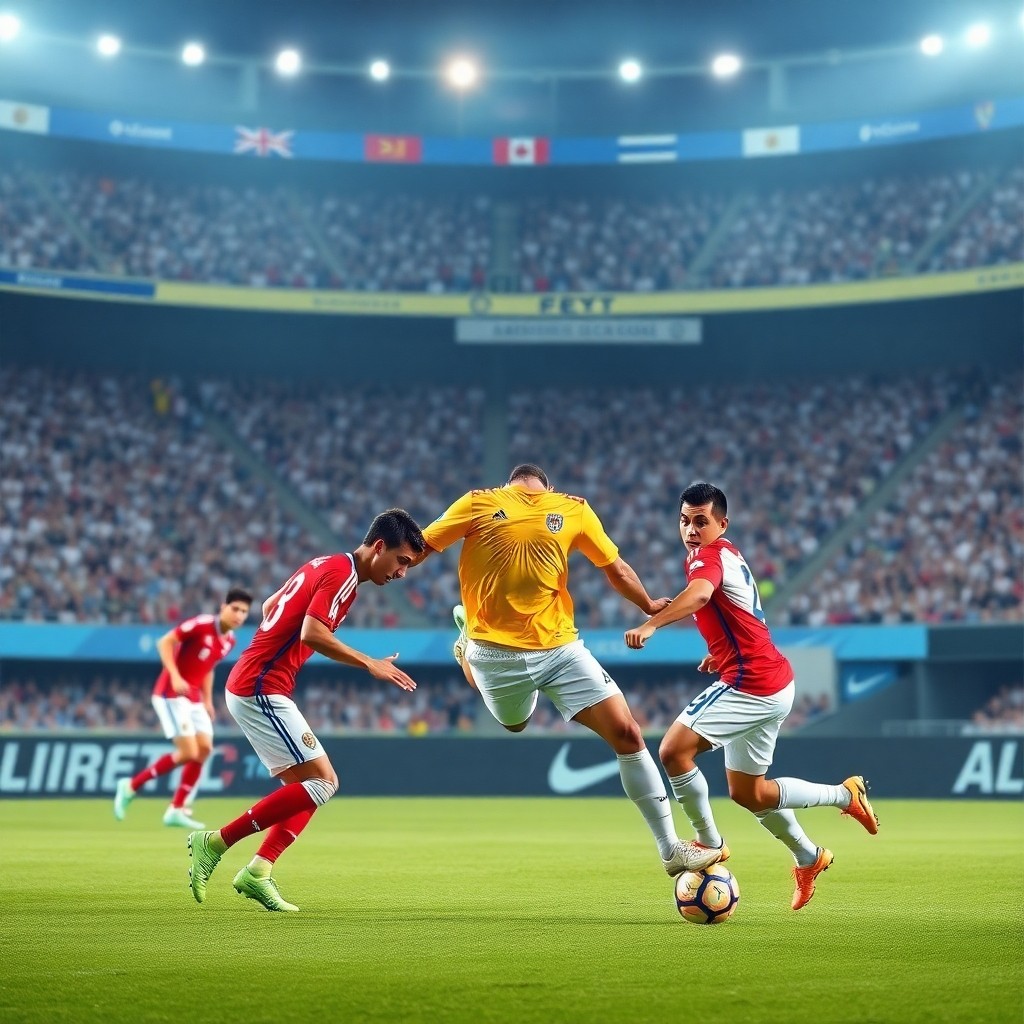
Club Deportivo Morón, affectionately known as "El Gallito", is one of the most traditional and passionate football institutions in the western part of Greater Buenos Aires. Currently competing in the Primera Nacional (the second division of Argentine football), the club is experiencing a moment of institutional consolidation at its modern stadium, the Nuevo Francisco Urbano, seeking to rebuild the sporting path that once took it to the national elite and that, more recently, stunned the country with historic campaigns in the Copa Argentina.
Club History
1. Origins and Foundation: Birth in the Heart of the West
The history of Club Deportivo Morón began to be written on June 20, 1947, in an Argentina experiencing intense social and urban transformations. Gathered at the iconic Café de la Amistad, located at the intersection of San Martín and Entre Ríos streets, a group of young enthusiasts led by Filiberto Ferrante decided to create an institution that would represent the identity and pride of the Morón district, an area rapidly expanding west of the Federal Capital.
Initially, the association was named Club Sportivo Morón. Its first colors reflected the simplicity and improvisation of the time: jerseys borrowed or handcrafted. However, in 1952, after the club's official affiliation with the Argentine Football Association (AFA), the institution was definitively renamed Club Deportivo Morón. It was also during this period that the iconic white shirt with a horizontal red stripe across the chest was consolidated, inspired by the River Plate design, but which would soon gain its own identity in the imagination of lower-division football.
The nickname "El Gallito" (The Little Rooster) has deep historical roots linked to local tradition. The city of Morón was historically famous for its cockfights during the colonial period and the 19th century, a practice that, although later prohibited, left a cultural mark on the region. The fighting rooster, a symbol of bravery, resistance, and combativeness to the bitter end, was adopted as the official crest and mascot of the institution, perfectly translating the warrior spirit that the club would demonstrate on the dirt pitches of the lower divisions.
2. Golden Eras and Historic Campaigns
The 1968 Epic: The Gallito's Highest Flight
The greatest sporting milestone in the history of Deportivo Morón occurred at the end of 1968. Under the technical direction of the legendary Ricardo "El Maestro" Trigilli, the club carried out a memorable campaign in the Primera División Reclassification tournament. Morón was competing for a spot in the elite against traditional teams trying to avoid relegation and other promotion hopefuls.
On November 30, 1968, by drawing 0-0 with Unión de Santa Fe at the old Atlanta stadium, Morón mathematically secured its historic promotion to the Primera División of Argentine football. The feat paralyzed the western zone. In 1969, El Gallito played in the Metropolitano Championship, facing giants like Boca Juniors, River Plate, San Lorenzo, and Independiente. Although the adventure in the elite lasted only one season, the club recorded historic triumphs, such as a 3-1 victory over Newell's Old Boys and a heroic draw against River Plate at the Monumental de Núñez.

The 1989/1990 Title: The Return to the B Nacional
After years of oscillating in the intermediate divisions, the 1989/1990 season brought joy back to the people of the west. Under the command of Salvador Daniele, a gritty and technically refined team won the Primera B Metropolitana championship. The title-deciding match, played in a packed Francisco Urbano against Deportivo Merlo, ended with a 2-0 victory, ensuring the return to the Primera B Nacional, where the club would remain a feared competitor throughout the 1990s.
The 2017 Copa Argentina: The Sleeping Giant Awakens
Already in the 21st century, Deportivo Morón wrote one of the most beautiful pages in the recent history of the Copa Argentina. In 2017, while playing in the third division (Primera B Metropolitana), the team led by Walter Otta starred in a "David vs. Goliath" campaign.
El Gallito successively eliminated four Primera División teams: Patronato, San Lorenzo de Almagro (one of the country's "Big Five," defeated 1-0 with a historic goal by Leandro Guzmán), Unión de Santa Fe, and Olimpo de Bahía Blanca. The dream was only interrupted in the semifinals, in an epic clash against the multi-champion River Plate of Marcelo Gallardo, who won 3-0 at a Malvinas Argentinas stadium (Mendoza) completely taken over by more than 15,000 Morón fans who crossed the country to support the team.
---3. Context and Current Moment of the Team
Deportivo Morón currently competes in the Primera Nacional, the second division of Argentine football. After the historic promotion achieved in 2017 (which ended a painful 27-year drought outside the second division), the club is focusing its efforts on a medium-to-long-term project to return to the elite division.
In recent years, the club has oscillated between solid campaigns—reaching the Reducido (promotion playoffs)—and moments of technical transition. The club's management has focused on modernizing its infrastructure and scouting talent in its youth categories, a vital necessity given the complex economic situation faced by lower-division football clubs in Argentina.
The great institutional engine of Deportivo Morón is its stadium: the Nuevo Francisco Urbano. Inaugurated in 2013 in a strategic location in the city, the stadium replaced the legendary and cramped previous stadium that bore the same name. With a capacity for more than 32,000 spectators, the complex features modern facilities, an indoor gymnasium, auxiliary courts, and an Olympic swimming pool, functioning as a true social, cultural, and sporting hub for the western community.
---4. Main Idols and Coaches Who Defined an Era
The rich historical tapestry of Deportivo Morón was woven by athletes of unwavering commitment and strategic coaches. Among the names most revered by the fans, the following stand out:
- Damián Akerman: The greatest undisputed idol in the club's history. With five different stints at El Gallito, Akerman is the player with the most matches played (over 400) and the top scorer in the institution's history, having surpassed the 160-goal mark. His official farewell to football was an event of popular emotion in Morón.
- Alejandro "Chiche" Migliardi: An iconic goalkeeper who defended the club's goal during multiple periods of crisis and glory, becoming a symbol of leadership and love for the jersey.
- Hugo Campagnaro: An international-class defender who began his professional career at Deportivo Morón in 1998. Later, he shone in Italian football (Napoli, Inter Milan) and even played in the 2014 World Cup final for the Argentine National Team, always proud of his origins in the west.
- Ricardo "El Maestro" Trigilli: The technical director who performed the miracle of promotion to the Primera División in 1968. His tactical vision and ability to motivate humble squads immortalized him in the club's gallery of heroes.
- Salvador Daniele: Known as "El Gato," he was the architect of the 1989/1990 Primera B title. His emotional connection with the fans and his attacking style of play marked a generation.
- Walter Otta: The coach who restored the club's pride in the 2010s. Under his leadership, Morón won the long-awaited Primera B Metropolitana title in 2017 and carried out the unforgettable Copa Argentina campaign that same year.
5. Major Rivalries: The Battle of the West
Football in the western zone of Greater Buenos Aires is lived with an almost religious intensity, and Deportivo Morón is the protagonist of some of the most fervent classics in the country.
| Rival | Classic Name | Origin and Historical Context |
|---|---|---|
| Almirante Brown | Clásico del Oeste | The most visceral rivalry. Originated in the 1950s due to the geographical proximity between the districts of Morón and La Matanza. It is a clash of deeply rooted territorial identities, often marked by high-tension matches and a historic dispute for hegemony in the west. |
| Nueva Chicago | Clásico de Frontera | A classic confrontation between the Federal Capital (Mataderos neighborhood, Chicago's stronghold) and the Province (Morón). The fanbases have nurtured a historic mutual antipathy based on disputes for leadership in the lower-division football stands since the 1970s. |
| Chacarita Juniors / Tigre | Zonal Rivalries | Matches considered "high risk" by the AFA due to historical incidents between organized fan groups throughout the 1980s and 1990s, always played in environments of extreme pressure. |
6. List of Titles and Notable Campaigns
Deportivo Morón's trophy room reflects a trajectory of overcoming adversity, characterized by hard-fought achievements in the most difficult divisions of Argentine football:
- Primera B Metropolitana (Third Division): 2 titles
- 1989/1990 Championship
- 2016/2017 Championship
- Primera C (Fourth Division): 1 title
- 1980 Championship
- Primera D / Tercera de Ascenso: 1 title
- 1959 Championship
- Notable Campaigns:
- Promoted to Primera División (1968): Winner of the AFA Reclassification tournament.
- Copa Argentina Semifinalist (2017): Best campaign by a third-division club in the modern history of the tournament.
7. Historical Curiosities
- Pope John Paul II's visit: In 1982, during his historic visit to Argentina in the context of the Falklands War, Pope John Paul II held a massive mass in the city of Morón. Many Gallito fans still cherish the memory of seeing the pontiff pass near the vicinity of the old Francisco Urbano stadium.
- The Rooster on the Crest: The original design of the rooster on the club's crest was inspired by the traditional Barcelos roosters, but with a much more aggressive posture. Over time, the design was stylized to denote strength and modernity, always maintaining the traditional combat stance.
- The demolition of the old Urbano: The move to the new stadium in 2013 generated a mix of nostalgia and progress. The old stadium, located in the city center, gave way to a commercial development, but many fans kept pieces of concrete from the stands as true religious relics.
Researched Sources
- Argentine Football Association (AFA) - Historical records of transfers and tournaments.
- Clarín Newspaper - Digital archive of sports coverage (1968, 1990, and 2017).
- Olé Newspaper - Coverage notes of the 2017 Copa Argentina campaign and current Primera Nacional news.
- "Club Deportivo Morón: Una Historia de Pasión" (Local historical monograph of the Morón District).
- El Gráfico Magazine - Historical editions from 1968 and 1969.
- Solo Ascenso - Updated statistics and rosters of the Primera Nacional.





