



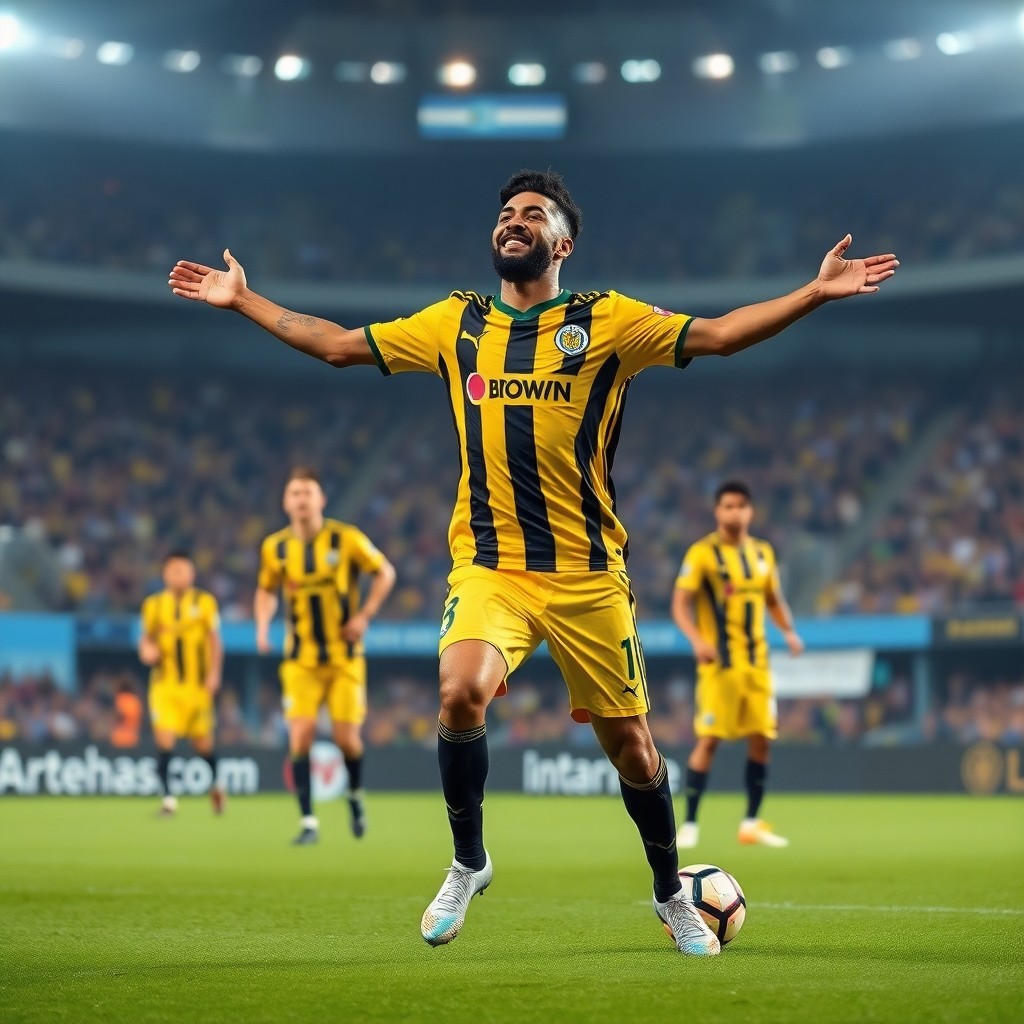
Club Almirante Brown, affectionately known as "La Fragata" or "El Mirasol," is the undisputed giant of La Matanza, the most populous municipality in Greater Buenos Aires. Currently competing in the Primera Nacional (the fierce second division of Argentine football), the club is undergoing a sporting restructuring after narrowly missing out on a historic promotion to the top flight in 2023, cementing its status as one of the most passionate, politicized, and working-class institutions in South American football.
Club History
1. Origins and Foundation: The Admiral's Legacy and the Identity of La Matanza
The history of Club Almirante Brown is inseparable from the urban, industrial, and social development of the La Matanza district in the western belt of Greater Buenos Aires. The club was originally founded on July 1, 1912, under the name Club Atlético Almirante Brown, paying tribute to Admiral Guillermo Brown, the Irish-born hero considered the father of the Argentine Navy. Its original founders, led by figures such as Juan Boeri, sought to create a space for socialization and sports for the working class that was expanding with the railway.
After a period of inactivity and administrative difficulties that led to its temporary dissolution in 1919, the club was reorganized and formally refounded on January 17, 1922. It was during this second phase that the identity that is now a trademark of Argentine football was consolidated.
The choice of black and yellow colors (Aurinegro) has one of the most famous curiosities of the era. In 1922, in urgent need of a kit to compete in local leagues, the board sent representatives to the famous Gath & Chaves department store in downtown Buenos Aires. Since they could not find a complete set of white shirts (the original idea), they purchased the only set of vertical stripes available: the colors of the traditional Uruguayan club Peñarol (which, in turn, derived from the colors of the Rocket locomotive of the Central Uruguay Railway). Since then, Almirante Brown has inherited not only the colors but also the nickname Mirasol.
The club wandered through various fields before settling permanently. In 1956, after merging with Club Deportivo San Justo, the institution planted deep roots in the heart of La Matanza, culminating in the inauguration of its sacred temple in the 1960s.
The Temple: Estadio Fragata Presidente Sarmiento
Inaugurated on June 14, 1969, in Isidro Casanova, the stadium is a concrete cauldron with a current capacity of approximately 25,000 spectators. The inaugural match was against Almagro (a 3-2 defeat). Located at the intersection of Rucci and Seguí streets, the stadium represents the cultural epicenter of La Matanza, where football transcends sport and becomes an expression of social resistance from the Buenos Aires periphery.
2. Golden Eras and Historic Campaigns
Almirante Brown built its reputation as a "tough nut to crack" in the Argentine lower divisions. Although it has never played in the professional AFA First Division, the club has been millimeters away from ultimate glory on more than one occasion.
The 1991/1992 Epic: The near-promotion to the elite
Under the technical command of the experienced Osvaldo "Chiche" Sosa, Almirante Brown achieved the most brilliant campaign in its history during the 1991/1992 Nacional B season. With a gritty squad led by figures such as Carlos Cardozo, Gabriel "Chulo" Rivoira, and Héctor Rivoira, the team reached the grand final of the Torneo Reducido for the second promotion spot to the First Division.
The opponent was the feared San Martín de Tucumán. In the first leg in Tucumán, Almirante Brown resisted bravely and secured a heroic 1-1 draw. In the return leg, played in Isidro Casanova before a deafening crowd, fate was cruel: the Mirasol was defeated 1-0 by a Jorge López goal, postponing the dream that seemed so palpable.
The Blas Giunta Era and the Miracle of the -18 points (2007-2010)
One of the most emblematic and dramatic eras of the club occurred under the leadership of Blas Armando Giunta, a historic Boca Juniors idol who injected a mentality of combat and extreme sacrifice into Almirante Brown.
In 2007, the club became champion of the Primera B Metropolitana after a fierce final against Estudiantes de Buenos Aires. However, due to serious incidents of violence caused by its fans in the promotion final against Nueva Chicago, the AFA punished the club with a 18-point deduction for the following season in the Primera B Nacional. What seemed like an inevitable relegation turned into one of the greatest displays of spirit in Argentine football: Giunta's team scored enough points to save themselves on the pitch, although the mathematical average ("promedios") forced relegation on the final matchday. Redemption came in 2010, with a triumphant return to the second division, again under Giunta's guidance.
---3. Context and Current Moment
Almirante Brown is living a reality of reconstruction and persistence in the Primera Nacional. In 2023, the club experienced its most exciting season in the last thirty years. Under the technical direction of Darío Franco, the Mirasol won Zone A of the championship, earning the right to play the final for direct promotion against Independiente Rivadavia de Mendoza.
On October 29, 2023, at the Mario Alberto Kempes stadium in Córdoba, Almirante Brown fought bravely but was defeated 2-0 in extra time. Subsequently, in the Torneo Reducido (play-offs), the team fell in the semifinals to Deportivo Riestra. The psychological and financial impact of missing out on promotion was reflected in a turbulent 2024 season, marked by coaching changes (including the stint of idol Daniel "Indio" Bazán Vera) and the struggle to consolidate in the middle of the table, far from the relegation zone, while restructuring its youth divisions and the infrastructure in Isidro Casanova.
---4. Main Idols and Coaches Who Defined an Era
- Blas Armando Giunta: The coach who personified the soul of the club. He led the team for over seven consecutive years in his first spell, becoming synonymous with the grit and the rustic, competitive style of Almirante Brown.
- Daniel "El Indio" Bazán Vera: The club's greatest modern goalscorer. A physical, charismatic, and lethal striker in the box, Bazán Vera had multiple spells as a player and later took on the role of coach, being revered as a popular hero in La Matanza.
- Héctor "Chulo" Rivoira: A midfielder with refined technique in the 1980s and early 1990s, Rivoira is remembered for his tactical intelligence and the unconditional love shown to the club throughout his professional life.
- José Luis "Lucho" García: A historic goalkeeper who defended the club's colors with extreme security during crucial transition phases between the 1970s and 1980s.
- Carlos "Chiche" Sosa: The strategist who almost took the club to the elite of Argentine football in 1992, recognized for his tactical wisdom and locker room management.
5. Major Rivalries: Blood, Sweat, and Territory
Almirante Brown is the protagonist of two of the hottest and most dangerous rivalries in Argentine lower-league football, both rooted in territorial and social disputes.
The "Clásico del Oeste": Almirante Brown vs. Deportivo Morón
This is the most traditional and fierce derby in the west of Greater Buenos Aires. The rivalry was born in the 1950s due to the geographical proximity between the districts of La Matanza and Morón. The first official match took place in 1957. Since then, the matches have become pitched battles on and off the pitch, characterized by heavy policing and, unfortunately, severe episodes of violence that led to the historic ban on away fans in the lower-division championships.
The "Clásico Metropolitano": Almirante Brown vs. Nueva Chicago
A rivalry that transcends football and enters the field of urban sociology. It separates Isidro Casanova (Buenos Aires province) from the Mataderos neighborhood (the edge of the Autonomous City of Buenos Aires). The duel pits the industrial working mass of the province against the traditional working class of the Buenos Aires meatpacking plants. The clashes throughout the 1970s, 1980s, and 2000s (such as the fateful 2007 match) have consolidated this derby as one of the most tense in the country.
---6. List of Titles and Achievements
| Competition / Division | Titles / Achievements | Years of Achievement |
|---|---|---|
| Primera B Metropolitana (Third Division) | 3 | 2006/07, 2009/10, 2019/20 |
| Primera C (Fourth Division) | 1 | 1965 |
| Primera D (Fifth Division) | 1 | 1956 |
| Notable Runner-up Finishes (Primera Nacional) | 2 | 1991/92 (Reducido), 2023 (Promotion Final) |
Sources Researched
- Asociación del Fútbol Argentino (AFA) - Historical Archives and Tournament Records.
- Diario Olé - Coverage of the 2023 campaign and 2024 coaching transition.
- "La Historia de Almirante Brown" - Historical editions of Club Almirante Brown.
- Centro de Investigación para la Historia del Fútbol (CIHF) - Match statistics and club foundation records.
- El Diario de La Matanza - Archive of local news and the club's social impact in the region.





