



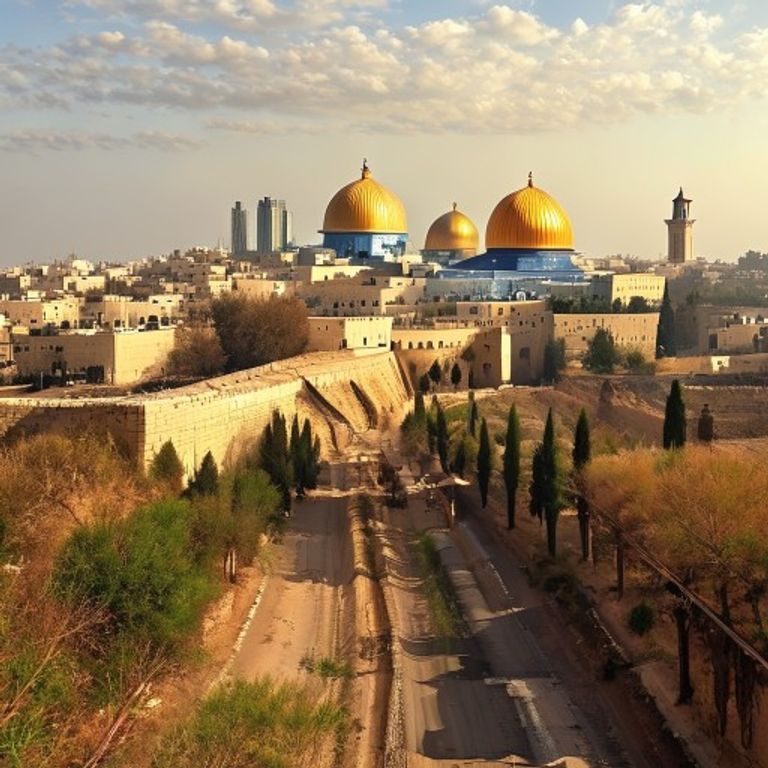
The Holy Land for Jews, Christians, and Muslims, Israel is a vibrant center of history and faith, centered in Jerusalem. Despite persistent geopolitical conflict, it is known as the 'Start-up Nation,' a global leader in technology, cybersecurity, and desert agriculture. Tel Aviv offers a cosmopolitan, liberal lifestyle and beaches, contrasting with the religiosity of the rest of the country.
⚠️ Research elaborated with the aid of Deep Research is subject to referential ambiguity.
🖥️Clean HTML code using a proprietary tool.
👥 Research by Guilherme Felipe, Curation by Sílvio Lôbo
The Literature of Israel: A Mosaic of Identities and Narratives
The literature produced in the region we now know as Israel is a vibrant and multifaceted field, intrinsically linked to the complex historical, social, and political realities that have shaped the nation. Far from being monolithic, this literary output reflects a tapestry of identities, where Zionism, post-Zionism, the Holocaust experience, coexistence with the Palestinian people, and the search for a sense of belonging are indelibly intertwined.
Historical Roots and Early Voices
The origins of modern Israeli literature are deeply rooted in the Zionist movement of the late 19th and early 20th centuries. Pioneering authors, many of whom immigrated to the Land of Israel (Eretz Israel), used writing as a tool to build a new national identity and a new language. Hebrew, in the process of revitalization, became the primary vehicle for these narratives.
One of the pillars of this phase is Chaim Nachman Bialik, considered the national poet of Israel. His work, often epic and lyrical, celebrates the resilience of the Jewish people and the hope for redemption in the ancestral land. Another crucial name is Shai Agnon, a Nobel laureate in Literature in 1966. His novels, such as "The Bridal Canopy" and "A Simple Story," explore Jewish life in the diaspora and the complex transition to life in the Land of Israel, with a prose rich in symbolism and mysticism.
Literary Movements and Generations
The establishment of the State of Israel in 1948 marked a turning point, giving rise to new literary currents that reflected the hopes and challenges of the newly created nation.
The Generation of the 1940s and 1950s: Idealism and Confrontation
Authors such as S.Y. Agnon (mentioned earlier) and Moshe Shamir, with works like "Ha-Massa shel Pinhas" (The Campaign of Pinhas), captured the pioneering spirit and the conflicts of the War of Independence. The literature of this era often celebrated the "new Jew" – strong, secular, and engaged in nation-building.
The Generation of the 1960s and 1970s: Criticism and Questioning
As time passed, more critical voices emerged. Authors such as Amos Oz and A.B. Yehoshua began to question the founding myths and explore the nuances of Israeli society. Oz, in works like "My Michael" and "Judas," delves into the psychological and social complexities of his characters, often addressing the relationship with the Arab world and internal tensions.
Yehoshua, with novels such as "The Love of the Year 2000" and "The Nights of Ranana," focuses on family dramas and the search for identity in a postmodern context, frequently exploring the interconnection between the individual and the collective.
Post-Zionism and New Voices
From the 1980s and 1990s onwards, the post-Zionist movement gained strength, challenging the hegemonic narrative of Zionism and addressing themes such as the occupation, Palestinian rights, and the diaspora more directly. David Grossman, with powerful novels such as "See Under: Love" and "To the End of the Land," has been a prominent voice, addressing the impact of violence and conflict on the lives of Israeli individuals and families.
Other relevant authors of this generation include Orly Castel-Bloom, known for her incisive style and for portraying marginality and social discontent in works like "Tzart" (the name of a character), and Etgar Keret, whose short, sharp stories address everyday life, dark humor, and existential anxiety.
Central Themes and Cultural Identity
Israeli literature is marked by a series of recurring themes that reflect its unique cultural identity:
- The Holocaust and Memory: The traumatic experience of the Holocaust is a common thread in many works, influencing the perception of security, the urgency of a national homeland, and the complexity of Jewish existence.
- The Relationship with the Land: The connection to the land, whether seen as a promise, a burden, or a battlefield, is a central element. The physical and symbolic landscape of Israel permeates the narratives.
- The Search for Identity: In a land forged by immigration and diverse cultures, the search for a sense of belonging, whether Zionist, secular, religious, or individual, is a constant.
- Conflict and Coexistence: The presence and impact of the Arab-Israeli conflict and the complexities of coexistence with the Palestinian people are undeniably present themes, explored from various perspectives.
- Everyday Life and Modernity: Despite the grand political and historical themes, Israeli literature also dedicates itself to portraying urban life, interpersonal relationships, and the joys and frustrations of modern life.
Important Publications and the Literary Ecosystem
Major Israeli publishing houses, such as Kinneret Zmora-Bitan Dvir, Yedioth Books, and Hakibbutz Hameuchad, have played a fundamental role in publishing and disseminating local literature. Literary magazines, such as the historic "Moznayim", have also served as important platforms for new voices and literary debates.
Translation into other languages has been crucial for the international projection of Israeli literature, allowing readers around the world to connect with its narratives. The Sapir Prize for Literature, Israel's most prestigious literary award, also contributes to highlighting relevant authors and works.
Conclusion
The literature of Israel is a mirror of its own complexity and dynamism. It is a literature that draws nourishment from a rich and sometimes painful history, but also celebrates resilience, creativity, and the incessant search for meaning. Through its pages, we are invited to explore a mosaic of identities, existential questions, and the vibrant cultural tapestry that defines this land and its people.





