



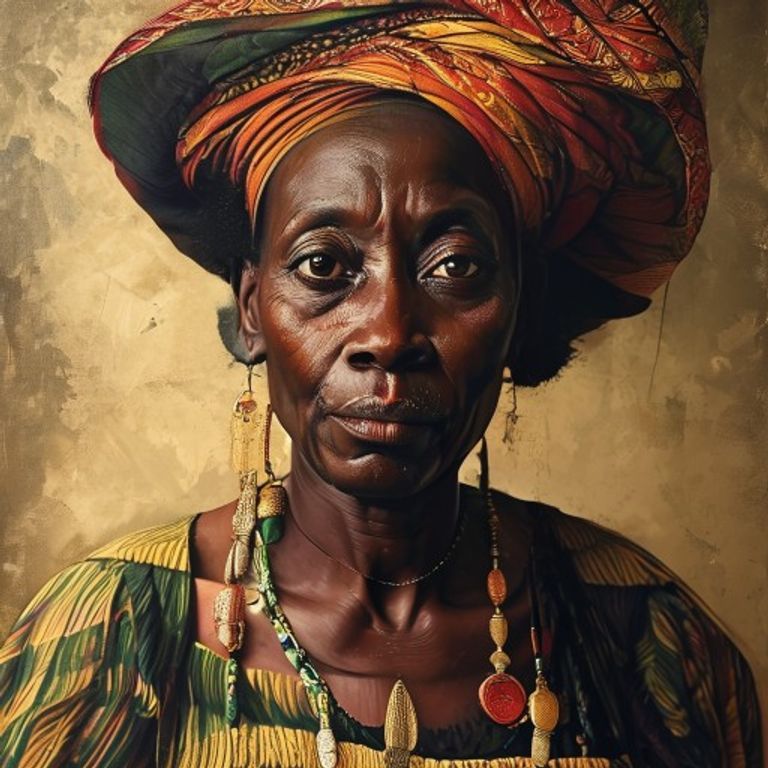
Known as the 'Water Tank of West Africa' due to its many rivers, Guinea boasts lush green landscapes and the Fouta Djallon mountains. Rich in bauxite, the nation has a remarkable history of resistance to colonialism. Its musical culture is influential in the region, and the country offers raw natural beauty, with largely unexplored waterfalls and dense forests.
⚠️ Research conducted with the assistance of Deep Research is subject to referential ambiguity.
🖥️Clean HTML code using a proprietary tool.
👥 Research by Guilherme Felipe, Curation by Sílvio Lôbo
The Voice of Guinea-Bissau: A Mosaic of Identities and Resistances in Literature
The literature of Guinea-Bissau, a country marked by a complex history of colonization, struggle for independence, and nation-building challenges, emerges as a vibrant mirror of its multifaceted cultural identity. Far from being monolithic, Guinean literary production weaves a rich tapestry of voices that capture the nuances of life, ancestral memories, and the aspirations of a people seeking to assert their uniqueness on the global stage.
Key Authors and Their Contributions
The constellation of Guinean authors, whether born in or residing in the nation, offers a diverse panorama of themes and styles. Undoubtedly, the figure of Agostinho Neto stands out. Although his work is more intrinsically linked to Angola, his influence and pan-Africanist activism resonate deeply in the African Lusophone context, including Guinea-Bissau. However, focusing strictly on Guinea-Bissau:
- Filinto Elísio is a seminal name. His poetry, imbued with lyricism and a deep love for his homeland, addresses African identity, colonial exploitation, and the pursuit of dignity. Works like "Poemas" (1970) and "A Minha Terra e a Minha Alma" are pillars of Guinean literature.
- José Carlos Schwarz, a poet and musician, is another unavoidable figure. His poetry is marked by social criticism, the celebration of Mandinka culture, and the denunciation of injustices. Songs like "Fidjidi" have become anthems of resistance and identity.
- Abdulai Sila, in more recent times, has distinguished himself with his engaging prose. His novels explore the complexities of contemporary Guinean society, the tensions between tradition and modernity, and the consequences of the colonial past. "A Última Canção de Nhamatã" is a notable example of his narrative skill.
- Tony Mostarda contributes with a more urban and contemporary perspective, exploring the experiences of youth, migration, and the dilemmas of modern life in Guinea-Bissau.
Literary Movements and Historical Publications
Guinean literature, in its early stages, was closely linked to the liberation movement and the search for a national identity. The anti-colonial struggle shaped a large part of the literary production, which served as a tool for awareness and cultural affirmation.
While it's not possible to speak of strictly defined literary movements as in other European literatures, phases can be identified:
- Pre-Independence Period (up to 1974): Characterized by engaged poetry that echoed the yearnings for freedom and denounced colonial oppression. Authors like Filinto Elísio and José Carlos Schwarz were important precursors. Publications were often clandestine or circulated in restricted contexts.
- Post-Independence: A period of consolidation and exploration of new themes. Literature began to reflect on the challenges of state-building, cultural legacies, and new social realities. The publication of novels and short stories gained more momentum.
- New Generations and Diversification: More recent authors have broadened the thematic and stylistic range, addressing issues of gender, migration, urbanization, and the dilemmas of globalization. The creation of publishing houses and cultural initiatives has been crucial for the dissemination of this production.
Important publications, in addition to the individual works already mentioned, include the circulation of cultural periodicals and the organization of literary events that, even on a smaller scale, promote exchange and visibility for authors. The "Terra Nova" collection, for example, has been an important space for publishing new talents.
Local Cultural Identity Reflected in Books
Guinean cultural identity is one of the most evident threads in its literature. This identity is complex, composed of:
- Multicultural Heritage: Guinea-Bissau is a mosaic of ethnicities, each with its own languages, traditions, and cosmogonies. Literature frequently explores this diversity, from the oral histories of the Mandinka people to the social practices of other groups.
- Ancestral Memory: The connection with the past, with ancestors, and with African roots is a recurring theme. Literature seeks to recover and value these memories, often silenced by colonialism.
- The Influence of the Sea and the Land: Guinea-Bissau's geography, with its extensive coastline, islands, and rivers, leaves an indelible mark on its culture and, consequently, on its literature. The sea, with its mysteries and symbolism, and the land, with its fertility and challenges, are constant presences.
- The Experience of Colonialism and Resistance: The scars left by colonization and the strength of the struggle for independence are themes that have shaped the worldview of many authors. Literature addresses exploitation and violence, but also resilience and the capacity for overcoming.
- Contemporary Struggles and Aspirations: Beyond the past, Guinean literature does not shy away from present-day dilemmas. The pursuit of a more just future, social inequalities, the challenges of education and health, and new forms of cultural expression are explored in depth.
In summary, the literature of Guinea-Bissau is a living testament to a people constantly building their identity. Through the words of its authors, we are invited to delve into a universe rich in sounds, colors, and knowledge, where history intertwines with art to give voice to a unique and resilient nation.





