



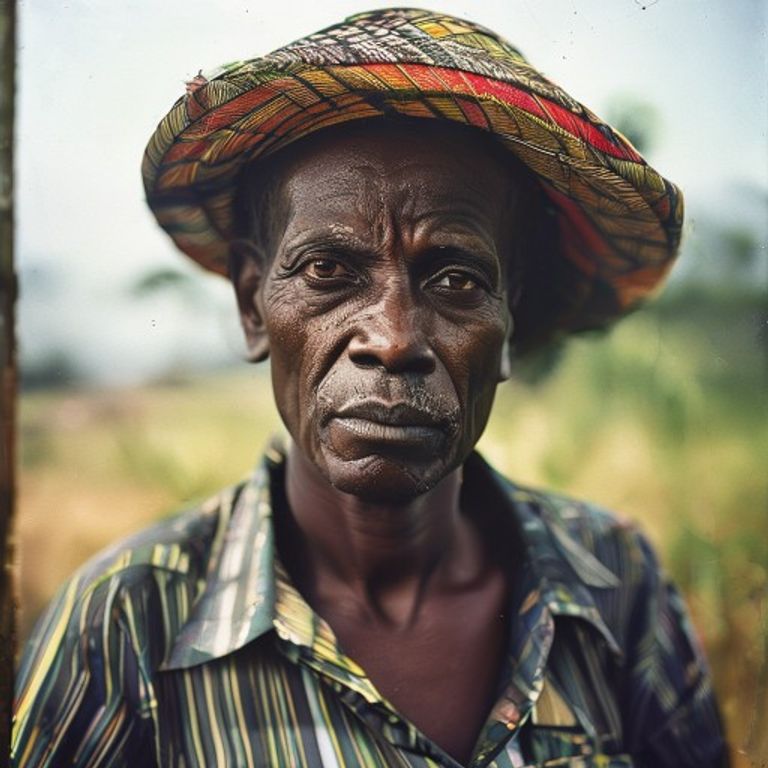
A small West African country, Guinea-Bissau is a treasure trove of biodiversity, notably the Bijagós Archipelago, a UNESCO Biosphere Reserve. Its culture is a mosaic of ethnicities that keep ancestral traditions and the use of Creole alive. Despite political and economic challenges, the nation possesses unexplored natural wealth and a vibrant, authentic carnival.
⚠️ Research conducted with the aid of Deep Research is subject to referential ambiguity.
🖥️Clean HTML code using a proprietary tool.
👥 Research by Guilherme Felipe, Curation by Sílvio Lôbo
The Narrated Soul: An Essay on Guinean Literature
Guinea-Bissau, a country of vibrant landscapes and a history marked by liberation struggles and resilience, finds in its literature a multifaceted mirror of its cultural identity. Far from being a mere reflection, Guinean literary production emerges as a space of resistance, memory preservation, and the construction of narratives that define and redefine what it means to be Guinean in a constantly changing world.
Guinean literature, although in the process of consolidation and international recognition, is rich in voices that echo ancestral wisdom, the experiences of colonization, the euphoria and hardships of independence, and the complexity of contemporary life. It is a literature that draws from the sources of orality, from the country's sound and visual landscapes, and from profound reflections on the human condition.
Roots and Voices: Key Authors and Their Legacies
The literary landscape of Guinea-Bissau is shaped by authors who, with their pens, have blazed trails and painted vivid pictures of Guinean reality and imagination. Among the prominent names, some have become fundamental pillars for understanding our literary production:
- Amílcar Cabral: Although better known for his role as a revolutionary leader and thinker, Amílcar Cabral also left us fundamental writings that transcend politics, delving into the realm of cultural reflection and identity. His essays and speeches are a source for understanding the foundations of African cultural self-determination, and by extension, Guinean self-determination.
- Filinto Elísio: A poet and short story writer, Filinto Elísio is a central figure in Guinean poetry. His work is marked by lyrical language deeply connected to the traditions and soul of the Guinean people, exploring themes such as nature, love, and identity.
- Osvaldo Lourenço: A novelist and short story writer, Osvaldo Lourenço's work delves into the social, political, and existential issues of Guinea-Bissau. His texts often address the complexities of the post-colonial transition and the country's social dynamics.
- Abdulai Sila: With an engaging prose, Abdulai Sila is another name to be celebrated. His novels explore human relationships, moral dilemmas, and social transformations, often set against backdrops that refer to Guinea-Bissau.
- Cristina Taquelim: A contemporary writer, Cristina Taquelim has contributed her vision to Guinean literature, addressing relevant themes for new generations and the discussion about the role of women in society.
It is important to note that many of these authors, especially in the early generations, had their works published outside Guinea-Bissau, either in Portugal or in other African countries, due to limitations in infrastructure and the domestic publishing market. However, their roots and inspirations are undeniably Guinean.
Movements and Publications: The Fabric of Literary History
Guinean literature did not develop in a vacuum. It is intrinsically linked to the historical moments and aspirations of the nation. Although there are no formally defined and institutionalized literary movements as in other contexts, we can identify periods and trends that have shaped production:
- The Period of the Liberation Struggle: During the War of Liberation against Portuguese colonial rule, literature served as an important tool for raising awareness and affirming national identity. Poems, songs, and stories exalted heroes, denounced oppression, and mobilized the people to fight.
- Post-Independence Literature: After the proclamation of independence in 1973, literature began to reflect the new realities of the country. There was a period of searching for a consolidated national identity, celebrating achievements, and reflecting on the challenges of building a new state. However, economic and political difficulties also found space in the narratives.
- Contemporary Literature: In recent decades, there has been a diversification of themes and styles. Younger authors explore new forms of expression, addressing issues such as emigration, globalization, gender identity, and the complexities of urban life.
Important publications, although fewer in number compared to countries with greater publishing infrastructure, include short story collections, poetry anthologies, and novels that are gradually gaining space in independent and university presses, and more recently, on digital platforms. The initiative of authors and literature enthusiasts has been crucial for the dissemination of these works.
Cultural Identity on Paper: Reflections of the Guinean Soul
Guinean cultural identity is the common thread that permeates most of the country's literary works. This identity is a complex mosaic, forged by the confluence of:
- Orality and Ancestral Traditions: The strong oral tradition, with its tales, proverbs, and myths, is an inexhaustible source of inspiration. Many authors seek to rescue and retell these stories, ensuring their preservation and transmitting ancestral knowledge to new generations.
- The Influence of Diverse Ethnic Groups: Guinea-Bissau is a multi-ethnic country, with a rich tapestry of groups such as the Fula, Manjaco, Balanta, Mandinka, among others. The different languages, customs, beliefs, and worldviews are reflected in the characters, settings, and conflicts addressed in the works.
- The Colonial and Post-Colonial Experience: The indelible mark of Portuguese colonization is a recurring theme. Literature explores the scars left by oppression, the struggle for liberation, and the challenges of building a sovereign nation after years of domination.
- Nature and Landscape: The lush nature of Guinea-Bissau – the rivers, the forests, the coastline – is not just a backdrop, but an active element in the narratives, influencing the mood, mythology, and the very identity of the characters.
- The Sorrows and Joys of Daily Life: The struggles for survival, family relationships, loves, losses, and the small victories of Guinean daily life are portrayed with sensitivity and realism, offering an intimate glimpse into the lives of the people.
In summary, Guinean literature is a living organism, constantly gestating and evolving. It is the voice that speaks of the land, the people, the memories, and the dreams of a nation. By delving into the pages of its authors, we not only read stories but connect with the pulsating and resilient soul of Guinea-Bissau.





