



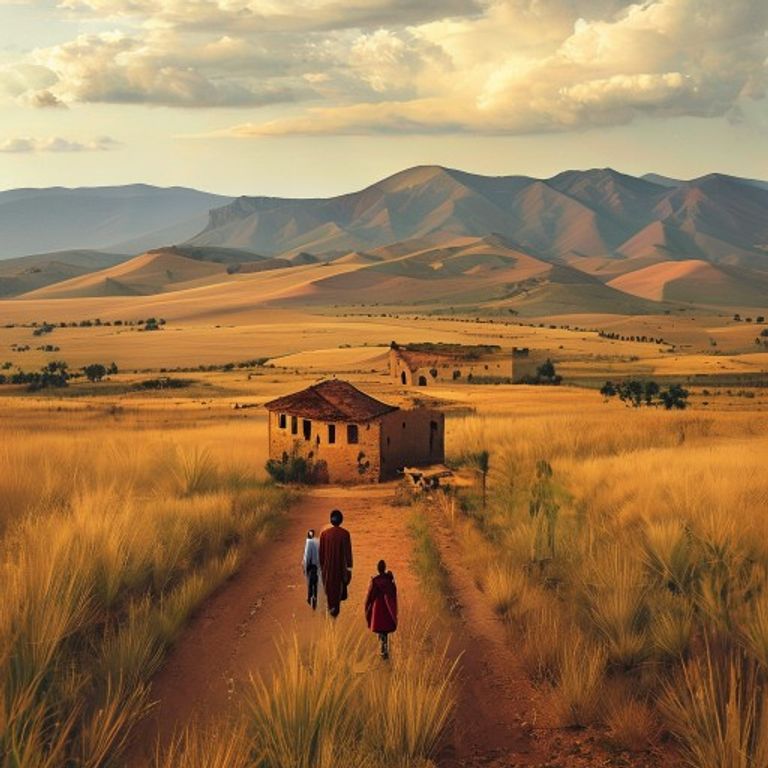
The only African country never colonized, Ethiopia is a symbol of independence and pride. The cradle of humanity (where 'Lucy' was found), it boasts an ancient history with rock-hewn churches in Lalibela and castles in Gondar. Home to the African Union, its culture is distinct, with a unique cuisine based on injera and its own alphabet and calendar.
⚠️ Research elaborated with the aid of Deep Research is subject to referential ambiguity.
🖥️Clean HTML code using a proprietary tool.
👥 Research by Guilherme Felipe, Curation by Sílvio Lôbo
The Soul of Ethiopia in Words: A Critical Look at its Literary Production
Ethiopia, a country with an ancient history and rich cultural tapestry, has in its literary production a faithful mirror of its identity, its struggles, and its aspirations. Through words that echo ancestral traditions and embrace modernity, Ethiopian authors have shaped and enriched the African and global literary landscape. This essay seeks to delve into the depths of this literature, highlighting its main exponents, historical movements, emblematic works, and the intrinsic relationship between writing and Ethiopian cultural identity.
Deep Roots: Ethiopian Literature and its Origins
Ethiopia's literary history is intrinsically linked to its religious tradition and the Ge'ez language, the liturgical language of the Ethiopian Orthodox Church. For centuries, written production was largely confined to religious texts, royal chronicles, and historical treatises. The introduction of the printing press in the 19th century and the gradual secularization of society paved the way for new forms of literary expression. Poetry, with its strong oral tradition, played a crucial role in this transition process, serving as a vehicle for transmitting stories, myths, and community values.
Literary Movements and Social Transformations
Literary movements in Ethiopia are often marked by periods of intense social and political transformation. The post-World War II period, for example, saw the emergence of a new generation of writers who sought to portray the lives of ordinary people and criticize social inequalities. The influence of Western literary movements, such as modernism, was also felt, encouraging formal and thematic experimentation.
An important milestone was the emergence of periodical publications that served as platforms for new talents and for the debate of ideas. These magazines allowed writers to share their works with a wider audience, fostering an active literary community.
Key Authors and Their Voices
Ethiopia boasts a lineage of talented authors whose works have transcended borders. While an exhaustive list is impossible, some names stand out for their influence and literary quality:
- Tsegaye Gabre-Medhin: One of Ethiopia's most important poets and playwrights. His works address themes such as national identity, social injustice, and the struggle for freedom, often using powerful metaphors and poignant lyricism.
- Alemseged Tesfai: Known for his novels that explore the complexities of contemporary Ethiopian life, its traditions, and the challenges posed by modernity. His prose is often marked by deep social observation and a humanist perspective.
- Yilma Gebre-Yohannes: Another significant name in Ethiopian poetry and prose. His contributions have enriched literature with his ability to capture the essence of the Ethiopian experience in different contexts.
- Mengistu Lemma: An author whose works, often in Amharic, explore humor, social criticism, and the human condition with insight.
It is important to note that many Ethiopian authors write in Amharic, the official language, but also in other Ethiopian languages and in English, expanding the reach of their works. Translation has been a fundamental link in bringing Ethiopian literature to a global audience.
Important Publications and Literary Legacy
Throughout history, various publications have been crucial for the development and dissemination of Ethiopian literature. In addition to the aforementioned literary magazines, the publication of anthologies of short stories, poems, and novels has played a vital role in consolidating authors and introducing new voices to the public.
Novels such as those by Alemseged Tesfai, which realistically portray the nuances of life in different regions of Ethiopia, have become benchmarks. The poetry of Tsegaye Gabre-Medhin, with its lyrical strength and social engagement, continues to inspire generations. Works exploring Ethiopian history, from antiquity to periods of conflict and change, are also important pillars.
Cultural Identity Reflected on the Pages
Ethiopian cultural identity is undoubtedly the common thread that runs through the vast majority of the country's literary production. Ethiopian literature is characterized by:
- The Deep Relationship with History and Tradition: Myths, legends, historical events, and the influence of the Orthodox Church are recurrently revisited and reinterpreted. Ethiopian literature often questions the past to understand the present.
- The Importance of Community and Family: The Ethiopian social structure, with its strong community and family ties, is a central theme. Interpersonal dynamics, rituals, and values passed down through generations are explored with sensitivity.
- The Struggle Against Injustice and the Pursuit of Dignity: Many authors address social inequalities, oppression, and the hardships faced by the Ethiopian people. Literature becomes a space for denunciation and affirmation of human dignity.
- The Landscape and Nature: The rich and diverse Ethiopian landscape, from the high mountains to the deep valleys, often serves as a backdrop and symbolic element in narratives.
- Amharic as a Vehicle of Expression: The richness and expressiveness of the Amharic language are explored by many writers, contributing to the preservation and enrichment of this linguistic heritage.
In summary, Ethiopian literature is a vibrant testament to a resilient and multifaceted culture. Through their words, Ethiopian authors not only narrate stories but also weave a continuous dialogue with their history, their identity, and their future, inviting the reader to share in the soul of Ethiopia.





