



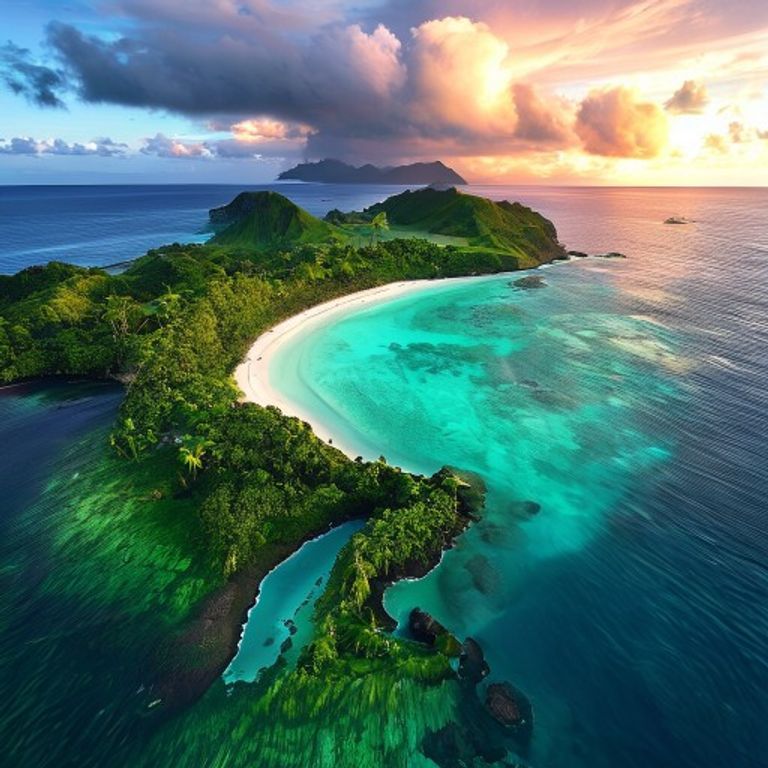
Composed of four states (Yap, Chuuk, Pohnpei, Kosrae), Micronesia offers cultural and historical diversity. Yap is famous for its giant stone money; Chuuk is the world's mecca for diving on World War II shipwrecks; Pohnpei is home to the mysterious ruins of Nan Madol. The nation maintains a close relationship with the US and preserves traditions of navigation and matriarchal clans.
⚠️ Research conducted with the aid of Deep Research is subject to referential ambiguity.
🖥️Clean HTML code using a proprietary tool.
👥 Research by Guilherme Felipe, Curation by Sílvio Lôbo
The Silent Voice of the Pacific: Literature in the Federated States of Micronesia
The Federated States of Micronesia (FSM), an archipelago scattered across the vast Pacific Ocean, boasts a rich cultural tapestry shaped by its unique geography, complex history, and a deep sense of community. Its literary output, though still emerging and often challenged by distance and limited resources, is a vibrant mirror of these influences, offering authentic glimpses into its traditions, struggles, and aspirations. This essay seeks to explore the literature of the FSM, highlighting its main authors, nascent movements, significant publications, and the resonance of local cultural identity in its works.
Pioneers and Contemporary Voices
Written literature in the FSM, especially in more modern forms, is a relatively recent phenomenon. Historically, the transmission of stories, myths, and knowledge was predominantly oral, passed down from generation to generation through narratives, songs, and dances. The introduction of writing in local languages and, later, in English, opened new avenues for literary expression.
One of the most prominent and internationally recognized names is John H. Tujuk. Born in Pohnpei, Tujuk is a prolific writer whose works explore the complexities of modern life in contrast to ancestral traditions. His short stories and poems often address themes such as migration, the loss of cultural identity in the face of globalization, and the deep connection to land and sea. His prose, though often melancholic, carries a lyrical strength and a keen insight into social nuances.
Another important figure is Daisy L. Mohe, whose contributions focus on portraying the daily lives of women in Micronesia, their resilience, and their often-marginalized voices. Her writings frequently examine family dynamics, educational challenges, and the pursuit of autonomy in a society in transition. Mohe is admired for her ability to capture the essence of human emotions with accessible and touching language.
Although the list of Micronesian authors with widely accessible published works is still limited, other voices are emerging, often through anthologies and university publications. Writers like Wiliam R. Aloko, with his explorations of myths and legends, and Palau W. Parel, who dedicates himself to social and political poetry, deserve mention. The strength of these voices lies in their authenticity and their ability to articulate local experiences to a broader audience.
Literary Movements and Publications
Due to its status as a young nation with limited resources, the FSM does not have formally defined historical literary movements in the same way as nations with centuries of written tradition. However, it is possible to observe an incipient literary movement that reflects a sense of literary "awakening," driven by the desire to preserve and disseminate Micronesian culture and stories.
Important publications in the FSM are often associated with educational institutions and cultural organizations. The University of the South Pacific, with its campuses and programs serving the region, plays a crucial role in publishing works by local authors, often in the form of monographs, anthologies, and academic journals. The publication of collections of folk tales, poetry, and historical narratives helps to solidify and disseminate the literary heritage.
Anthologies such as "Voices of Micronesia", while not exclusive FSM publications, often include contributions from Micronesian writers, presenting a diverse range of styles and themes. The creation of online platforms and blogs by individual writers also represents an important evolution, allowing their voices to reach a global audience more immediately and democratically. The lack of large commercial publishing houses in the region makes these initiatives even more vital.
Cultural Identity and Recurring Themes
The cultural identity of the Federated States of Micronesia is intrinsically linked to the sea, the land, island communities, and a deep respect for ancestors. This connection is the backbone of most literary works produced in the region.
Recurring themes include:
- The Relationship with the Ocean: The sea is not just a backdrop but a living character, a source of sustenance, danger, and spirituality. Stories often depict traditional navigation, fishing, and myths associated with the ocean.
- Tradition vs. Modernity: The conflict and coexistence between traditional customs and external influences of globalization are a central theme. Writers explore how young people deal with the loss of ancestral practices and the search for a hybrid identity.
- The Role of Family and Community: Social structures strongly based on family and community are frequently portrayed, with an emphasis on the bonds, responsibilities, and conflicts that can arise within these groups.
- Migration and Return Narratives: Many Micronesians emigrate in search of better opportunities, and their stories of departure, adaptation in foreign lands, and the desire to return to the islands are poignant themes.
- Ancestral Myths and Legends: The preservation and reinterpretation of traditional myths and legends are crucial to keeping cultural heritage alive. These tales explain the origin of the world, of human beings, and provide moral lessons.
- Environmental Impacts: With growing concern about climate change and rising sea levels, Micronesian literature is also beginning to address the existential threats facing the region, such as coastal erosion and extreme weather events.
Challenges and Future Prospects
The literature of the Federated States of Micronesia faces significant challenges. The lack of robust publishing infrastructure, limited distribution, and the need to promote literacy in local languages are obstacles to be overcome. However, the growing awareness of the importance of cultural preservation and the emergence of new generations of talented writers offer a promising future.
As more Micronesian voices find platforms to be heard, the region's literature has the potential to offer the world not only captivating stories but also unique perspectives on life, culture, and humanity's relationship with its environment in an increasingly interconnected world. Micronesian literature is a testament to the resilience and richness of a people who, despite their geographical dispersion, maintain a strong and unmistakable cultural identity.





