



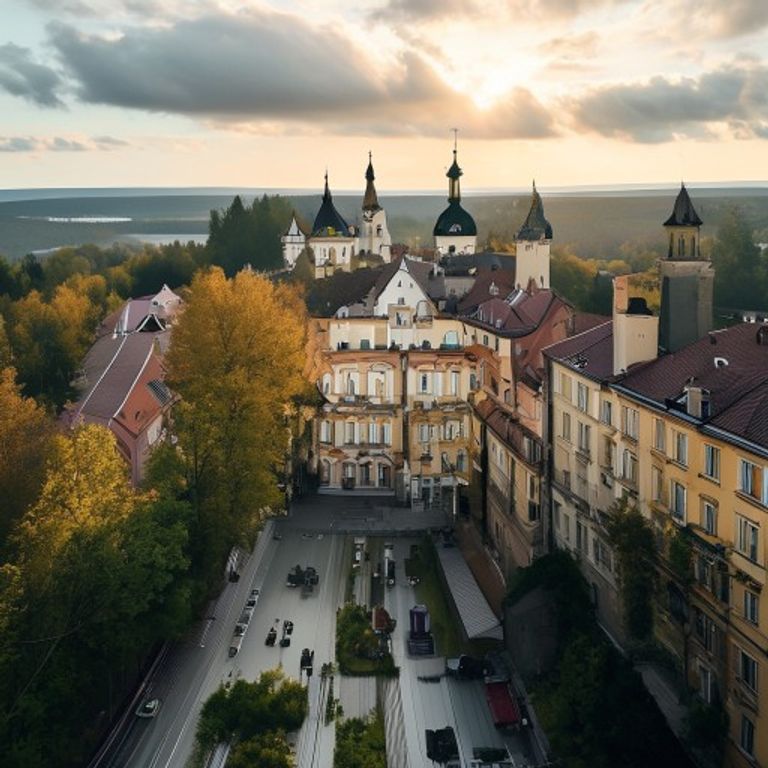
The most Nordic of the Baltic nations, Estonia is a global digital leader, where almost everything is done online (e-Residency). With charming medieval cities like Tallinn and forests covering half the country, it shares a cultural affinity with Finland. The Estonian people value choral singing as a national identity, having achieved freedom through the 'Singing Revolution'.
⚠️ Research elaborated with the aid of Deep Research is subject to referential ambiguity.
🖥️Clean HTML code using a proprietary tool.
👥Research by Guilherme Felipe, Curation by Sílvio Lôbo
The Baltic Soul in Words: An Essay on Estonian Literature
Estonia, a vibrant Baltic nation with a complex history, boasts a rich and multifaceted literary tradition that reflects its unique cultural identity and its struggles for autonomy. Through its poets, novelists, and playwrights, Estonian literature weaves a tapestry of resilience, longing for freedom, and a deep connection to nature and the soul of its people. This essay delves into the key authors, historical literary movements, and manifestations of local cultural identity that shape Estonia's literary landscape.
The Beginnings and the National Awakening
The roots of Estonian literature trace back to ancient folk songs and the first religious texts written in Estonian. However, the true flourishing and formation of a national literary identity solidified in the 19th century, driven by the Estonian national awakening movement. * **Friedrich Reinhold Kreutzwald (1803-1882)** is a seminal figure. His most notable work, "Kalevipoeg", the Estonian national epic, compiled from folk tales, is a cornerstone of national literature and identity. The poem narrates the adventures of the hero Kalevipoeg, a giant who represents the strength and destiny of the Estonian people. * Another pillar of this period is **Lydia Koidula (1843-1886)**, often called the "Mother of the Nation." Her patriotic and lyrical poetry, imbued with fervent love for her homeland and the Estonian language, inspired generations. Her plays were also crucial to the development of national theater. These authors, along with others, fought for the preservation and promotion of the Estonian language and culture in a context of foreign domination, laying the groundwork for a vibrant and autonomous literature.
The 20th Century: Modernity, Occupation, and Resistance
The 20th century presented significant challenges for Estonia, including the World Wars and decades of Soviet occupation. The literature of this period reflects these turbulences, but also an unyielding spirit of creativity and resistance. * **Anton Hansen Tammsaare (1878-1940)** is arguably the greatest Estonian novelist. His masterpiece, "Tõde ja õigus" (Truth and Justice), an epic five-volume saga, examines Estonian peasant life and the complex social and philosophical questions surrounding the pursuit of truth and justice. It is a monumental work that shaped the perception of Estonian reality. * In the interwar period, the modernist movement gained momentum. Poets like **Jaan Kross (1920-2007)**, though better known for his historical prose, also explored the nuances of existence in difficult times. Later, Kross would become one of the most internationally translated Estonian authors, with novels such as "The Emperor's Weaver" and "King Midas", which reimagine historical moments from an Estonian perspective. * During the Soviet era, many writers operated under censorship, resorting to metaphors and allegories to express their criticisms and longings. Literature became a refuge for truth and national identity. Authors like **Jaan Kaplinski (1941-2021)**, known for his philosophical poetry and prose exploring the relationship between man, nature, and the cosmos, kept the flame of intellectual reflection alive.
Contemporary Literature: Diversity and New Horizons
With the restoration of independence in 1991, Estonian literature experienced an explosion of diversity and experimentation. New themes emerged, addressing the complexities of post-Soviet society, globalization, and identity issues in a rapidly changing world. * **Andrus Kivirähk (born 1970)** is one of the most popular and acclaimed contemporary Estonian authors. His work moves between sharp social satire, surreal fantasy, and chronicles of everyday life, often with a peculiar and dark humor. Novels like "Rehepapp ehk novembrirahud" (The Old Barn and the Ghost or The November Peace), which blends Estonian folklore with a cynical view of rural life, achieved international success. * **Meelis Friedenthal (born 1973)**, with novels like "The Book of Pestilence", explores historical and existential themes with erudite and engaging prose. * Contemporary poetry continues to thrive, with voices like **Maarja Kangro (born 1973)** exploring the human condition with originality and insight.
Cultural Identity Reflected in Literature
Estonian cultural identity is intrinsically woven into the fabric of its literature. Several recurring elements can be observed: * **Connection with Nature:** Estonia's vast and often wild landscape, with its forests, lakes, and the Baltic coast, is a constant source of inspiration. Nature is not merely a backdrop but a vital force, a refuge, and a mirror of human emotions. * **Resilience and the Struggle for Freedom:** Throughout its history, the Estonian people have faced numerous attempts at cultural and political suppression. This struggle for autonomy and the preservation of identity is a recurring theme, infusing works with a sense of perseverance and hope. * **Folklore and Mythology:** Ancient folk traditions, myths, and legends play a significant role, offering a connection to ancestral roots and shaping unique narratives. The epic "Kalevipoeg" is a prime example. * **The Importance of Language:** The Estonian language, one of the few Finno-Ugric languages, is a national treasure. Literature has been fundamental to its preservation and evolution, with many authors dedicating themselves to the beauty and richness of Estonian expression. * **Melancholy and Reflection:** There is a certain introspective melancholy, an existential longing that permeates many Estonian works, reflecting history and the human condition in the face of adversity. In summary, Estonian literature is a living testament to the soul of a people. From the foundational epics that forged national identity to contemporary voices exploring the challenges of the modern world, Estonia's books offer a profound glimpse into its history, its culture, and its unyielding spirit.





