



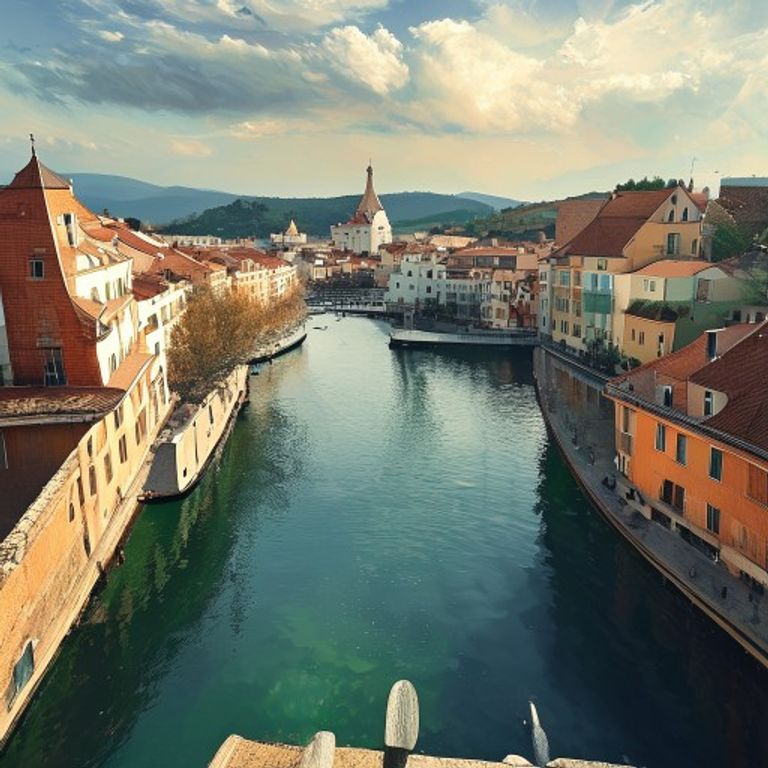
This municipality in the state of Rio Grande do Sul was home to the poet Mario Quintana, who lived in the iconic Hotel Majestic, and is the center of contemporary literary production in the far south of the country.
⚠️ Research conducted with the aid of Deep Research is subject to referential ambiguity.
🖥️Clean HTML code using a proprietary tool.
👥 Research by Guilherme Felipe, Curation by Sílvio Lôbo
The Literature of Porto Alegre: A Critical and Cultural Panorama
Porto Alegre, the capital of Rio Grande do Sul, has established itself throughout its history as one of Brazil's most vibrant cultural centers. Its literature, multifaceted and rich, reflects the particularities of a border region, marked by indigenous, European, and Lusitanian influences, as well as a climate and landscape that shape both the spirit and the narrative of its writers. This essay proposes an in-depth dive into the Porto Alegre literary scene, exploring its main authors, historical movements, fundamental publications, and the intrinsic relationship between literary production and local cultural identity.
I. Roots and Early Emergence: From the 19th to the Early 20th Century
The seeds of literature in Porto Alegre were sown in the 19th century, during a period of the city's formation and consolidation. The first manifestations were predominantly journalistic or historical and political in nature, but they already pointed towards intellectual flourishing. Among the pioneering figures, José Joaquim de Campos Leão (Qorpo-Santo) stands out, a singular playwright whose theater, surrealist and anachronistic for his time (mid-19th century), is today recognized as a landmark of originality, anticipating trends that would only consolidate in the 20th century. Although marginalized in his time, Qorpo-Santo represents the audacity and experimental spirit that, in a way, has always permeated local artistic production.
It is impossible to speak of the roots of Gaúcho literature without mentioning the influence of Simões Lopes Neto. Although born in Pelotas and not directly associated with Porto Alegre's urban life, his work, deeply rooted in the pampas culture and the legends of the "gaúcho," such as "Lendas do Sul" and "Contos Gauchescos," became the backbone of a regionalism that would inform much of Rio Grande do Sul's literature, echoing in Porto Alegre as a mythical and identity-forming reference.
The early 20th century saw the emergence of names that paved the way for modernity. The Rio Grande do Sul Academy of Letters, founded in 1901, and various newspapers and magazines of the time served as catalysts for the production and circulation of texts.
II. Modernism and the Great Generations of the 20th Century
Modernism in Rio Grande do Sul was more absorptive than rupturing compared to the Rio-São Paulo axis. Porto Alegre's literature incorporated innovations but often merged them with a strong attachment to regionalism and attention to the psychology of its characters. From the 1930s and 1940s onwards, the city would become the birthplace of some of the greatest exponents of Brazilian literature.
- Érico Veríssimo (1905-1975): He is the undisputed giant of Porto Alegre's literature and one of the most important Brazilian novelists. His vast work, which ranges from psychological novels ("Clarissa," "Música ao Longe") to historical epics ("O Tempo e o Vento"), captures the soul of the Gaúcho people and the complexity of Brazil's formation. Veríssimo not only narrated the history of Porto Alegre and Rio Grande do Sul but also masterfully explored universal dilemmas, becoming a fundamental voice of Brazilian literary modernity.
- Dyonélio Machado (1893-1985): A physician and writer, Dyonélio Machado is a master of social and psychological realism. His novel "Os Ratos" (1935) is a classic that crudely portrays urban alienation and the struggle for survival, with Porto Alegre as an implicit setting. His work, although less extensive than Veríssimo's, is of striking intensity and depth.
- Mário Quintana (1906-1994): The "poet of simple things" is one of Porto Alegre's most beloved figures. His poetry, of unparalleled delicacy and sensitivity, ranges from the lyrical, the ironic, and the philosophical, always with a touch of melancholy and humor. Quintana transformed the city's urban landscape, parks, and bookstores into settings and muses for his verses, becoming a cultural symbol of the Gaúcho capital.
The following generations would continue to diversify and enrich the panorama. In the 1960s and 1970s, voices emerged that explored new facets of the human condition and urban life:
- Moacyr Scliar (1937-2011): With a style marked by humor, the fantastic, and the influence of his Jewish heritage, Scliar built a vast and captivating body of work. His novels and short stories, often set in Porto Alegre, address themes such as immigration, identity, memory, and daily life, with a unique ability to blend the universal and the particular.
- Caio Fernando Abreu (1948-1996): An icon of urban literature and the counterculture, Caio F. Abreu captured the loneliness, anguish, and loves of big cities, with Porto Alegre serving as a backdrop for many of his narratives. His poetic prose, his dense short stories, and his sensitive gaze on homosexuality and the marginalized made him an essential voice of his generation.
- Other important names from this period include Luiz Antônio de Assis Brasil, with his epic historical novels, and short story writers like Sergio Faraco and Charles Kiefer, who masterfully explored psychological complexities in concise narratives.
III. The Contemporary Scene: Diversity and Globalization
The 21st century has brought a new crop of writers who, without abandoning their roots, engage with globalization and new technologies, exploring universal themes with a Porto Alegre perspective. Contemporary literature from Porto Alegre is marked by a diversity of voices, styles, and themes:
- Letícia Wierzchowski: Achieved great success with historical novels such as "A Casa das Sete Mulheres," which narrates a crucial chapter of Gaúcho history, popularizing history-based literature with broad popular appeal.
- Daniel Galera: One of the prominent names of the so-called "2000s generation," Galera explores contemporary urban life, alienation, human relationships in the digital age, and existential crises in novels like "Barba Ensopada de Sangue."
- Luisa Geisler: A young and award-winning writer, Geisler stands out for her short stories and novels that address youth, uncertainties, new forms of communication, and contemporary dilemmas with sharp and ironic prose.
- Jeferson Tenório: His work, especially "O Avesso da Pele," brought urgent issues of racism, black identity, and structural violence in Brazil to the forefront of debate, with a visceral and poetically powerful narrative set in Porto Alegre.
- Carol Bensimon: In her novels, Bensimon explores themes such as nomadism, the search for identity, and the relationship with nature, often with characters who move between Brazil and abroad, reflecting a globalized perspective.
- Martha Medeiros: Through chronicles, poetry, and novels, with a direct and accessible style, she addresses issues of female daily life, romantic relationships, and the search for self-knowledge, becoming one of the most widely read authors in the country.
This new generation demonstrates the vitality of Porto Alegre's literature, capable of engaging with the world without losing its local identity.
IV. Publications and Literary Institutions: Pillars of Production
The strength of literature in Porto Alegre is not limited to its authors but is supported by a robust infrastructure of publications and institutions:
- Publishing Houses:
- Editora Globo: Originally founded in Porto Alegre (though currently headquartered in Rio de Janeiro), it was for decades one of Brazil's largest and most influential publishing houses, responsible for publishing Érico Veríssimo and many other national and foreign classics, establishing an important publishing hub in the city.
- L&PM Editores: Headquartered in Porto Alegre, it revolutionized the publishing market with its pocket books and a diverse catalog ranging from classics to contemporary bestsellers, establishing itself as one of the country's largest independent publishers.
- Artes e Ofícios and Dublinense: More recent publishers that stand out for their refined curation and the publication of high-quality national and foreign authors, contributing to the renewal of the publishing scene.
- Events and Institutions:
- Porto Alegre Book Fair: Held annually in Praça da Alfândega, it is one of the oldest and most important book fairs in Brazil and Latin America. A true cultural festival that attracts hundreds of thousands of visitors and promotes encounters between readers and writers, launches, and debates.
- Casa de Cultura Mario Quintana: Occupying the former Hotel Majestic, where Mário Quintana lived for years, it is a vibrant cultural center housing libraries, cinemas, theaters, bookstores, and exhibition spaces, serving as a meeting point and hub of artistic and literary effervescence.
- Academia Rio-Grandense de Letras (ARL) and the Associação Gaúcha de Escritores (AGES): Institutions that work to preserve literary memory, foster new talents, and promote Rio Grande do Sul's literature.
- Newspapers and Cultural Supplements: Historically, newspapers such as Correio do Povo, Jornal do Comércio, and, more recently, Zero Hora, have dedicated and continue to dedicate significant space to literary criticism, reviews, and interviews, shaping readers and providing visibility to local authors.
V. The Cultural Identity of Porto Alegre Reflected in Books
The literature of Porto Alegre is a multifaceted mirror of its cultural identity, a synthesis of particularities that distinguish it on the national scene:
- The Urban Gaúcho: The transition from the mythical figure of the rural gaúcho to the urban gaúcho is a recurring theme. Porto Alegre writers explore how tradition coexists or clashes with the capital's modernity, reinterpreting "being gaúcho" beyond the pampas.
- The Climate and Landscape: The harsh winters, the fog over the Guaíba, and the city's eclectic architecture are not mere backdrops but active elements that infuse narratives with a melancholic, introspective, or sometimes resilient tone. "Loneliness" and "introspection" are feelings frequently evoked by authors like Mário Quintana and Caio F. Abreu, who find in Porto Alegre's landscape a correspondence for their states of mind.
- Cultural Hybridism: Porto Alegre is a melting pot of influences. Strong European immigration (German, Italian, Jewish, among others) has enriched the local culture and is reflected in the diversity of characters and perspectives. Moacyr Scliar, in particular, masterfully explored Jewish identity in the city, while the Afro-Brazilian presence gains prominence in contemporary works such as those by Jeferson Tenório.
- Social and Existential Criticism: From Dyonélio Machado, through Veríssimo and Scliar, to contemporary authors, there is a current of social criticism that scrutinizes inequalities, urban alienation, and racial tensions. In parallel, an existentialist vein and a questioning of the human condition permeate much of the production, especially in Caio F. Abreu and Daniel Galera.
- The City as a Character: Porto Alegre is not just the stage but often a character in itself. Its neighborhoods, parks (like Redenção), its streets (like Rua da Praia), and its Guaíba River are living elements that interact with the stories and shape the characters' destinies.
Conclusion
The literature of Porto Alegre is a living and constantly transforming heritage. From the innovations of Qorpo-Santo to the epics of Érico Veríssimo, from the delicacy of Mário Quintana to the acidity of Caio F. Abreu, and the multifaceted voices of contemporary times, the Gaúcho capital has demonstrated a remarkable ability to generate and nurture talent. Its authors, whether regionalist or cosmopolitan, have always found in the city and its culture a fertile ground for imagination. The strength of its publishing houses, the relevance of the Book Fair, and the presence of solid cultural institutions ensure that Porto Alegre's literary voice continues to resonate with vigor, enriching the Brazilian literary landscape and offering the world a unique perspective on the human experience.





