



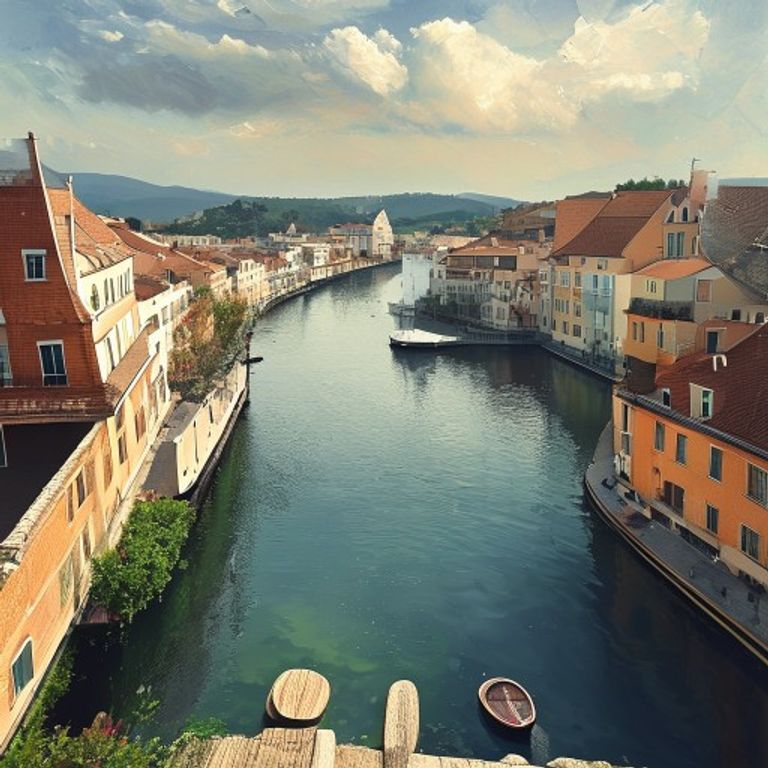
This municipality in the state of Rio Grande do Sul was home to the poet Mario Quintana, who lived in the iconic Hotel Majestic, and is the setting for the works of contemporary authors who narrate urban life and the cultural effervescence of the capital.
⚠️ Research elaborated with the aid of Deep Research is subject to referential ambiguity.
🖥️Clean HTML code using a proprietary tool.
👥 Research by Guilherme Felipe, Curation by Sílvio Lôbo
The Literary Landscape of Porto Alegre: An In-depth Essay
Porto Alegre, the capital of Rio Grande do Sul, transcends its role as an administrative and economic center to establish itself as one of Brazil's most vibrant cultural and literary hubs. With a rich history and a multifaceted identity, the city has been the birthplace and refuge of countless writers who, over centuries, have shaped Gaúcho and Brazilian literature, reflecting in their works the nuances of a peculiar culture, its struggles, and its beauties.
Roots and Beginnings: The 19th and Early 20th Centuries
The genesis of literature in Porto Alegre and Rio Grande do Sul is intrinsically linked to the formation of the Gaúcho identity, marked by border conflicts, pampa culture, and European influence. Although early literary production was often guided by a certain eclecticism and the importation of European models, the 19th century already saw the emergence of voices that began to pave the way for more authentic writing.
In this period, literature was still incipient and closely tied to journalism and chronicles. However, it is impossible to speak of the roots of Gaúcho literature without mentioning the figure of Simões Lopes Neto (1865-1916), from Pelotas, whose regionalist work — such as Contos Gauchescos and Lendas do Sul — became the backbone of the representation of the traditional Gaúcho and the pampa, exerting a lasting influence on authors based in Porto Alegre and beyond. His stories are a deep dive into the soul of the country folk and their traditions, establishing a canon for regionalism.
The first decades of the 20th century witnessed the consolidation of periodicals and magazines that would become important vehicles for the dissemination of literary production. The city, already a growing urban center, began to host a more organized intellectual life, preparing the ground for the great movements to come.
Modernism and the Post-45 Generations: The Consolidation of Great Names
The impact of Modernism, although late and with its own characteristics in the south, propelled an aesthetic and thematic renewal. The Revista do Globo (1929-1969), published in Porto Alegre, played a crucial role in disseminating not only local literature but also national and international trends, serving as a platform for various writers.
From the 1930s and 1940s onwards, Porto Alegre became the epicenter of literary production of the highest caliber, revealing authors who would become pillars of Brazilian literature:
- Érico Veríssimo (1905-1975): Although born in Cruz Alta, Veríssimo settled in Porto Alegre, where he developed most of his monumental work. With his trilogy O Tempo e o Vento, he not only narrated the historical formation of Rio Grande do Sul but also explored universal themes such as time, freedom, and the human condition. His chronicles of the city and novels like Clarissa and Música ao Longe reveal a deep social sensitivity and a keen eye for urban and rural life.
- Mário Quintana (1906-1994): Born in Alegrete, the "poet of simple things" made Porto Alegre his home, and the city became the muse and setting for much of his poetry. With accessible and profound language, Quintana explored the ephemerality of life, melancholy, and the charm of everyday life. His poetry, full of lyricism and subtle humor, reflects a unique sensibility that made him one of Brazil's most beloved poets.
- Dyonélio Machado (1895-1985): A physician and writer, Dyonélio Machado is one of the great names of Brazilian social realism. In works like Os Ratos, he dissected urban poverty and the anguish of the worker with impressive psychological depth, offering a raw and moving portrait of Porto Alegre in the first half of the 20th century.
- Cyro Martins (1908-1995): A psychiatrist and novelist from Quaraí, also based in the capital, he blended regionalism with psychological analysis in novels such as Semana de Rafael Martins and Um Pontinho de Luz, exploring the complexities of the Gaúcho soul and the social and political dilemmas of his time.
The post-45 generations consolidated this effervescence, with an even greater diversity of voices and approaches:
- Moacyr Scliar (1937-2011): Born and always based in Porto Alegre, Scliar is one of the great chroniclers of the city and of Jewish identity in Brazil. With an ironic style and peculiar fantastic realism, he explored themes such as immigration, memory, and the human condition in novels like O Centauro no Jardim and A Mulher que Escrevia à Máquina. His work is a mosaic of cosmopolitan Porto Alegre and its diverse cultural layers.
- Lya Luft (1938-2021): Born in Santa Cruz do Sul and based in Porto Alegre, Luft stood out for her introspective and existentialist prose. Her novels and essays, such as Perdas e Ganhos and As Parceiras, explore the complexities of human relationships, the search for meaning, and the fragility of existence with great emotional intensity and lucidity.
- Caio Fernando Abreu (1948-1996): One of the most iconic and influential Brazilian writers of his generation, born in Santiago and based in Porto Alegre. His work, permeated by urban themes, existential anguish, homosexuality, and the search for affection, captured the spirit of an era. Short stories like those in Morangos Mofados and novels like Onde Andará Dulce Veiga? are marked by lyrical, fragmented prose with great emotional impact.
- Luiz Antônio de Assis Brasil (1945-): A professor and writer from Porto Alegre, a master in constructing historical and psychological plots. His novels, such as Caminhos Cruzados and Concerto para Clarinete e Timbales, are examples of literary rigor and narrative skill, frequently revisiting Gaúcho history with a critical and inventive perspective.
- Sergio Faraco (1940-): From Alegrete and based in Porto Alegre, Faraco is a master of the short story, exploring from the regional to the universal with concise and impactful prose. His stories, published in collections like A Dama do Bar Nevada, are critically acclaimed.
Contemporary Effervescence
The literary scene in Porto Alegre remains vibrant, with new generations of writers engaging with the legacy of their predecessors while exploring new languages, themes, and formats. The city continues to be fertile ground for experimentation and diversity.
- Daniel Galera (1979-): One of the most prominent names in contemporary Brazilian literature, born in Porto Alegre. His work, which includes novels such as Barba Ensopada de Sangue and Meia-Noite e Vinte, explores urbanity, human relationships in the digital age, and existential crises with agile and insightful language.
- Michel Laub (1973-): Also from Porto Alegre, Laub stands out for his introspective prose that often addresses themes such as memory, Jewish identity, and the impact of historical events on individual lives, as in Diário da Queda and A Maçã Envenenada.
- Luísa Geisler (1991-): A young and talented author from Porto Alegre, she has gained prominence with short stories and novels that capture the voice and anxieties of contemporary youth, as in Contos de Mentira and Enfim, Fugimos.
- Jeferson Tenório (1977-): Born in Rio de Janeiro and based in Porto Alegre, Tenório brings issues of black identity, racism, and social inequality to the local literary scene, notably with the award-winning novel O Avesso da Pele, which has become a landmark in recent Brazilian literature.
- Carol Bensimon (1982-): From Porto Alegre, her works, such as Todos Nós Adorávamos Caubóis and O Clube dos Jardineiros de Fuji, are marked by elegant and melancholic prose, exploring travel, displacement, and the search for a place in the world.
These authors, among many others, demonstrate the vitality of the Porto Alegre literary scene, which remains connected to its roots while open to the transformations of the world.
Important Publications and Cultural Institutions
The solidity of Porto Alegre's literary scene is also due to a robust infrastructure of publications and cultural institutions:
- Periodicals and Literary Supplements: Newspapers such as Correio do Povo and Zero Hora have a long tradition of publishing chronicles and literary essays, serving as crucial spaces for the dissemination of local authors and cultural debate. The already mentioned Revista do Globo was a historical landmark.
- Publishing Houses: Porto Alegre is home to one of the country's most important publishing houses, L&PM Editores, fundamental in popularizing pocket books and publishing national and foreign authors. Other important publishers such as Artes e Ofícios, Libretos, and Dublinense also contribute to editorial diversity.
- Porto Alegre Book Fair: Held annually in Praça da Alfândega, it is one of the largest and oldest open-air book fairs in the Americas. It is one of the most important literary events in the country, attracting millions of visitors and promoting intense exchange between authors, readers, and publishers.
- Cultural Institutions: The Casa de Cultura Mario Quintana (former Hotel Majestic, where the poet lived), the Public Library of the State of Rio Grande do Sul, the Rio Grande do Sul Academy of Letters, and the State Institute of Books (IEL) are pillars that foster the production, research, and dissemination of literature in the city.
The Local Cultural Identity Reflected in Books
The literature produced in Porto Alegre and by its resident authors is a multifaceted mirror of the region's cultural identity. Several themes and characteristics recur:
- Urbanity and the City's Imaginary: Porto Alegre is not just a setting but a character in many works. The melancholy of the Guaíba, the parks, the streets, the climate, the cafes, and the atmosphere of the "city of winds" are explored by Quintana, Scliar, Caio Fernando Abreu, and Daniel Galera, creating a rich and affective literary cartography.
- Regionalism and Its Reinterpretations: Beyond the classic regionalism of Simões Lopes Neto, Porto Alegre literature reflects a reinterpretation of "being Gaúcho." Veríssimo, Cyro Martins, and others explore the complexity of this constantly changing identity, confronting tradition with modernity and urban influences.
- Immigration and Ethnic Diversity: The strong presence of European immigrants (Germans, Italians) and Jews in the formation of Rio Grande do Sul is a central theme. Scliar and Michel Laub, for example, address Jewish identity, the memory of the Holocaust, and the experience of diaspora, while other authors explore cultural tensions and integrations.
- Social and Political Critique: Many engaged authors have used literature to reflect on social injustices, the military dictatorship, and Brazil's political dilemmas. Dyonélio Machado is a classic example of social realism, while Jeferson Tenório's work exposes the scars of structural racism.
- Introspection and Existentialism: There is a strong current in Porto Alegre literature that delves into the human condition, existential anguish, affective relationships, and the search for meaning. Lya Luft and Caio Fernando Abreu are exponents of this line, exploring the depths of the soul with great sensitivity.
- Humor and Melancholy: A peculiar combination of intelligent humor and a certain existential melancholy permeates the work of several authors, such as Moacyr Scliar and Mário Quintana, creating a characteristic tone of local literature.
Conclusion
The literature of Porto Alegre is a testament to the cultural richness and complexity of a region that, although often perceived as "distant" from the country's major centers, has always produced works of national and international relevance. From the pioneers of regionalism to contemporary avant-garde writers, through the great masters of the novel and poetry, the city has solidified itself as a melting pot of talents and ideas.
The uniqueness of Porto Alegre literature lies in its ability to reconcile its roots in a specific cultural identity – the Gaúcho one – with the universality of human themes. Through the pages written in its cafes, parks, and homes, Porto Alegre continues to reveal itself as a literary city, a space of continuous creative flourishing that indelibly enriches the panorama of Brazilian culture.





