



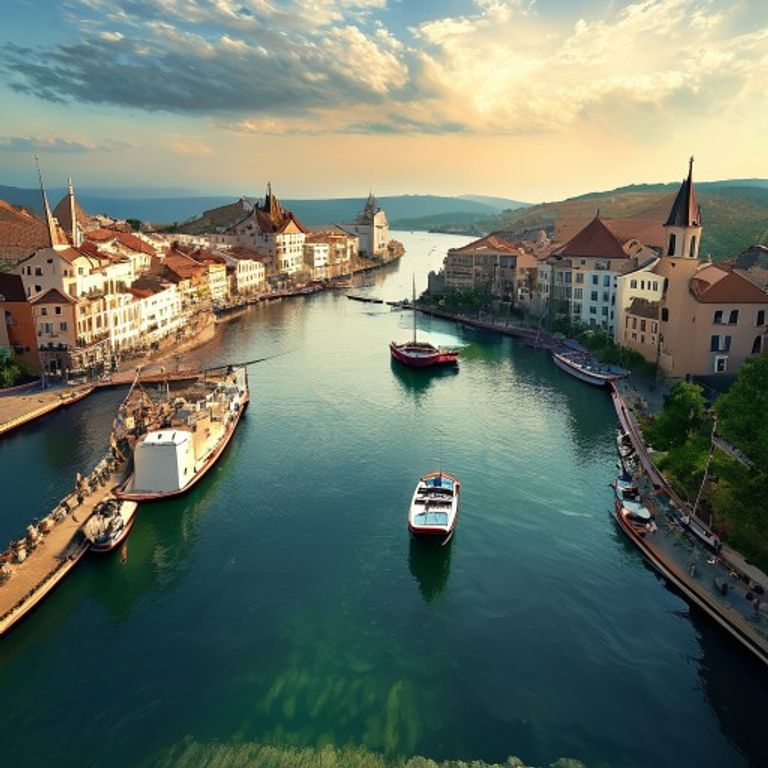
This municipality in the State of Acre holds fundamental literary and historical importance, being the main setting for the Acrean Revolution, a theme exhaustively portrayed in historical novels and essays on national sovereignty.
⚠️ Research conducted with the aid of Deep Research is subject to referential ambiguity.
🖥️Clean HTML code using a proprietary tool.
👥 Research by Guilherme Felipe, Curation by Sílvio Lôbo
Literature in Porto Acre: Voices from the Amazonian Frontier
Porto Acre, a municipality nestled in the heart of the Western Amazon and historically a crucial point of the Rubber Boom and the Acrean Revolution, presents a literary landscape that, while not boasting the canonical volume of major urban centers, is rich in potential and thematic resonance. The literature originating from or inspired by this region serves as a mirror to its complex cultural identity, forged at the confluence of peoples, in the struggle for land, and in deep symbiosis with the forest. As a critic and researcher, I aim to explore the literary veins that pulse in Porto Acre, focusing on its particularities, its voices, and the identity traits that emerge from its narratives.
Porto Acre: A Melting Pot of Histories and Identities
To understand the literature of Porto Acre, it is imperative to contextualize its historical and geographical genesis. The municipality, once a strategic outpost of the Bolivian Company and the stage for intense conflicts at the turn of the 19th to the 20th century, is a borderland. Its formation resulted from the miscegenation of indigenous peoples, Northeastern rubber tappers, Bolivians, and migrants from various parts of Brazil. This human melting pot, combined with the imposing presence of the Amazon rainforest, with its rivers, streams, and rich biodiversity, offers an inexhaustible narrative substrate. The literature of Porto Acre, or about Porto Acre, tends to delve into these elements: the epic of extraction, indigenous resistance, the drama of rubber tapping, and the search for identity in a constantly transforming territory.
Authors and Resonant Voices
Although Porto Acre does not have an extensive list of world-renowned authors born and based exclusively within its limits, it is crucial to recognize that Acrean literature as a whole encompasses and represents the municipality's experiences. Many of the great names in Acrean literature, even if originating from Rio Branco or other cities, dedicate themselves to themes that intrinsically permeate the reality of Porto Acre. Field research and the collection of oral narratives are crucial for unearthing local voices, often silenced by the absence of a robust publishing circuit.
We can cite, for example, how its themes align with figures such as:
- Maques-Reis: Although not from Porto Acre, his work, deeply rooted in the Amazon and Acre, frequently addresses the world of rubber tapping, the man-nature relationship, and social struggles, elements that are central to Porto Acre's identity. His short stories and novels capture the essence of life in the forest and the complexity of human relationships in the context of extraction.
- Tião Natureza (Sebastião Dantas da Silva): A popular poet and storyteller, he represents the authentic voice of the rubber tapper and the river dweller. His poetry, rich in orality, describes the daily life, beliefs, challenges, and beauty of Amazonian life, with a clear echo in the experiences of Porto Acre's residents.
It is important to highlight the prominence of oral literature and popular tales. In communities like those in Porto Acre, the transmission of stories from generation to generation – about Curupira, the Boto, the heroes of the Acrean Revolution, the legends of indigenous peoples – constitutes the basis of a rich literary tradition that predates the written word. These anonymous storytellers are the true pillars of a local literary imagination.
Literary Movements and Local Resonances
The literary trends that permeate Brazil also find their particularities in Porto Acre. Amazonian Regionalism is undoubtedly the movement that most aligns with its reality. Characterized by the exaltation of the landscape, the denunciation of social ills (exploitation, deforestation), and the valorization of local cultures (indigenous, rubber tapping), regionalism takes on a specific form in the context of Porto Acre. The prose and poetry that emerge from this environment often focus on:
- The Rubber Boom: Not just as a historical event, but as an epic of suffering, resistance, and the construction of a new society.
- The Environmental Issue: The forest is not merely a backdrop; it is an active character, a source of life, but also of dangers and a stage for conflicts.
- Border Identity: The tension between national cultures (Brazilian, Bolivian) and the search for a distinct identity, Acrean and Amazonian.
More recently, a socio-environmental literature has gained strength, reflecting the growing concern for the preservation of the Amazon and the rights of forest peoples. This type of literature, which directly dialogues with the experiences of Porto Acre, seeks to give voice to traditional communities and denounce the threats to the biome and culture.
Publications and the Dissemination of the Word
The absence of publishing houses or companies dedicated exclusively to Porto Acre is a notable challenge. However, local literature finds avenues of circulation through:
- Regional Periodicals: Newspapers and cultural magazines published in Rio Branco, the state capital, often provide space for short story writers, poets, and columnists from all over Acre, potentially including authors from Porto Acre.
- Anthologies and Collections: Publishing projects by institutions such as the Acrean Academy of Letters or local universities play a fundamental role in gathering and publishing emerging or established authors, offering an overview of the state's literary production.
- Independent and Digital Publications: With the advent of the internet, many authors seek digital platforms and self-publishing to promote their works, bypassing the barriers of the traditional publishing market.
- Cultural and Educational Projects: Schools and cultural centers in Porto Acre, through poetry contests, literary gatherings, and writing workshops, encourage local production and reading, serving as incubators for new talents.
The Cultural Identity of Porto Acre in Literature
The cultural identity of Porto Acre, reflected in its literature (or in the literature about it), is multifaceted and deeply rooted in its history and geography. Books, whether novels, short stories, poems, or ethnographic records, reveal the following pillars:
- The Resilience of the People: Literature portrays the adaptability and strength of rubber tappers, river dwellers, and indigenous people in the face of forest adversities and exploitation.
- The Complexity of the Border: Narratives that explore hybrid identity, influenced by Brazilian and Bolivian cultures, and the constant negotiation of boundaries and belonging.
- The Sacredness of Nature: The forest is more than a backdrop; it is a living being, a holder of spirits, legends, and ancestral knowledge, exerting a profound influence on local life and imagination.
- Historical Memory: The Acrean Revolution and the Rubber Boom are not just facts; they are the basis of a local mythology, retold in prose and verse, which shapes the perception of self and the world.
- The Plurality of Voices: The recognition that there is no single "voice of Porto Acre," but a chorus of diverse perspectives – from the indigenous, the migrant, the rubber tapper, the urban and rural resident – each contributing to the literary tapestry.
Conclusion: Untapped Potential
The literature of Porto Acre, whether written or oral, published or latent, is a testament to the region's cultural and historical richness. Although the names of authors exclusively from Porto Acre may not feature prominently in national anthologies, the municipality is a repository of narratives waiting to be discovered, recorded, and celebrated. The challenge lies in encouraging local production, creating platforms for visibility, and, above all, recognizing the intrinsic value of the stories that emanate from that piece of the Amazon, a laboratory of humanity where nature and culture intertwine inextricably. Continuous research and appreciation are essential for the voices of Porto Acre to resonate beyond its borders, enriching the panorama of Brazilian literature.





