



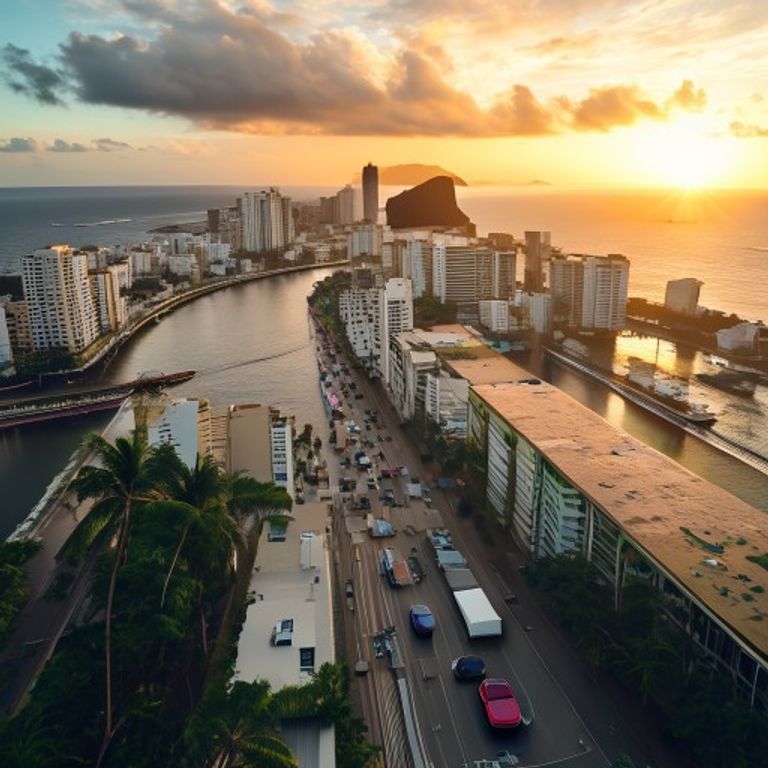
This municipality in the State of Sergipe is the land of Tobias Barreto, leader of the Recife School, and Santo Souza, one of the most important lyric poets in Sergipe literature of the 20th century.
⚠️ Research elaborated with the aid of Deep Research is subject to referential ambiguity.
🖥️Clean HTML code using a proprietary tool.
👥 Research by Guilherme Felipe, Curation by Sílvio Lôbo
The Blade and the Breeze: An Essay on Aracaju's Literature
Brazilian literature is a mosaic of voices, landscapes, and identities, where each region, however discreet it may seem on the national scene, holds a particular universe of sensibilities and narratives. Aracaju, the capital of Sergipe, nestled between the Sergipe River and the Atlantic, with its constant breeze and its relatively recent history as an urban center, has forged a literary production that, although sometimes overshadowed by larger centers, bears an indelible mark of its people and its place. Analyzing Aracaju's literature is to delve into a poetics of calm and introspection, but also of resistance and sharp social observation.
Historical Overview and Literary Movements in Sergipe
The genesis of literature in Aracaju, and in Sergipe more broadly, follows the sociocultural transformations of the state. In the 19th and early 20th centuries, production was predominantly influenced by Romanticism and Parnassianism, with lyric poetry and prose of customs setting the tone. Figures like Fausto Cardoso, although better known for his political and journalistic career, also ventured into poetry, expressing a romantic and civic idealism. Modernism arrived in Sergipe somewhat late and with adaptations, but no less impact. The Revista da Academia Sergipana de Letras, founded in 1929, and periodicals like "A Semana" were important vehicles for the dissemination of new ideas and forms. Authors like José Sampaio, with his regionalist prose, began to explore Sergipe's identity, moving away from European canons and turning their gaze to the local man and environment. The 1940s and 1950s witnessed an effervescence of new talents, many of them marked by the influence of the Generation of '45, which sought formal rigor and existential depth without abandoning regional themes. Contemporary Aracaju literature is multifaceted, embracing everything from experimental poetry to urban prose, everyday chronicles, and critical essays. The influence of universities and access to new media have contributed to the diversification of themes and styles, with authors who engage both with local tradition and global trends.
Key Authors: Voices of Aracaju
The list of authors born or based in Aracaju who have contributed to its literary richness is vast and significant. Among them, the following stand out: * José Sampaio (1888-1960): Considered one of the precursors of modern prose in Sergipe, his work, such as "Luzia-Homem" and "O Homem da Raia," explores regionalism, the landscapes of the sertão, and the psychological nuances of his characters, marking Sergipe literature with the authenticity of his land. * Mário Jorge da Fonseca (1927-1996): One of the greatest poets from Sergipe, his work is characterized by musicality, deep lyricism, and the ability to move between the colloquial and the erudite, revealing a sensitive gaze towards the human and everyday life. His book "Canto e Cor" is a landmark. * Francisco Dantas (1941-2016): A novelist, short story writer, and chronicler of great talent, Dantas explored in works like "Pé de Guerra" and "A Outra Noite" the complexities of human relationships, memory, and social conflicts, often set in a Sergipe that serves as a metaphor for the human condition. * Délio Menezes (1938-2022): A chronicler and short story writer, Délio captured the soul of Aracaju in his brief narratives, full of humor and sensitivity, which portray the city's daily life, its anonymous characters, and its peculiarities. * Núbia Marques (b. 1961): A contemporary poet and essayist, her work engages with memory, landscape, and the complexity of the feminine, with a dense and imagistic poetic language, present in books like "Os Nomes das Coisas." * Marcelino Freire (b. 1967): Although born in Pernambuco, Marcelino lived a significant part of his youth in Aracaju, and the city and its slang influenced the formation of his transgressive and visceral style, which would earn him the Jabuti Prize. His short prose is a notable example of literary "rootedness." * Maria Lígia Mello (b. 1955): A poet with a strong connection to the sea and local culture, her poetry is marked by engaging lyricism and a deep reflection on existence and identity.
Important Publications and Dissemination Channels
The vitality of a literary scene depends directly on its dissemination channels. In Aracaju, the following stand out: * Academia Sergipana de Letras (ASL): Founded in 1929, the ASL has been a pillar for the preservation and promotion of Sergipe literature, publishing its journal and encouraging new talents. * EDISE (Editora Diário Oficial de Sergipe): Although it is an official publisher, EDISE plays a crucial role in publishing works by Sergipe authors, including literature, history, and essays, making a significant part of the local intellectual production accessible. * Newspapers and Literary Magazines: Historical periodicals like "A Semana," "Sergipe Jornal," and more recent cultural supplements of newspapers like "Correio de Sergipe" and "Cinco Minutos," or independent magazines like "Margens," have been vital spaces for the dissemination of poetry, short stories, and criticism. * Small Independent Publishers: In recent years, the emergence of independent publishers has expanded publication opportunities for emerging authors and for the dissemination of less commercial genres. * Literary Events and Fairs: The Sergipe Book Fair and other occasional events contribute to the visibility of authors and their interaction with the public.
Local Cultural Identity Reflected in Books
Aracaju's literature is a multifaceted mirror of Sergipe's identity, revealing: * The City and Its Landscape: Aracaju, with its mangroves, the Sergipe River, its urban beaches, and planned architecture, emerges as a character in itself. The constant breeze, the sunlight, the apparent calm of the capital influence the tone of many works, giving them an air of introspection and contemplation. The contrast between urbanity and nature is always present. * The Sergipe Man: The books reflect the resilience, subtle humor, religiosity, and orality of the Sergipe people. There is an appreciation for memory and nostalgia, often expressed in chronicles that recall the past and traditions. * The Sertão and the Seashore: Although Aracaju is coastal, the imaginary of the Sergipe sertão, with its droughts and archetypal figures (cangaceiros, beatos, vaqueiros), resonates in the literature, either as a backdrop or as a contrast to urban life. The tension between the interior and the coast is a constant. * Conflicts and Memories: Aracaju's literature also addresses the scars of history, social conflicts, struggles for justice, and the search for a place in the world. Affective and historical memory is fertile ground for creation, exploring the transformations of the city and the state over time. * Mysticism and Folklore: Elements of Sergipe folklore, urban and rural legends, and a certain popular mysticism permeate the poetry and prose, enriching the narrative and poetic fabric with the colors and sounds of local culture.
Conclusion
Aracaju's literature, therefore, is a silent yet potent force that manifests itself in the delicacy of poetry that captures the essence of the sea breeze, in the acidity of a chronicle that dissects urban daily life, or in the density of a novel that explores the depths of the Sergipe soul. It does not shout, but whispers and reveals itself to those who are willing to listen, offering an authentic and unmistakable perspective on life in the Brazilian Northeast. It is an invitation to discover a literary universe that, in its peculiarity, enriches Brazil's cultural heritage.





