



⚠️ Research conducted with the aid of Deep Research may be subject to referential ambiguity.
🖥️Clean HTML code using a proprietary tool.
👥 Research by Guilherme Felipe, Curation by Sílvio Lôbo
Chicken Reproduction: Natural vs. Incubators
Chicken reproduction is a fascinating process, whether it occurs naturally or is assisted by technology such as incubators. Both methodologies aim for the same goal: the generation of new chicks. However, they present significant differences in terms of control, efficiency, and management.
Natural Reproduction
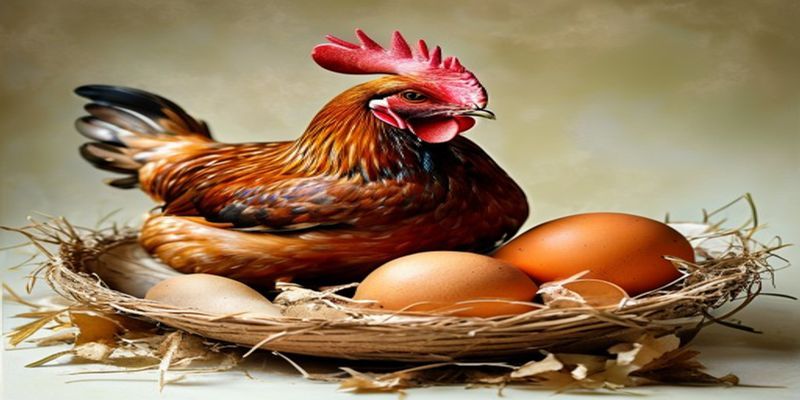
In natural reproduction, the reproductive cycle is entirely driven by the hen and the rooster. The process begins with mating, where the rooster fertilizes the hen's eggs. After fertilization, the hen lays the eggs. If the hen is of a laying breed, the laying frequency will be high, but not all eggs will be fertile if a rooster is not present. If there is a rooster, and the hen feels safe and has her brooding instinct activated, she will begin to incubate the eggs.
The natural incubation period lasts approximately 21 days. During this time, the hen remains on the eggs, keeping them warm at an ideal temperature (around 37.5°C) and turning them regularly to ensure the embryo's homogeneous development. Maintaining humidity and protecting against predators and climate variations are also the hen's responsibilities. At the end of the period, the chicks hatch, and the hen assumes the role of mother, protecting and feeding the newborn offspring.
Advantages of natural reproduction:
- Lower initial cost, no investment in equipment required.
- The mother hen provides post-hatching care, such as protection and guidance.
- May be more suitable for small-scale farming or for those seeking a more traditional management approach.
Disadvantages of natural reproduction:
- Generally lower hatching rate due to environmental factors, predation, and the hen's inexperience.
- Less control over the incubation environment, which can lead to losses.
- Dependence on the hen's brooding instinct, which does not always manifest.
- The brooding hen stops laying eggs during the incubation period.
Incubator Reproduction (Artificial Incubation)
Incubator reproduction, also known as artificial incubation, uses equipment to simulate the ideal incubation conditions that the hen would naturally provide. The incubator allows for precise control of temperature (maintained around 37.5°C), humidity, and, in more advanced models, even ventilation.
Fertile eggs are placed in the incubator, and the artificial incubation process also lasts about 21 days. In many incubators, there is an automatic egg turning mechanism that replaces the hen's role of manually turning the eggs. This turning is crucial to prevent the embryo from sticking to the shell and to ensure uniform development.
After hatching, the chicks are removed from the incubator and need to be carefully raised by humans, using artificial heating (heating lamps) and specific chick feed. The incubator, therefore, focuses solely on the incubation and hatching phase.
Advantages of incubator reproduction:
- Higher hatching rate due to strict control of environmental conditions.
- Possibility of incubating a large number of eggs simultaneously.
- Independence from the hens' brooding instinct.
- Allows for the recovery of eggs from hens that do not brood.
- Lower risk of disease transmission, as eggs and chicks do not come into direct contact with the hen.
Disadvantages of incubator reproduction:
- Initial cost of purchasing and maintaining the equipment.
- Need for technical knowledge to operate the incubator and care for newly hatched chicks.
- Absence of the hen's maternal instinct, requiring intensive human care for the chicks.
- Electricity consumption.
In summary, while natural reproduction offers a more organic and less equipment-costly method, the incubator provides superior control, resulting in greater hatching efficiency and enabling large-scale breeding. The choice between one method and the other will depend on the breeder's objectives, the size of the flock, and the available resources.





