




Source of this image: G1
03/15/2011 - The official death toll surpasses 3,300, but authorities estimate it could exceed 10,000.
03/15/2011 - The damage to reactor 1 was 70%, and to reactor 2, 33%. The reactor cores appear to have partially melted after the loss of cooling functions, which occurred on Friday following the magnitude 9 earthquake followed by a tsunami that hit the coast. (G1)
On February 6, 2011, silviolobo.com.br discussed Tsunami (津波) referring to the event of 12/26/2004, and again, in 2011, history repeats itself.
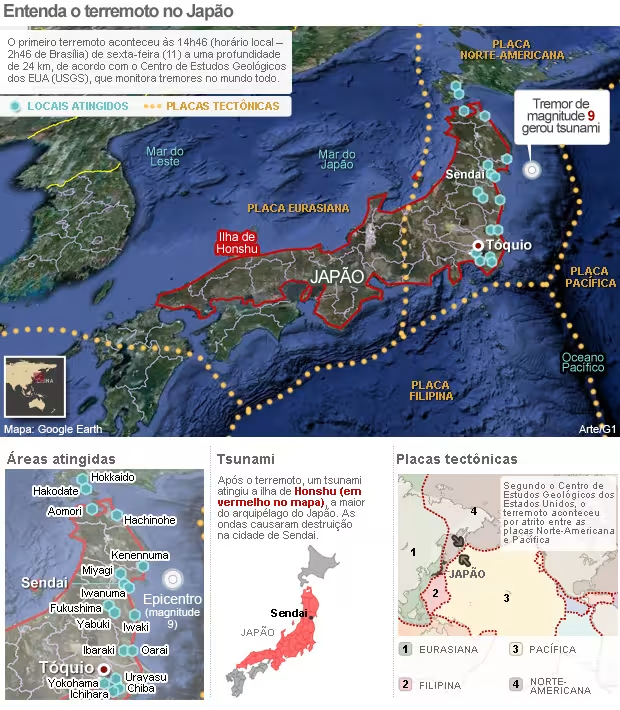
At 2:46 PM (local time; 12:46 AM in Brasília) on this Friday (03/11/2011), an 8.9 magnitude earthquake struck the Japanese archipelago. It was the strongest earthquake recorded in Japan and the seventh in world history. (G1)
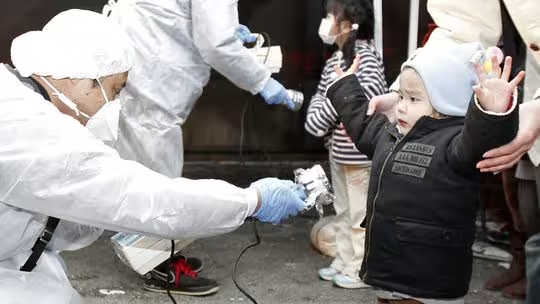
The explosion that occurred yesterday at the Fukushima I nuclear power plant was the worst since Chernobyl. The accident caused by Friday's earthquake forced about 140,000 people living in the region, 240 kilometers northeast of Tokyo, to abandon their homes due to radioactive pollution. The explosion was classified yesterday as level 4 on the International Nuclear Event Scale by the Japanese Nuclear and Industrial Safety Agency. The severity of the accident was just below the Three Mile Island explosion in 1979 and far from the Chernobyl accident in 1986 in the former USSR, which was classified as level 7, the maximum on the scale. Although the Japanese government declares the incident is under control, the international community is keeping a close eye on the plant. The European Commission has convened a meeting on the nuclear industry for the week. In other words, the fear of nuclear power has returned. (publico.pt)
"What's important is to know where the explosion was," Paddy Regan, a nuclear physicist at the University of Surrey, England, told Reuters yesterday morning. "It's not clear what exploded. The big problem is if the reactor's pressure vessel [where the nuclear fuel is] exploded, but it doesn't seem to be what blew up." (publico.pt)





