



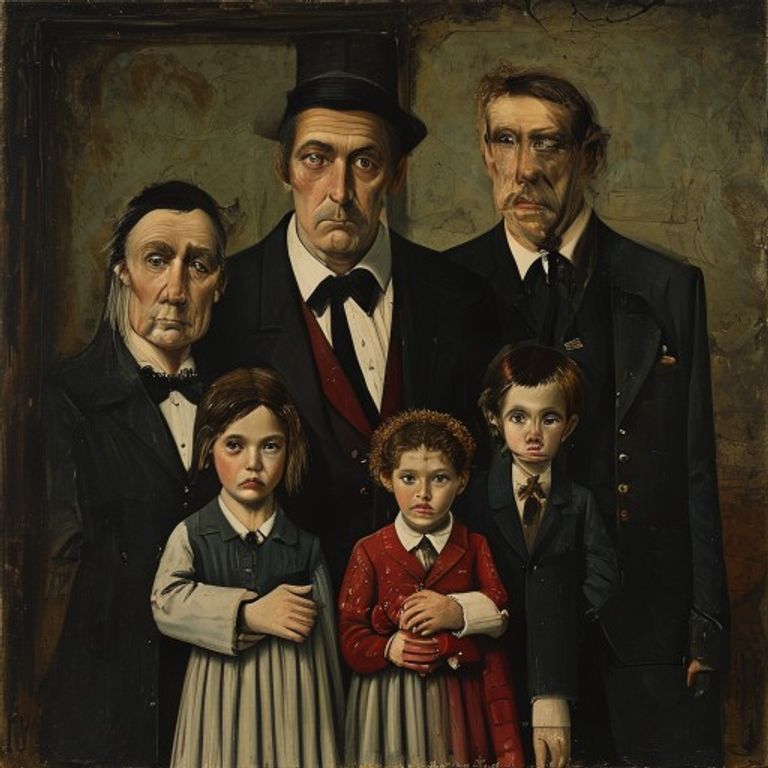
A crime in Japan in the year 2000 where the killer murdered four people and remained in the house for hours, using the computer, eating ice cream, and leaving countless genetic clues, but was never identified.
⚠️ Research conducted with the aid of Deep Research is subject to referential ambiguity.
🖥️ Clean HTML code using a proprietary tool.
👥 Research by Guilherme Felipe, Curation by Sílvio Lôbo
The Bloody Enigma of Setagaya: A Family Murder That Steals the Truth
On a winter night that became synonymous with horror in Japan's criminal history, the tranquility of a Tokyo suburb was brutally shattered. The Setagaya Family Murder Case, which occurred on December 30, 2000, transcended mere crime to become one of the country's most disturbing unsolved mysteries, a nightmare that has haunted authorities and the public imagination for over two decades.
The Context and the Incident: The Night Time Stood Still
The story unfolds in the Setagaya district of Tokyo, a quiet and affluent residential neighborhood. On that fateful night, Miyako Seta, 41, her husband Tatsuya, 44, and their two young children, Yuzuki (6) and Kotaro (4), were brutally murdered in their home. The crime, shocking in its violence and the apparent lack of a clear motive, was only discovered the following morning, December 31, 2000, when Miyako's mother, concerned by the lack of contact, went to the house and found the gruesome scene.
The police were called and, upon entering the residence, encountered a scene of indescribable horror. The victims suffered multiple stab wounds and strangulation. The house had been ransacked, indicating a possible robbery, but most valuables, including cash and jewelry, remained untouched. This contradiction became one of the first major enigmas of the case.
Timeline of Events: Fragments of a Tragedy
The chronological reconstruction of the events leading to the tragedy is crucial for understanding the case, although many gaps remain:
- December 30, 2000, early evening: The Seta family is last seen alive by neighbors. Reports indicate the couple and their children were at home, possibly preparing for New Year's festivities.
- December 30, 2000, night (estimated): The attack occurs. The lack of signs of forced entry suggests the killer may have been known to the family or entered the house stealthily. The exact time of the crime is uncertain, but forensic experts estimate it occurred between late afternoon and early evening.
- December 31, 2000, morning: Miyako Seta's mother arrives at the residence and discovers the bodies. Police are called.
- December 31, 2000, throughout the day: Police investigation begins. The crime scene is cordoned off and experts begin their work. Evidence is collected, including DNA traces and footprints.
- January 2001 and subsequent years: Police conduct a vast investigation, interviewing hundreds of people, analyzing thousands of pieces of evidence, and issuing public appeals. Several leads are followed, but none lead to a concrete suspect.
Main Theories: A Mosaic of Hypotheses
Over the years, several theories have emerged to try to unravel the mystery, each with its own logic and, often, significant flaws:
Police and Scientific Theories (the most likely, according to the investigation):
- Robbery gone wrong: This is the police's initial hypothesis. The house was ransacked, but the failure to steal valuables is a contradictory point. Could the killer have been interrupted or taken only something of non-obvious value?
- Personal Motive/Revenge: The possibility of an attack directed at a specific member of the family, with the others being collateral victims, is a strong line of investigation. The husband, Tatsuya Seta, was an up-and-coming executive, which could have generated enemies. The wife, Miyako Seta, could also have had disagreements.
- Crime of Passion: Although less likely given the brutality and the apparent lack of an obvious emotional connection, the possibility of a crime of passion, perhaps involving a hidden relationship, was not entirely ruled out in the initial phases.
- Opportunistic Criminal: An individual who happened to be at the residence, perhaps with the initial intention of robbery, and found themselves forced to commit the murders to eliminate witnesses.
Alternative and Conspiracy Theories:
- Gang/Yakuza Involvement: The cruelty of the crime and the meticulous execution led some to speculate about the involvement of criminal organizations. However, there is no concrete evidence to support this theory.
- Unknown Serial Killer: The possibility of an unknown serial killer, who could have acted in other locations without being detected, was also considered. However, the lack of other crimes with similar characteristics makes this hypothesis difficult.
- Government/Secret Conspiracy: More extreme theories suggest the involvement of government bodies or secret agencies, perhaps related to Tatsuya Seta's profession or some unknown activity of the family. These are, obviously, speculations without any factual basis.
Paranormal Theories (without scientific basis):
- Supernatural Influence: In some reports and online discussions, mentions of inexplicable phenomena or a "curse" on the residence arise. These ideas lack any empirical foundation.
Controversies and Blind Spots: The Cracks in the Investigation
The investigation, despite its efforts, was not free of controversies and flaws that fuel the mystery:
- Contradictory Evidence: The ransacking of the house suggesting robbery, contrasting with the abundance of valuables left behind, is one of the most glaring blind spots.
- DNA and Footprints: Several DNA traces and footprints were found at the crime scene, but none matched known individuals or were able to lead to a definitive suspect. The origin and significance of some of these traces remain ambiguous.
- Absence of Direct Witnesses: The fact that the crime occurred in a private residence, during the night, drastically limited the number of eyewitnesses. Neighbors could only report general sounds or movements, without crucial details.
- Disappearance of Potential Clues: Over the years, rumors have surfaced that some important evidence may have been mishandled or even disappeared from police files, although this has never been officially confirmed.
- Interviews and Reports: Analysis of official reports (when available to the public) and interviews given by investigators reveals a constant struggle to reconcile the few pieces of a complex and tragic puzzle.
Curiosities and Legacy: A Ghost in Japanese Memory
The Setagaya Family Murder Case left an indelible mark on Japanese culture:
- Impact on Public Safety: The crime deeply shook the sense of security in Japan, a country known for its low crime rate. The idea of such a brutal killer acting in a quiet residential neighborhood generated widespread apprehension.
- Media and Fiction: The case has inspired countless documentaries, articles, books, and even works of fiction, which attempt to retell and reinterpret the events, fueling public discussion and the search for answers.
- Current Status: The case remains officially unsolved. The Japanese police maintain an open line of communication to receive new information, and the statute of limitations for the crime was extended due to its severity. However, hopes for a resolution diminish with each passing year, leaving the Seta family and the truth about what happened on that cold December night in 2000 immersed in a veil of perpetual mystery.
The Setagaya Enigma remains a grim reminder that, even in the safest societies, darkness can hide in the shadows, challenging our understanding and haunting us with the persistent question: who was responsible for silencing an entire family forever?





