



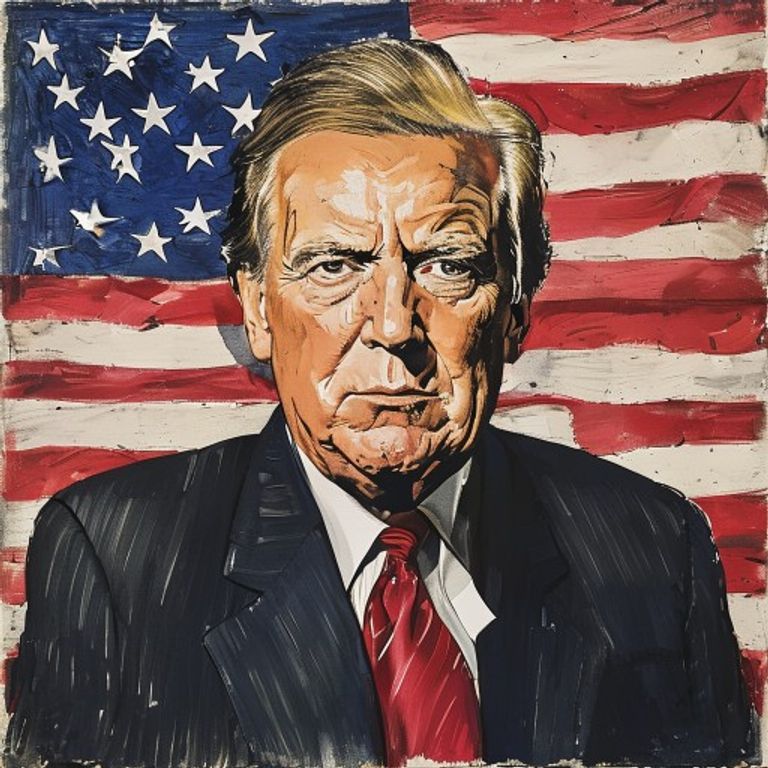
The 1972 break-in at the Democratic National Committee headquarters that revealed a network of power abuses and led to the only resignation of a president in United States history.
⚠️ Research conducted with the aid of Deep Research is subject to referential ambiguity.
🖥️ Clean HTML code using a proprietary tool.
👥 Research by Guilherme Felipe, Curation by Sílvio Lôbo
The Watergate Scandal: The Shadow That Toppled a President
On June 17, 1972, a seemingly trivial event erupted in American history: the break-in at the Democratic National Committee headquarters in the Watergate building in Washington D.C. What appeared to be a simple burglary for political espionage purposes quickly unfolded into one of the greatest presidential scandals in United States history, culminating in the resignation of a president and leaving a trail of distrust and questions that echo to this day.
1. The Context and the Incident: Where, When, and How the Mystery Began
The incident occurred during President Richard Nixon's reelection campaign, at a time of intense political polarization. The Democratic Party was based in the Watergate office complex, a strategic location for gathering information. Five men were arrested while attempting to install wiretaps and photograph confidential documents. Initially, the government itself tried to downplay the event, classifying it as a "third-rate burglary." However, the persistence of some journalists and the subsequent investigation would reveal that the operation had much deeper roots, reaching directly into the White House.
2. Timeline of Events: A Chronological Reconstruction
- June 17, 1972: Five men are arrested inside the Democratic National Committee headquarters at the Watergate complex.
- August 1972: The press begins to link the break-in to figures close to President Nixon.
- January 1973: The trial of the burglars begins, and they soon start cooperating with authorities.
- March 1973: Former Attorney General John Mitchell is indicted.
- April 1973: President Richard Nixon announces the resignation of his top aides, including H.R. Haldeman and John Ehrlichman.
- July 1973: The existence of a secret recording system in the White House is revealed.
- August 1974: The House Judiciary Committee votes to impeach Richard Nixon.
- August 8, 1974: Richard Nixon announces his resignation.
- August 9, 1974: Vice President Gerald Ford assumes the presidency and, days later, grants a pardon to Nixon.
3. The Main Theories
Although the basic facts of the scandal are well-documented by official reports and testimonies, some nuances and motivations remain subject to interpretation. Theories range from more direct explanations to more elaborate conjectures:
- Official Theory (High-Level Conspiracy): The dominant theory, widely supported by evidence and confessions, is that the break-in was part of a larger operation orchestrated by individuals linked to Nixon's reelection campaign, with the goal of obtaining information and harming his political opponents. The attempt to cover up the White House's involvement and the obstruction of justice were the crucial points that led to the president's downfall. This theory is solidified by the testimonies of figures such as John Dean, a former White House counsel, and by the famous transcript of the tapes that reveal Nixon's participation.
- External Influence Theories (Speculation): Some speculation suggests that foreign intelligence agencies could have played a role or had influence, perhaps by exploiting internal vulnerabilities. However, there is no concrete evidence to support this hypothesis in official reports. The investigation focused firmly on Nixon's political machine.
- Broader Conspiracy Theories (Paranoia and Secret Engagement): More elaborate conspiracy theories include the idea that the break-in was a "diversion" to cover up more serious crimes committed by the government, or that the operation had even more secret objectives related to undisclosed intelligence operations. The complexity of the cover-up web and the number of individuals involved fuel these theories, although they lack verifiable proof. The secret nature of some government activities at the time, such as CIA operations, may have served as fertile ground for these conjectures.
4. Controversies and Blind Spots
Despite the extensive investigation and subsequent trials, some areas remain murky:
- The Extent of Presidential Involvement: Although the tapes and testimonies incriminated Nixon in the obstruction of justice and the initial approval of the operation, the exact extent of his participation in the planning and prior knowledge of the break-in details remains a point of debate for some historians.
- Ignored Leads and Lost Evidence: Investigative reports indicate that some lines of inquiry may have been weakened by political pressure, and the loss or destruction of some evidence (such as specific tapes that were deliberately erased or damaged) raises questions about what else could have been discovered.
- The Role of Third Parties: The possibility of the involvement of other individuals or groups, beyond those directly linked to the campaign and the White House, was never completely ruled out, although official investigations focused on unraveling the internal conspiracy.
5. Trivia and Legacy
The Watergate scandal had a profound cultural impact, shaping public perception of politics and the press. The term "Watergate" became synonymous with political scandal and corruption.
- Legacy in the Media: The investigative work of journalists Bob Woodward and Carl Bernstein of The Washington Post, guided by an anonymous source known as "Deep Throat" (later revealed to be W. Mark Felt, associate director of the FBI), demonstrated the power of the press to hold the executive branch accountable.
- Impact on Public Trust: The scandal eroded public trust in government institutions and the presidential office, leading to campaign finance reforms and greater scrutiny of government actions.
- Current Status: The Watergate case was legally closed with Nixon's resignation and the subsequent trials. However, its echoes persist in historical debates and in new revelations from declassified files that continue to shed light on the intricacies of power and conspiracy. The case was never "reopened" in a legal sense, but it continues to be a subject of study and analysis, with new perspectives emerging as more information becomes accessible.
The Watergate case serves as a perpetual reminder of the dangers of concentrated power without proper oversight and the importance of the truth, however uncomfortable it may be.





