



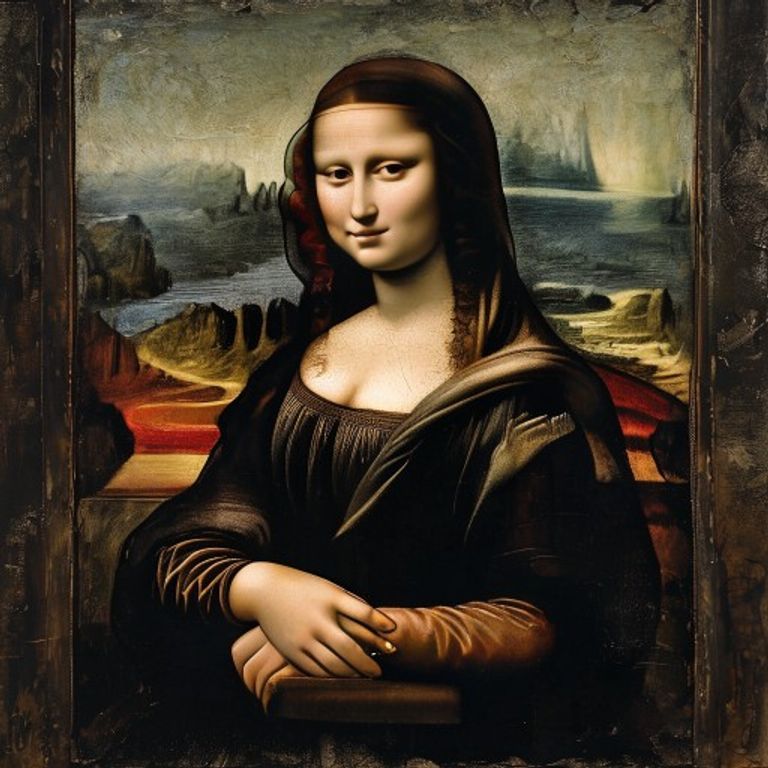
The 1911 theft of Da Vinci's masterpiece from the Louvre Museum by an Italian employee, an event that turned the painting into the most famous and recognized in the world.
⚠️ Research conducted with the aid of Deep Research is subject to referential ambiguity.
🖥️ Clean HTML code using a proprietary tool.
👥 Research by Guilherme Felipe, Curation by Sílvio Lôbo
The Theft of the Mona Lisa: An Enigma That Defies Time
The Mona Lisa, the enigmatic smile that has captivated the world for centuries, hides within its own history one of the most fascinating and enduring mysteries in art history: its own theft. On August 21, 1911, the jewel of the Louvre Museum in Paris vanished without a trace, plunging France and the world into perplexity and triggering an investigation that would become legendary.
1. The Context and the Incident: An Impossible Theft
On the morning of a Tuesday that promised to be like any other, Louis Béroud, a painter who frequented the Louvre to copy Leonardo da Vinci's masterpiece, found the pedestal empty. Initially, it was thought to be an administrative oversight; perhaps the canvas had been taken for restoration or cleaning work. However, as the hours passed and no official explanation emerged, panic began to set in. The painting, one of the most valuable and guarded treasures in the world, had simply evaporated.
The Louvre, one of the largest museums in the world, was considered a bastion of security. The idea that the most famous work in its collection could be stolen with such ease was, to many, inconceivable. The theft not only shocked the public but also exposed the security vulnerabilities of world-renowned cultural institutions.
2. Timeline of Events: An Enigma in Motion
- August 21, 1911, morning: Louis Béroud discovers the absence of the Mona Lisa from its pedestal in the Salon Carré of the Louvre.
- August 21, 1911, afternoon: News of the theft spreads. The French police begin the investigation, isolating the museum and questioning employees.
- August 22, 1911: The Louvre is closed to the public. The international press covers the case with frenzy. Suspects are interrogated, including poet Guillaume Apollinaire and painter Pablo Picasso, who were briefly detained and questioned for having employed a former Louvre worker who had previously stolen Iberian statuettes. Both were released without charges.
- September 1911: The official investigation focuses on museum employees and art theft rings. Leads prove scarce.
- 1913: The thief sends letters to Italy, announcing his plan to return the painting to its country of origin.
- December 1913: The Mona Lisa is recovered in Florence at the home of an art dealer named Alfredo Geri, who was contacted by Vincenzo Peruggia, the confessed perpetrator of the theft.
- January 1914: Vincenzo Peruggia is tried and convicted in Italy. His sentence is light, reflecting public sympathy for his act, seen by many as a patriotic gesture.
- January 1914: The Mona Lisa returns triumphantly to the Louvre.
3. Main Theories: Unraveling the Mystery
The recovery of the canvas after two years of disappearance did not end the debate. Several theories emerged, ranging from the pragmatic to the fantastic.
Police and Scientific Theories (Most Likely)
- The Disgruntled Employee Theory (Vincenzo Peruggia): This is the official and most widely accepted theory. Vincenzo Peruggia, an Italian worker who had collaborated on installing protective glass for the Mona Lisa, hid in the museum on the night of August 20, wearing a white smock like one of the employees. The next morning, he took advantage of the guards' distraction, removed the painting from the wall, took it out of its frame, and hid it under his smock. The simplicity of the method and the lack of sophistication in the execution support this hypothesis. Peruggia claimed to have acted out of patriotism, believing the painting should return to Italy, the homeland of Leonardo da Vinci.
Alternative and Conspiracy Theories
- The Professional Thief / International Theft Ring: This theory suggests that Peruggia was merely a scapegoat, or a low-level executor in a larger scheme orchestrated by more sophisticated art thieves or private collectors. The ease with which the painting was removed raises suspicions that someone with inside knowledge or a network of contacts could have facilitated the theft. Police reports of the time considered this possibility, but the recovery of the work with Peruggia diminished the momentum of this line of investigation.
- The Fake Theft to Increase Value: A bolder hypothesis suggests that the theft may have been orchestrated to increase the value and fame of the Mona Lisa. The disappearance catapulted the work into the global spotlight, transforming it from a renowned work of art into a global icon. The generated publicity would have, paradoxically, made the painting much more valuable and recognizable than it was before the theft.
- The Involvement of Powerful Figures: Rumors circulated at the time about the possible involvement of influential figures, including the aristocracy or even individuals linked to French intelligence, who might have planned the theft for political or financial reasons, using Peruggia as a pawn. These theories lack concrete evidence and remain in the realm of speculation.
- Theft for Personal or Psychological Reasons: Some less formal speculations suggest that the theft may have been motivated by a personal obsession with the work, or by complex psychological motives of the thief that went beyond simple financial gain or patriotism.
Paranormal or Supernatural Theories (Marginal)
Although there is no concrete evidence to support such claims, in informal discussions and conspiracy theory niches, the disappearance and reappearance of the Mona Lisa are sometimes associated with inexplicable events or occult forces. However, these hypotheses lack any factual or scientific basis and are widely dismissed by common sense and rigorous investigation.
4. Controversies and Blind Spots: Ignored Clues?
The official investigation, while leading to the recovery of the work, was not without controversy and blind spots:
- The Lack of Effective Tracking: The absence of a modern alarm system and the relative ease with which an individual could remain inside the museum after closing raise questions about the effectiveness of security at the time.
- Conflicting Testimonies: Reports from employees and visitors on the day of the theft presented some inconsistencies, which is common in complex investigations but made the exact reconstruction of events difficult.
- The Role of Other Suspects: The brief detention of Apollinaire and Picasso, although without charges, suggests that the police considered the possibility of broader involvement, but the investigation did not move in that direction convincingly.
- The Fate of Evidence: As in many historical cases, complete documentation and the tracking of all physical evidence may have been incomplete or lost over time, hindering further analysis.
- The Speed of Recovery in Florence: The way Peruggia was discovered and how the painting was recovered in Florence, after a period of silence, still generates questions. Some wonder if there was some form of orchestrated "handover" or if police surveillance was less rigorous than it should have been.
5. Curiosities and Legacy: The Smile That Captivated the World
The theft of the Mona Lisa, paradoxically, transformed the painting into the global icon we know today. Before the theft, it was an important work, but its status as a global celebrity is, in large part, a direct legacy of the incident.
- The "Mona Lisa Effect": The disappearance of the painting generated an unprecedented wave of public interest. People went to the Louvre just to see the empty space, and newspapers published daily extra editions about the case.
- Cultural Influence: The theft inspired countless books, films, articles, and discussions, solidifying the case as a milestone in the history of crime and art.
- Current Status: The Mona Lisa theft case is considered resolved regarding the recovery of the work and the identification of the material author. Vincenzo Peruggia served his sentence and the painting returned home. However, the nuances and possible omissions in the official investigation continue to fuel the debate and the mystery surrounding the world's most famous smile. The case has not been officially reopened, but it remains an invitation to reflect on the secrets that history sometimes prefers to keep veiled.





