



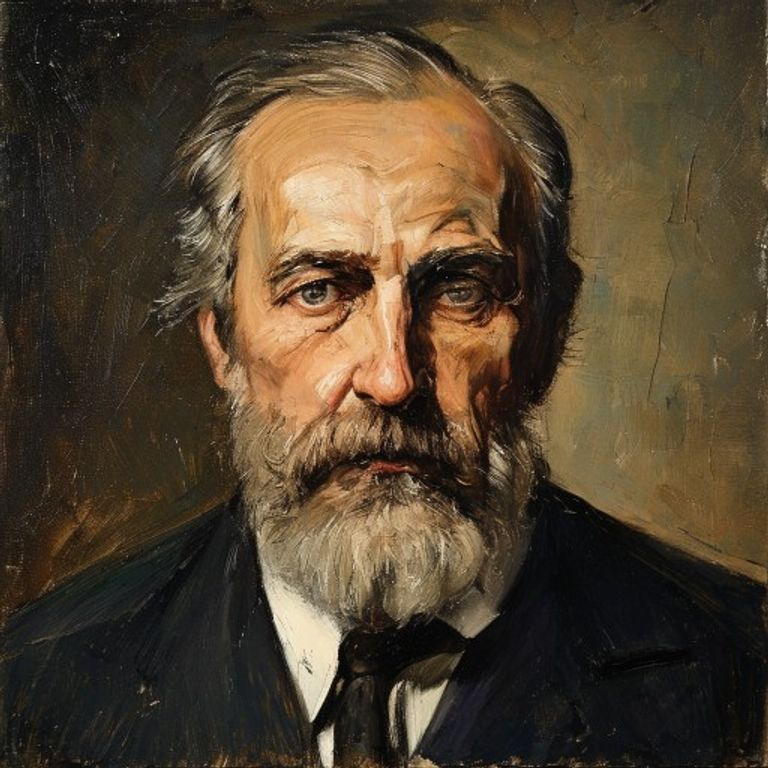
The Brazilian journalist who died under torture in 1975; the dictatorship attempted to stage a suicide, but the photo of the scene became the greatest symbol of resistance and truth.
⚠️ Research conducted with the aid of Deep Research is subject to referential ambiguity.
🖥️ Clean HTML code using a proprietary tool.
👥 Research by Guilherme Felipe, Curation by Sílvio Lôbo
The Vladimir Herzog Case: The Mystery in the Interrogation Room
The Vladimir Herzog Case is not only one of the most emblematic and painful chapters in Brazil's recent history, but also an enigma that, decades later, continues to challenge certainties and the very notion of justice. What the official version points to as suicide, collective memory and rigorous analysis of the facts insist on questioning, painting a picture of mystery, repression, and, quite possibly, murder.
The Context and the Incident: Where, When, and How the Mystery Began
The story unfolds in São Paulo, in the turbulent year of 1975. Brazil was living under the aegis of the Military Dictatorship, a period of intense censorship, political persecution, and the systematic use of torture as a tool of the State. In this dark scenario, Vladimir Herzog, a journalist and director of journalism at TV Tupi, a respected intellectual and critic of the regime, was summoned to testify at the Department of Political and Social Order (DOPS), the feared political police of São Paulo.
The summons itself was already a warning sign. The DOPS was known for its interrogations that frequently descended into physical and psychological violence. Herzog, a man of principles and firm convictions, appeared voluntarily on the morning of October 25, 1975. What happened in the following hours, inside interrogation room 5 of the DOPS, remains the core of the mystery.
On the afternoon of the same day, around 5:00 PM, the body of Vladimir Herzog was found lifeless in his cell. The official version, presented quickly and conclusively by military authorities, was suicide. The journalist had allegedly hanged himself with a piece of his own belt. The news shocked the country, and cracks in this version quickly began to appear.
Timeline of Events: A Chronological Reconstruction
- October 25, 1975, morning: Vladimir Herzog appears voluntarily at the DOPS in São Paulo in response to a summons.
- October 25, 1975, afternoon: The body of Vladimir Herzog is found in his cell. The official suicide version is released.
- October 26, 1975: The body of Vladimir Herzog is waked and buried at the Israelite Cemetery of Embu. Public commotion is immense.
- October 27, 1975: The newspaper O Estado de S. Paulo publishes an iconic article, showing the closed coffin and the headline "Herzog dies at DOPS".
- November 1975: The Brazilian Bar Association (OAB) and the Inter American Press Association (IAPA) begin independent investigations into the case.
- 1978: The National Truth Commission, in its report, points out that Vladimir Herzog was tortured and killed by State agents.
- Subsequent years: Various investigative commissions, forensic reports, and testimonies reinforce the murder thesis, but the case remains technically filed as suicide.
- 2012: The National Truth Commission (CNV) is created, and in its final 2014 report, it reaffirms the conclusion that Vladimir Herzog was a victim of torture and death attributable to the State.
Main Theories: Possible Explanations
Although the official version insists on suicide, the evidence and testimonies lead to a range of theories, each with its own logic and level of acceptance.
Official Theory: Suicide
Logic: The version presented by authorities at the time. It was argued that Vladimir Herzog, under psychological pressure and fear of being subjected to more severe torture, had opted for his own death. The existence of a belt found near the body was used as proof of the act's execution.
Criticism: This theory is widely contested. The conditions of the cell, the rapid release of the official version, and the absence of a cry for help or any sign of prior despair from Herzog undermine its credibility.
Theory of Qualified Homicide (Torture followed by Death)
Logic: This is the thesis defended by most of those involved in the investigation and by human rights organizations. The idea is that Herzog was tortured by DOPS agents during the interrogation. The assaults were so severe that they led to his death. To cover up the crime, the torturers allegedly staged the suicide scene, placing the body in the cell and simulating the hanging.
Evidence and Support: Testimonies from other political prisoners who were at the DOPS at the time report hearing screams coming from the room where Herzog was interrogated. Subsequent forensic reports pointed to inconsistencies in how the body was found and in signs of violence that could have been masked. The 2014 National Truth Commission, in its final report, concluded that Vladimir Herzog was a victim of torture and death attributable to the State. The then-director of the DOPS, Sérgio Fernando Paranhos Fleury, is pointed out as one of the main individuals responsible for the agency's brutality.
Theory of Conspiracy and Targeted Political Assassination
Logic: Similar to the previous one, but with a greater focus on the political intent to silence an influential opponent. Herzog's death would be a calculated action to intimidate other journalists and intellectuals critical of the regime, in addition to removing an inconvenient voice from the public scene.
Criticism: Although the political motivation is unquestionable, the distinction between this theory and the previous one lies in the emphasis on the premeditation of the assassination rather than just the consequences of torture that "got out of control."
Alternative/Paranormal Theories (without proven factual basis)
It is important to note that, as in many cases of great repercussion and mystery, speculative theories have emerged without any basis in official reports or reliable testimonies. These include, for example, extraterrestrial interventions or supernatural events. Such hypotheses lack any investigative rigor and will not be detailed in this article, which is based on the analysis of facts and evidence.
Controversies and Blind Spots: Inconsistencies in Official Investigations
The Vladimir Herzog Case is full of controversies and blind spots that weaken the official version and fuel doubts about the fairness of the investigation.
- The Presence of Silenced Key Witnesses: Several political prisoners who were detained at the DOPS at the time reported hearing sounds of torture coming from Herzog's interrogation room. However, many of these testimonies were given under coercion or after many years, with the natural difficulty of recalling precise details.
- Questionable Forensics: The initial forensic examination, carried out in an environment controlled by the repression apparatus itself, was considered rushed and biased by several experts. Questions arose about how the body was removed from the cell, the absence of a complete forensic analysis at the scene, and the speed with which the suicide report was issued.
- Missing or Inaccessible Evidence: Important documents related to Herzog's interrogation, such as the DOPS entry and exit log and detailed reports from the interrogators, were never fully made available or have disappeared from public archives.
- The Silence of Involved Agents: Most of the agents directly involved in Herzog's interrogation never provided detailed testimony or admitted any participation in torture or the murder. Many, such as police chief Sérgio Fleury, passed away before justice could be fully served.
- The Speed in Releasing the Body and Burial: The haste in releasing the body to the family and performing the burial raised suspicions that the authorities wanted to avoid a deeper and independent analysis.
- The "Suicide" Entry in the Cause of Death: The official suicide record on the death certificate, despite evidence to the contrary, made the review of the case an arduous and prolonged legal battle.
Curiosities and Legacy: Cultural Impact and Current Status
The Vladimir Herzog Case transcended the limits of politics and justice to become a powerful symbol of the fight for freedom of the press and against oppression. The way the case was handled by the authorities contributed to increasing popular resistance and indignation against the military dictatorship.
- Impact on the Press: Herzog's death mobilized the Brazilian press, which, despite censorship, managed to give visibility to the case. The iconic cover of the newspaper O Estado de S. Paulo with the image of the closed coffin and the headline "Herzog dies at DOPS" is a milestone in the history of national journalism.
- Legacy for Human Rights: The case became a reference point in the fight for human rights in Brazil, inspiring generations of activists and serving as a constant reminder of the horrors of the dictatorship.
- The Fight for Truth: For decades, Herzog's family and human rights organizations fought tirelessly for the truth to be officially recognized. The 2014 National Truth Commission was a milestone in this battle, reaffirming the thesis of torture and death attributable to the State.
- Current Status: Although the National Truth Commission concluded that there was torture and death attributable to the State, the case has not yet been fully resolved judicially in terms of direct criminal accountability for those involved, given the statute of limitations on crimes and the death of many suspects. The official suicide record remains a legal obstacle to complete reparation. However, Vladimir Herzog's legacy as a victim of repression and a symbol of resistance is unquestionable, and his memory continues to be honored as a warning against abuses of power.
The Vladimir Herzog Case remains a knot in our history, a grim reminder of the cost of freedom and the persistence of the search for truth in the face of imposed silence. The questions about what really happened in that DOPS interrogation room on October 25, 1975 continue to echo, waiting for a complete answer that time, memory, and justice may, perhaps, still bring.





