



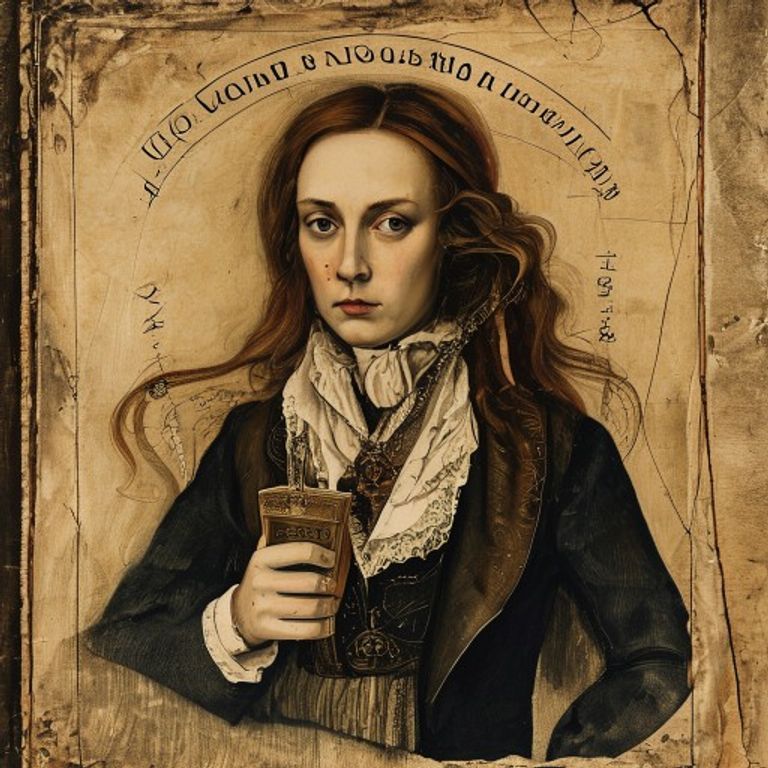
A fifteenth-century illustrated book written in an unknown alphabet and ciphered language that remains untranslated, despite the efforts of renowned cryptographers.
⚠️ Research conducted with the aid of Deep Research is subject to referential ambiguity.
🖥️ Clean HTML code using a proprietary tool.
👥 Research by Guilherme Felipe, Curation by Sílvio Lôbo
The Impenetrable Enigma: Unraveling the Voynich Manuscript Case
Amidst the labyrinth of historical and cryptographic mysteries that haunt humanity, few cases prove as tenacious and enigmatic as that of the Voynich Manuscript. A tome of hundreds of pages, preliminarily dated to the 15th century, it has defied translators, linguists, cryptographers, and historians for over a century. This document, adorned with peculiar illustrations and written in an unknown language, represents one of history's greatest unsolved enigmas, a constant invitation to speculation and tireless investigation.
1. The Context and the Incident: The Awakening of the Mystery
The fascination with the Voynich Manuscript lies not only in its content but in its very discovery and the aura of secrecy that surrounds it. Its known history begins in the early 20th century, when Polish antiquarian Wilfrid Voynich, based in the United States, acquired the manuscript in 1912 from a Jesuit society at Villa Mondragone, near Rome, Italy. It is believed that the manuscript passed through various European collections over the centuries, with its exact origin and initial purpose shrouded in uncertainty.
Voynich, a perceptive man with a keen eye for the unusual, immediately realized the potential of his find. The peculiar script, unknown to any recorded language, and the bizarre illustrations—never-before-seen plants, abstract astronomical diagrams, and naked female figures in complex plumbing systems—foreshadowed a monumental challenge. From then on, the manuscript became the focus of an international decipherment effort, a true "incident" that triggered a global search for answers.
2. Timeline of Events: A Shadowy Chronology
Reconstructing the history of the Voynich Manuscript is an exercise in patience, where fragments of information mix with significant gaps. However, some milestones can be established:
- Early 15th Century (Estimate): Radiocarbon dating, with a high degree of confidence, points to the period between 1404 and 1438 for the creation of the parchment.
- 17th Century: There is evidence that the manuscript was in the possession of Georg Baresch, an alchemist in Prague. His correspondence with the scholar Athanasius Kircher, a Jesuit famous for his studies in various fields, suggests an attempt at decipherment at that time.
- Late 17th / Early 18th Century: The manuscript may have belonged to the Holy Roman Emperor Rudolf II, who reportedly bought the book for a considerable sum, believing that Roger Bacon, the renowned 13th-century English philosopher and scientist, was the author.
- 19th Century: The manuscript reappears in Jesuit collections in Rome, possibly at the Jesuit Library of the Collegio Romano or at Villa Mondragone.
- 1912: Wilfrid Voynich acquires the manuscript and introduces it to the academic and cryptographic world.
- 1920s-1940s: Several renowned cryptographers and linguists delve into the text, without success. Figures such as William F. Friedman, the "father of American cryptanalysis," attempted to unlock its secrets.
- 1961: The manuscript is acquired by Yale University, where it currently resides at the Beinecke Rare Book & Manuscript Library.
- 2017: A team of researchers from the University of Alberta, using artificial intelligence, announces a breakthrough in identifying words and grammatical structures. However, the significance of the "discovery" is widely debated.
3. The Main Theories: A Mosaic of Hypotheses
The absence of a key to decipher the Voynich Manuscript has given rise to a myriad of theories, each with its own logic, ranging from scientific rigor to pure speculation:
Scientific and Forensic Theories (Most Likely)
- Ciphered or Coded Language: The most widely accepted hypothesis is that the manuscript contains text in a known language, but disguised by a method of cryptography. The apparent complexity of the text, with its repetitions and patterns, suggests a sophisticated system. However, the lack of correspondence with any known cipher is the main obstacle.
- Artificial Language: The possibility that the text is written in an invented language, created specifically for this purpose, is also considered. Artificial languages have been created throughout history, and the Voynich could be a precursor example. The internal consistency of the text, which suggests a grammatical structure, supports this idea.
- Alchemical or Herbal Pseudoscience: Given the presence of plant illustrations and the historical context where alchemy was practiced, many believe the manuscript is a compendium of alchemical or botanical knowledge, possibly authored by an anonymous alchemist trying to protect their secrets. The plant illustrations, however, do not correspond to any known species.
Alternative, Conspiracy, or Paranormal Theories
- Elaborate Hoax: A persistent theory is that the manuscript is a complex forgery, created to deceive collectors or for prestige purposes. However, the authenticity of the parchment and ink, confirmed by scientific analysis, hinders this hypothesis. The elaboration and consistency of the text also point against a simple fraud.
- Written in an Extinct Language or Unknown Dialect: Another possibility is that the text represents a language or dialect that went extinct without leaving known documentary traces, or a rare and unknown form of an existing language.
- Extraterrestrial or Interdimensional Contact: In more esoteric circles, there is speculation about the extraterrestrial or interdimensional origin of the manuscript. The bizarre nature of the illustrations and the impossibility of decipherment fuel such theories, although they lack any empirical evidence.
- Authorship of Roger Bacon: Although rejected by most experts due to temporal and stylistic discrepancies, the belief that Roger Bacon was the author persists, fueled by the story of Rudolf II.
4. Controversies and Blind Spots: Where Investigation Fails
The investigation of the Voynich Manuscript is marked by blind spots and controversies that add layers of mystery to its narrative:
- Incomplete Historical Records: The gap between the period of production and its reemergence in the 17th century leaves a vast period without reliable records regarding the possession and whereabouts of the manuscript. The possible links to the court of Rudolf II, for example, are based on circumstantial evidence.
- Frustrated Cryptographic Analyses: Despite the efforts of brilliant minds in cryptography, no decipherment method has been universally accepted. Attempts at statistical analysis, while revealing patterns, have not led to a coherent translation.
- Interpretations of the Illustrations: The illustrations, crucial to understanding the context, are often ambiguous and subject to multiple interpretations. The identification of the plants, in particular, has been a dead end.
- The Question of the "System": The internal consistency of the text suggests an underlying system, but the nature of that system—whether it is a language, a code, or a writing system—remains elusive. The absence of punctuation and known alphanumeric characters further complicates matters.
5. Curiosities and Legacy: A Timeless Enigma
The Voynich Manuscript has transcended the academic world to become a cultural icon, inspiring books, films, and conspiracy theories. Its notoriety lies in its sheer incomprehensibility, a testament to the human capacity to create and the difficulty of unraveling the unknown.
The current status of the manuscript is that of an object of ongoing study. The Beinecke Library at Yale keeps the manuscript under controlled conditions, and access is restricted to qualified researchers. Although new technologies, such as artificial intelligence, offer new tools for analysis, the central mystery remains. The Voynich Manuscript has not been "reopened" in the traditional sense of a criminal case, but its investigation has never truly been "shelved." It continues to be a beacon of mystery, inviting new generations of investigators to delve into its impenetrable secrets.





