



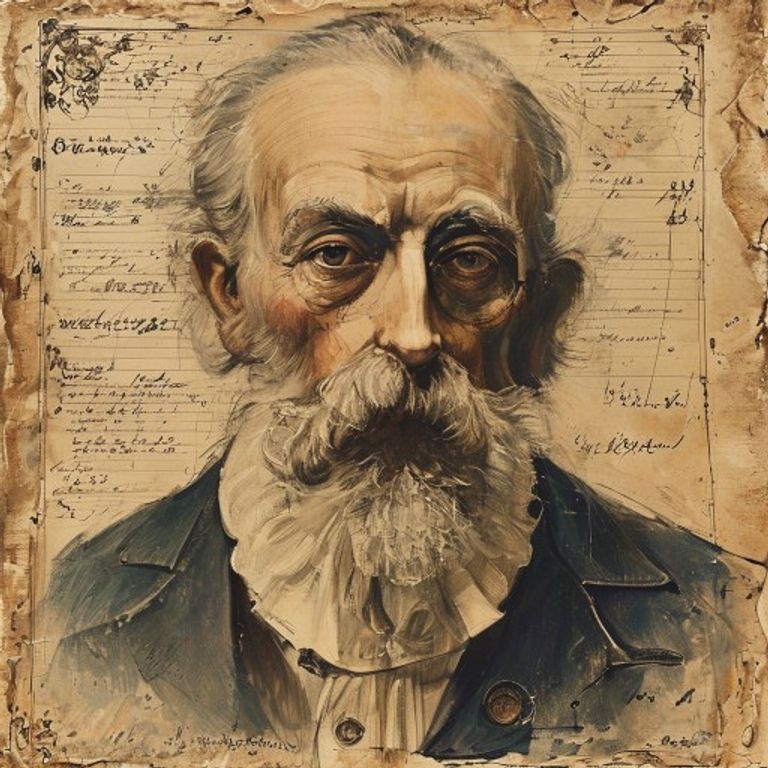
A 15th-century illustrated book written in an unknown writing system that has challenged the world's greatest cryptographers for centuries.
⚠️ Research conducted with the aid of Deep Research is subject to referential ambiguity.
🖥️ Clean HTML code using a proprietary tool.
👥 Research by Guilherme Felipe, Curation by Sílvio Lôbo
The Voynich Manuscript: The Enigma That Challenges Science and History
In the labyrinth of forgotten archives and secrets that time insists on hiding, few historical mysteries match the persistence and depth of the Voynich Manuscript. This centuries-old codex, wrapped in an unknown script and bizarre illustrations, has been an unrelenting test for cryptographers, linguists, historians, and puzzle enthusiasts for centuries. What lies within its pages? A lost language, a secret code, an unprecedented work of fiction, or something entirely different?
1. The Context and the Incident: Where, When, and How the Mystery Began
The history of the Voynich Manuscript as we know it is inseparable from the figure of Wilfrid Voynich, a Polish antiquarian who in 1912 acquired a bulky manuscript from a private Jesuit collection at Villa Mondragone, near Rome. The exact origin of the manuscript before this acquisition is obscure, but Voynich's narrative introduced it to the world, triggering a saga of investigation that continues to this day.
The incident itself was not a crime or a traumatic event, but rather the revelation of an enigmatic object. The manuscript, radiocarbon-dated to between 1404 and 1438, is written in an alphabet that resembles no known language. Its detailed illustrations depict non-existent plants, strange astronomical diagrams, and human figures in baths or practices that defy immediate interpretation. It is this combination of indecipherable writing and bizarre iconography that launched the mystery into the public domain.
2. Timeline of Events
- 15th Century (possibly before 1438): The creation of the Voynich Manuscript. Its location and authorship during this period are unknown.
- 17th Century: The manuscript appears in the possession of Georg Baresch, an alchemist from Prague, who describes it as a "magic book."
- 1665: Johannes Marcus Marci, a scholar and friend of Baresch, sends a copy of a letter from Baresch about the manuscript to the renowned Jesuit Athanasius Kircher in Rome, hoping his expertise could decipher it.
- 17th - 19th Century: The manuscript appears to have remained in the possession of the Jesuits, possibly in collections in Rome, without much public attention.
- 1912: Wilfrid Voynich acquires the manuscript from the Jesuit collection at Villa Mondragone. He begins promoting it, attracting the attention of scholars and cryptographers.
- 1920s and 1930s: Various cryptographers and linguists attempt to decipher the manuscript, with little to no significant conclusion.
- 1961: The manuscript is bequeathed to the Beinecke Rare Book and Manuscript Library at Yale University, where it resides to this day.
- 1969: Edward Murrie, a US government cryptography expert, studies the manuscript but fails to achieve success in its decipherment.
- 2000s - Present: The application of computational techniques and artificial intelligence in the analysis of the manuscript, generating new hypotheses, but the enigma remains.
3. The Main Theories
The absence of a definitive answer has given rise to a profusion of theories, ranging from plausible scientific explanations to more fantastic speculations.
- Encrypted Language Theory: This is the most popular hypothesis among cryptographers. It suggests that the manuscript is written in a known language but encoded through a cipher system. Various types of ciphers have been proposed, from simple substitution to more complex ciphers that could have been designed to be indelible. The challenge: No proposed cipher has yet fit convincingly with the linguistic structure observed in the text.
- Artificial Language Theory (Glottogonic): Proposed by some linguists, it suggests that the text may be an invented language, created specifically for the manuscript. This language could have its own grammatical rules and vocabulary. The challenge: Creating a coherent artificial language with the statistical complexity observed in the Voynich would be a monumental task, and yet, the lack of context or purpose for such an undertaking is questionable.
- Hoax or Forgery Theory: Some argue that the manuscript may be an elaborate hoax, created to deceive collectors or scholars. The difficulty in deciphering it and the bizarre nature of the illustrations could be artifices to give the impression of depth and mystery. The challenge: The complexity and statistical consistency of the text, as well as the radiocarbon dating, make the theory of a pure 15th-century hoax less likely, although later frauds regarding the manuscript's origin are a possibility.
- "Nonsense" or "Gibberish" Text Theory (Glossolalia): A less formal hypothesis suggests that the text may be a form of "speaking in tongues" or automatic writing without deliberate linguistic meaning. It would be an artistic or spiritual expression. The challenge: Statistical analysis of the text reveals patterns that resemble natural languages, suggesting some structure and intent, which contradicts the idea of completely random content.
- Alternative and Conspiracy Theories:
- Alchemy and Magic: Given the initial possession by Baresch and the mention of a "magic book," theories link the manuscript to alchemical or esoteric practices, where encoded language would be essential to protect secrets.
- Extraterrestrial Theories: In a more speculative spectrum, some suggest that the manuscript could be of extraterrestrial origin, explaining the strangeness of the writing and illustrations.
- Lost Civilization Theory: Another hypothesis suggests that the manuscript is a vestige of an ancient and unknown civilization, whose knowledge was lost to history.
4. Controversies and Blind Spots
The investigation of the Voynich Manuscript is not without controversies and blind spots that fuel the mystery.
- Disappearance of Evidence: Although modern history begins with Voynich, the original documentation regarding the acquisition and the state of the manuscript at the time may have been incomplete or lost.
- Subjective Interpretations: The illustrations are often interpreted in a highly subjective way. What one researcher sees as a medicinal plant, another may interpret as an internal organ or a mythical creature.
- The "Red Herring" Problem: Many researchers have claimed to have deciphered the manuscript, only for their findings to be refuted by other experts. The lack of an independent and replicable verification method has been a constant obstacle.
- The "Voynich Manuscript Man": The exact figure and intention of the original author remain a complete mystery. The lack of any biographical or contextual clue about the creator is one of the biggest blind spots.
- The Lack of a "Rosetta Stone": Just as the Rosetta Stone was crucial for deciphering Egyptian hieroglyphs, the Voynich Manuscript lacks a parallel text in a known language that serves as a key for decipherment.
5. Curiosities and Legacy
The Voynich Manuscript has transcended the academic realm, becoming a cultural icon of mystery and unattainable knowledge.
- Cultural Impact: The manuscript has inspired novels, films, documentaries, and countless online debates. Its enigmatic aura has turned it into a symbol of hidden knowledge and the search for truth.
- Use of AI: In recent decades, artificial intelligence has been applied on an unprecedented scale to analyze linguistic patterns, attempt to identify the origin of the language, and even propose possible decipherments. However, so far, none of these efforts have produced a widely accepted result.
- Current Status: The manuscript remains at Yale University, available for study (with restrictions). Although there is no formal "reopening" of a criminal case, the scientific community and enthusiasts continue to actively investigate, seeking to unravel its secrets.
- A Continuous Challenge: The Voynich Manuscript serves as a humbling reminder of the vastness of knowledge that may have been lost and the complexity of human communication. It continues to challenge us to think beyond the boundaries of what we consider known.
As the ink fades and the yellowed pages of the Voynich Manuscript continue to challenge the brightest minds, its mystery remains. A silent relic of an unfathomable past, it whispers secrets that, perhaps, one day, we will finally be able to hear.





