



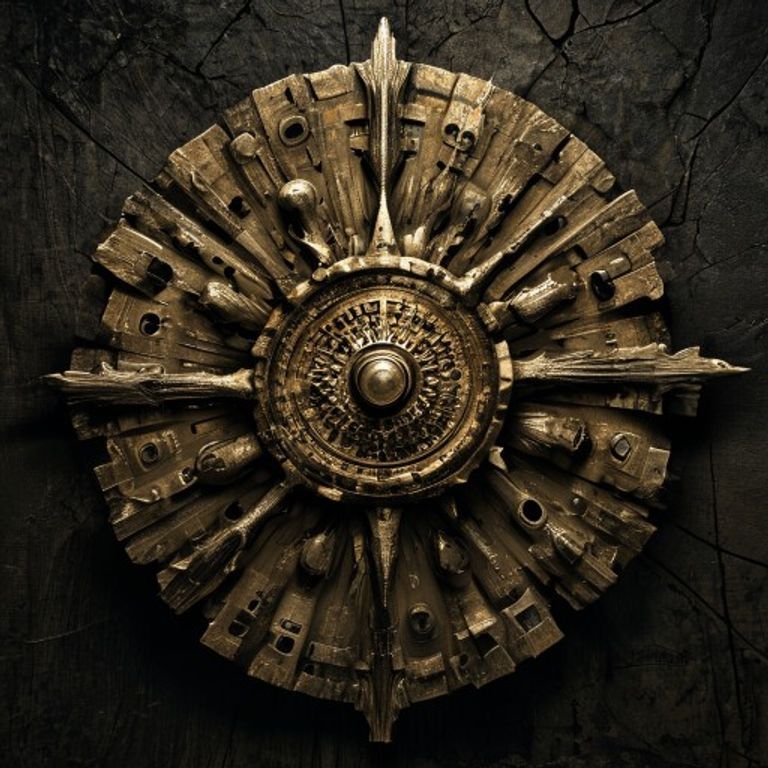
Known as the Devil's Bible, it is the largest medieval manuscript in the world which, according to legend, was written in a single night by a monk with the aid of a supernatural entity.
⚠️ Research conducted with the assistance of Deep Research is subject to referential ambiguity.
🖥️ Clean HTML code using a proprietary tool.
👥 Research by Guilherme Felipe, Curation by Sílvio Lôbo
The Mystery of the Codex Gigas: The Devil's Book and Its Inscrutable Secrets
By [Your Senior Journalist Name], Researcher of Unsolved Cases.
There are mysteries that defy time, logic, and even sanity. The Codex Gigas, frequently labeled as the "Devil's Book," is one such enigma. More than a mere medieval manuscript, it has become the epicenter of a saga that intertwines demonic legends, fervent devotion, and the shadow of crimes never fully unraveled. This article delves into the depths of this case, separating facts from the speculations that have surrounded it for centuries.
1. The Context and the Incident: Where, When, and How the Mystery Began
The origin of the Codex Gigas dates back to the early 13th century, in a Benedictine monastery in Bohemia, a historical region in the modern-day Czech Republic. Its creation is attributed to the monk Herman the Recluse, who, according to legend, made a pact with the Devil to complete the book in a single night in exchange for his soul. The work is colossal, measuring 92 cm in height and weighing about 75 kg, containing the Bible in Latin, medical texts, encyclopedias, calendars, and, notably, a terrifying portrait of the Devil, which gives it its nickname.
The mystery, however, lies not only in its creation but in its subsequent journey and the events surrounding it. The codex was stolen from the Podlažice monastery in 1204, disappearing for a significant period. It was later recovered by a Cistercian order. However, the true mystery that intrigues modern investigators and historians is the series of subsequent disappearances and thefts, particularly in recent centuries, which have fueled theories about protection, curses, and even the concealment of dangerous secrets within its pages.
2. Timeline of Crucial Events
- Early 13th Century: Creation of the Codex Gigas at the Podlažice monastery, Bohemia.
- 1204: Theft of the Codex Gigas from the Podlažice monastery.
- Period after 1204: Recovery of the Codex by a Cistercian order.
- 1593: Transfer of the Codex to the court of Emperor Rudolf II in Prague, a figure known for his interest in occultism and alchemy.
- 1648: Sacking of Prague by Swedish troops at the end of the Thirty Years' War. The Codex is taken as war booty to Sweden.
- 20th and 21st Century: Various security incidents and attempted thefts, including a case in 2007 that generated significant media attention.
3. The Main Theories: Deciphering the Shadows
The explanations for the mysteries surrounding the Codex Gigas range from rational approaches to the realm of the paranormal.
3.1. Scientific and Police Hypotheses (Based on Proven Facts and Investigations)
- Theft and Antiquities Trafficking Theory: This is the most direct hypothesis for the recent disappearances. The Codex Gigas is an artifact of inestimable value, both historical and monetary. Organized groups or individuals with specialized knowledge could attempt to steal it for sale on the black market for antiquities or for private collectors. Investigations into the attempted thefts in 2007 focused on individuals with access to or knowledge of the library's security systems.
- Protection and Concealment Theory: Some theories suggest that the Codex was deliberately hidden during certain periods to protect it from wars, looting, or confiscation, such as during the Thirty Years' War. Its transfer to the court of Rudolf II may have been part of an attempt to protect it, given the imperial interest in unique artifacts and those possibly possessing mystical properties.
3.2. Alternative, Conspiracy, or Paranormal Theories
- Demonic Pact and Curse Theory: The most widespread legend is that of Herman the Recluse's pact with the Devil. This theory suggests that the misfortunes surrounding the codex – thefts, disappearances, and even its dark reputation – are consequences of a curse inherent to the book, a kind of "mark" of the Devil. It is believed that anyone who attempts to possess or damage the codex would be subject to nefarious events.
- Concealment of Forbidden Knowledge Theory: Some esoteric currents postulate that the Codex Gigas contains arcane secrets, forbidden knowledge, or instructions for dark rituals. The theft and concealment of the book would be attempts by certain groups to access or prevent access to this knowledge. The inclusion of medical and encyclopedic texts, along with the demonic image, fuels this speculation.
- Paranormal Influence Theory: Unverified rumors and reports suggest that the codex emits a strange energy, causing discomfort or inexplicable events in its vicinity. This line of thought, while lacking concrete evidence, is fueled by the atmosphere of mystery and the unusual nature of the work.
4. Controversies and Blind Spots: Gaps in the Investigation
The investigation into the incidents involving the Codex Gigas, especially the most recent ones, presents blind spots and inconsistencies that fuel the debate.
- Evidence of Unauthorized Access: In the attempted thefts, the nature of the security breaches, if they existed, was not always fully clarified. The lack of detailed records on how the intruders proceeded leaves room for speculation about internal complicity or unusual methods of entry.
- The Disappearance of the 2007 Security Report: After the 2007 incident, where an attempted theft was thwarted, some details about the official investigation and the security reports of the National Library of Sweden (where the codex is housed) became vague or difficult for the public to access. This raises questions about the transparency of the investigations.
- Ambiguous Witness Reports: In cases of historical artifact theft, witness statements can be ambiguous or influenced by fear and pressure. The lack of direct eyewitnesses to the original thefts in the 13th century contributes to the aura of mystery.
- The Identity of the "Collectors": If the codex was stolen to be sold, the identity of the buyers or intermediaries in the black market for antiquities is almost impossible to track, making the recovery of the item a monumental challenge.
5. Curiosities and Legacy: The Enduring Fascination
The Codex Gigas has transcended its status as a book to become a cultural icon, a symbol of the unexplored and the dark.
- Cultural Impact: The codex has inspired countless works of fiction, films, documentaries, and academic debates. Its image, especially that of the Devil, is widely recognized and used in representations of mysticism and occultism.
- Current Status: The Codex Gigas is permanently on display at the National Library of Sweden in Stockholm, under strict security measures. Although it has not been reopened as an active criminal case in the mold of a traditional police investigation, the attempted thefts keep the case in a state of latent alert. The possibility of new incidents or the discovery of unpublished information keeps the mystery alive.
- The Secret of the Pages: Despite having been widely studied, the Codex Gigas still holds secrets within its pages. The complete deciphering of all its texts, the deep understanding of production techniques, and the analysis of possible hidden annotations continue to be areas of active research.
The Mystery of the Codex Gigas is a reminder that, even in the age of digital information, there are enigmas that persist, inviting us to look at the past with a mixture of admiration, caution, and an insatiable thirst for answers. While the "Devil's Book" rests in its apparent safety, the shadows of its mysteries continue to loom, fueling the imagination and challenging human understanding.





