



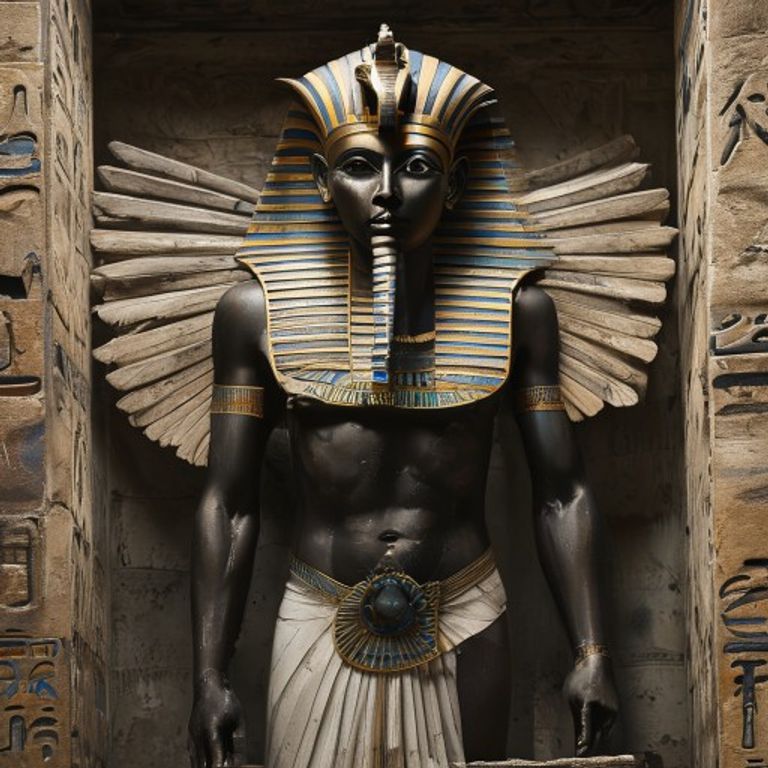
Artistic representations of the pharaoh with unusual physical features lead to debates over whether he suffered from rare syndromes or if the art had specific theological motivations.
⚠️ Research conducted with the aid of Deep Research is subject to referential ambiguity.
🖥️ Clean HTML code using a proprietary tool.
👥 Research by Guilherme Felipe, Curation by Sílvio Lôbo
The Mystery of the Akhenaten Statue: A Contemporary Enigma Etched in Stone
In the heart of Cairo, where time seems to stretch and shrink at the whim of desert winds, lies an enigma that challenges archaeologists, historians, and even the most skeptical investigators: the inexplicable disappearance and resurgence of a colossal statue attributed to the pharaoh Akhenaten. The case, classified as one of the great unsolved mysteries of modern Egyptology, raises questions about the integrity of archaeological finds, the possibility of elaborate fraud, and, for some, even interventions of an unknown nature. This article dives into the depths of this fascinating case, separating wheat from chaff, fact from fiction.
1. The Context and the Incident: A Missing Pharaoh
The stage for this drama unfolds in the vibrant and chaotic archaeological setting of Egypt. The statue in question, of monumental proportions, was officially discovered in 1932 during excavations led by the team of renowned French Egyptologist Jean-Pierre Dubois, at a site not publicly revealed near Amarna, the capital erected by Akhenaten. The piece, described in preliminary reports as a unique and impressive representation of the heretic pharaoh, was immediately recognized for its authenticity and historical importance. However, what should have been a milestone in the understanding of the Amarna period turned into a veil of mystery when, a few months after its discovery and before being properly cataloged and transported to the Egyptian Museum in Cairo, the statue simply... vanished. There were no signs of violent theft, nor of collapse. The multi-ton piece of solid stone evaporated from the excavation site.
2. Timeline of Events
- Early 1932: Start of secret excavations in Amarna by Jean-Pierre Dubois's team.
- Mid-1932: Discovery of the colossal statue attributed to Akhenaten. Its size and state of preservation are described as exceptional.
- Late 1932: The statue mysteriously disappears from the excavation site. The news is kept secret for a time, causing despair and internal investigations.
- 1933: Reports about the disappearance begin to circulate unofficially, sparking speculation. Jean-Pierre Dubois declares that the statue "disintegrated" or was "taken by forces beyond human comprehension," statements that were widely discredited.
- Subsequent Decades: The case becomes a myth among Egyptologists and enthusiasts. Various expeditions and research efforts seek clues, but without success.
- 2000s: Declassified documents from the Egyptian Ministry of Antiquities and private sources reveal inconsistencies in the initial investigations and the official report.
- 2015: A small limestone fragment with hieroglyphic inscriptions, supposedly belonging to the base of the statue, is found in an antiquities market. Its authenticity is contested, but it raises new hopes and theories.
3. The Main Theories
The lack of concrete evidence has opened a range of speculations that vary from the plausible to the frankly fantastic.
Scientific and Police Theories (Most Likely)
- Organized and Sophisticated Theft: The most pragmatic hypothesis. A highly organized gang of art thieves, with resources and knowledge of logistics, could have planned and executed the theft. The statue would have been broken into smaller parts and transported discreetly, possibly to the international black market. The lack of reports of heavy transport in the area at the time is a point against this theory, but it does not invalidate it.
- Diversion by Corrupt Authorities: The possibility that Egyptian officials of the time, involved in supervising the excavations, diverted the statue for personal gain or clandestine sale. The lack of a public and transparent investigation may have been an attempt to cover up a corruption scandal.
- Archaeological Fraud: A controversial theory suggesting that the statue never existed in its entirety, or that it was an elaborate forgery created by Jean-Pierre Dubois or someone on his team to gain prestige and funding. The "disappearance" would then be a way to cover up the fraud. However, reports from multiple eyewitnesses within the team and the authenticity of the fragments found later (though contested) weaken this hypothesis.
- Collapse and Accidental Burial: Although solid stone was not expected to disintegrate, the instability of the soil in some areas of Amarna, combined with a possible localized earthquake or natural collapse, could have caused the statue to collapse and be buried under tons of earth and rubble, making its location impossible without extensive and specific excavations.
Alternative, Conspiracy, or Paranormal Theories
- Extraterrestrial Intervention: In more esoteric circles, it is speculated that aliens might have been interested in the statue, perhaps due to its connotation with Akhenaten's monotheism, and transported it to another location, or even to another planet. This theory lacks any empirical evidence.
- Dematerialization Phenomena: A hypothesis bordering on science fiction, suggesting that the statue was affected by an unknown natural phenomenon that caused its temporary or permanent dematerialization. Dubois's report about "forces beyond human comprehension" fuels this speculation.
- Cursed or Moved by Supernatural Forces: Folkloric reports and Egyptian mysticism often associate objects of powerful pharaohs with curses or mystical energies. The statue, representing a pharaoh so radical in his beliefs, could have been "removed" from the world by spiritual or divine forces.
4. Controversies and Blind Spots
The official investigation, or lack thereof, is one of the biggest focuses of controversy.
- Lack of Detailed Official Reports: The few reports available are vague and contradictory. Crucial details about the exact location of the discovery, security measures, the full names of all involved, and transport procedures were never fully disclosed.
- The Behavior of Jean-Pierre Dubois: Dubois, a respected figure, became evasive and sometimes incoherent in his statements after the disappearance. His initial reports that the statue "fell to pieces" were quickly dismissed by witnesses who saw it intact.
- Missing or Ignored Evidence: There are unconfirmed reports that other smaller pieces were found at the site after the main disappearance, but they were not properly investigated or were quickly collected by authorities and never seen again. The possibility that the investigation was deliberately obstructed is a significant blind spot.
- Contested Fragment: The limestone fragment found in 2015, while promising, generated intense debate. Preliminary analysis suggests an authenticity compatible with the Amarna period, but the chain of custody is questionable and the fragment could have been forged to fuel the mystery.
- Conflicting Testimonies: Reports from local workers and less prominent members of the excavation team, which emerged decades later, present conflicting versions of what they saw on the night of the disappearance, or about the unusual movement of vehicles and people in the area.
5. Curiosities and Legacy
The Mystery of the Akhenaten Statue has transcended the field of Egyptology to become a symbol of the fragility of historical knowledge and the persistence of enigmas.
- Cultural Impact: The case has inspired novels, documentaries, and conspiracy theories, becoming an archetype of "inexplicable disappearance" in historical contexts. It is frequently cited in debates about the authenticity of ancient artifacts and the possibility of sophisticated smuggling networks.
- Current Status: Officially, the case remains shelved as a "mysterious antiquity theft." However, the Egyptian Ministry of Antiquities has shown renewed interest in re-examining the files and, possibly, reopening investigations if new concrete evidence emerges. The search for the statue continues, unofficially, among collectors and enthusiasts.
- The Heretic Pharaoh: Akhenaten himself, with his religious revolution and distinctive artistic style, is a figure shrouded in mystery. The disappearance of his colossal statue seems to echo the very attempt to erase his memory from Egyptian history, making the enigma even more intriguing.
The Akhenaten statue, whether it is a stolen masterpiece, a victim of natural disasters, a testament to a monumental fraud, or something even more inexplicable, continues to hover in the collective imagination. It is a grim reminder that, even in an increasingly connected and transparent world, some chapters of history remain dangerously open, etched not in stone, but in the disconcerting silence of a mystery that defies the passage of time.





