



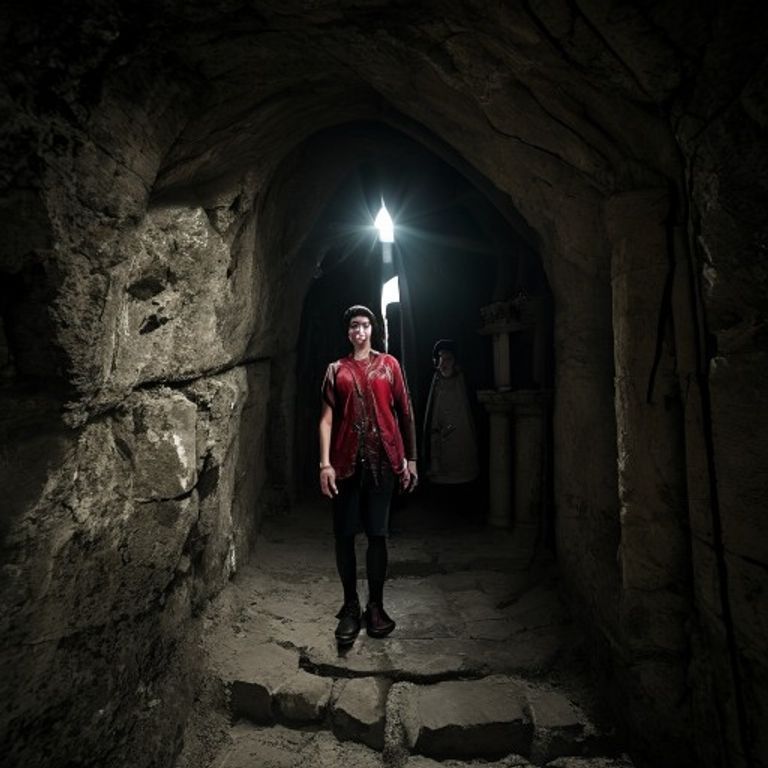
The discovery in Nevada of artifacts and large-stature skeletons that fueled indigenous legends about a race of red-haired giants that inhabited the region in ancient times.
⚠️ Research conducted with the aid of Deep Research is subject to referential ambiguity.
🖥️ Clean HTML code using a proprietary tool.
👥 Research by Guilherme Felipe, Curation by Sílvio Lôbo
The Mystery of Lovelock Cave: Where Giants and Secrets Were Lost in the Sand
In the vast and silent Nevada desert, under a relentless sun and the shadow of ancestral mountains, lies a mystery that defies time and reason: the enigma of Lovelock Cave. A story of native tribes, scientific expeditions, and the emergence of a tale that echoes in legends and speculations to this day. What really happened in the depths of that cave in 1911, and why does its truth seem so elusive?
1. The Context and the Incident: Where, When, and How the Mystery Began
Lovelock Cave, located near the town of Lovelock, Nevada, is a geological formation of great archaeological interest. Its fame, however, is intrinsically linked to an event that occurred in 1911. That year, a team of guano miners, led by David Pugh and James H. Hart, began commercial exploration of the cave. Guano, a valuable fertilizer composed of bird and bat excrement, was the reason for the hard labor and tunnel drilling. However, what they found was not just mineral wealth, but a spectrum of stories that would fuel the popular imagination for decades.
During the extraction, the miners claimed to have discovered a large number of mummies and artifacts. Most intriguing, however, were the reports about the discovery of a population of "red-haired giants" who supposedly inhabited the cave. This narrative, initially reported in local newspapers and later amplified, started one of the most persistent archaeological mysteries in the United States.
2. Timeline of Events: A Chronological Reconstruction of Key Facts
- Early 1911: Start of guano exploration at Lovelock Cave by miners led by David Pugh and James H. Hart.
- During the 1911 exploration: Initial reports of the discovery of mummies and artifacts. The first mentions of "red-haired giants" begin to circulate among workers and the local community.
- Subsequent years (1910s): The story of the "red-haired giants" gains notoriety through newspaper reports. Archives indicate that an archaeologist from the University of California, L. L. Loud, visited the cave and conducted preliminary excavations, finding artifacts and evidence of human occupation, but with no direct mention of giants.
- 1912: Newspaper reports such as "The Lovelock Tribune" and the "San Francisco Call" detail the findings, often with a sensationalist tone, describing the alleged "giants."
- Following decades: The legend of the Lovelock giants becomes consolidated in local folklore and mystery publications. Multiple archaeologists visit and excavate the cave, collecting a vast amount of artifacts, but no concrete proof of the existence of a race of giants.
- 21st Century: Lovelock Cave becomes a point of interest for mystery researchers, conspiracy theorists, and paranormal enthusiasts. The lack of conclusive evidence for the giants fuels the debate.
3. The Main Theories: Possible Explanations for the Enigma
The mystery of Lovelock Cave is fertile ground for various interpretations, ranging from plausible scientific explanations to more exotic theories:
3.1. The Scientific and Archaeological Explanation
- Indigenous Occupation and Myth Confusion: The theory most accepted by mainstream archaeology is that the "red-haired giants" were, in fact, a misinterpretation of remains of Native American populations, such as the Paiute. The Paiute had legends about a rival tribe of "giants" called the Si-Te-Cah, who were allegedly defeated and driven into Lovelock Cave. The reddish color would be the result of the oxidation of hair and skin over time, and the "gigantic" stature, an amplification of individuals who might have been relatively tall for the standards of the time, or simply a characteristic of some better-preserved mummies.
- Mummification and Preservation Phenomena: The dry, saline environment of the cave allowed for excellent preservation of organic remains. The reddish color, commonly attributed to hair in many mummies found, may be the result of exposure to natural elements and extreme dehydration. The perception of "gigantism" could be subjective or influenced by exaggerated reports.
- Archaeological Evidence: Excavations conducted by L. L. Loud and other archaeologists found a rich variety of artifacts, including basketry, tools, fire pits, and, crucially, mummies of individuals who did not show characteristics of gigantism, but rather of adults of common stature for the region and the era.
3.2. Alternative and Speculative Theories
- Undocumented Giant Tribes: One theory suggests the existence of a race of humans of exceptionally tall stature who inhabited the region in prehistoric times and whose remains were found in the cave. The lack of robust scientific evidence for this hypothesis keeps it in the realm of speculation.
- Extraterrestrial Interference or Advanced Ancient Civilizations: In a broader spectrum of theories, some argue that the "giants" could be remnants of extraterrestrial visitors or an ancient civilization with advanced technology, whose knowledge and presence were hidden. This line of reasoning lacks any factual basis and falls into the domain of science fiction.
- Government/Scientific Cover-up: A branch of conspiracy theory alleges that authorities or the scientific community deliberately suppressed or discredited evidence of the existence of these giants to maintain a certain "status quo" or hide inconvenient truths about human history.
4. Controversies and Blind Spots: Inconsistencies in Official Investigations
The greatest controversy surrounding the case lies in the discrepancy between the sensationalist reports of the miners and the absence of indisputable physical evidence corroborating the existence of a race of giants in Lovelock Cave. Several points remain as "blind spots" in the narrative:
- The Nature of the Miners' Reports: The credibility of the miners' testimonies is questioned. In 1931, archaeologist M. R. Harrington revisited the cave and, in his report, mentions that one of the original miners, James H. Hart, had admitted that the story of the giants might have been a "hoax" to attract attention or increase the value of the findings. This confession, if true, casts a shadow over the initial reports.
- Disappearance of Artifacts and Evidence: It is alleged that many of the original artifacts and mummies discovered by the miners were dispersed, lost, or even "stolen" over time. The lack of a meticulous record of the initial findings makes forensic analysis and confirmation of the original reports difficult. Some believe that crucial evidence may have been intentionally removed.
- Interpretation of Paiute Legends: While archaeologists use Paiute legends to explain the "giants," some alternative theorists interpret these same legends as testimony to the real existence of these creatures, who were later demonized.
- L. L. Loud's Reports: Although L. L. Loud excavated the cave and recorded his findings, his reports make no direct mention of giants. This contrasts with the more colorful descriptions found in the press of the time, raising the question of whether Loud chose not to report such findings or if they simply did not exist as described.
5. Curiosities and Legacy: The Cultural Impact of the Case and Its Current Status
The Lovelock Cave case has transcended the field of archaeology to become an icon of ufology, the paranormal, and American folklore. Its ability to generate debate and fascination proves the power of the narrative and the appeal of the unknown.
- Cultural Impact: The story of the "red-haired giants" has inspired countless books, documentaries, articles, and discussions in online forums. It has become a classic example of an archaeological mystery that refuses to be solved definitively, fueling the popular imagination.
- Current Status: Lovelock Cave is now a Special Management Area managed by the Bureau of Land Management (BLM). Access is restricted to protect archaeological and geological resources. Although scientific research has provided more mundane explanations, the mystery and fascination surrounding the alleged giants remain alive, ensuring that the cave continues to be a site of intrigue. The case has not been formally "reopened" by major police or official investigations, but continues to be an object of study and informal debate in mystery research circles.
- Cryptozoology and the Cave: The cave is frequently cited in discussions about unknown creatures and legends. The persistence of the myth demonstrates how the unknown can take root in culture, even in the face of more rational explanations.
The Mystery of Lovelock Cave reminds us that, even in the most arid landscapes apparently devoid of secrets, history can hold echoes of narratives that challenge our understanding and invite reflection. The truth, like desert sand, can be slippery and difficult to grasp completely, leaving room for legends to flourish in the cracks of time.





