



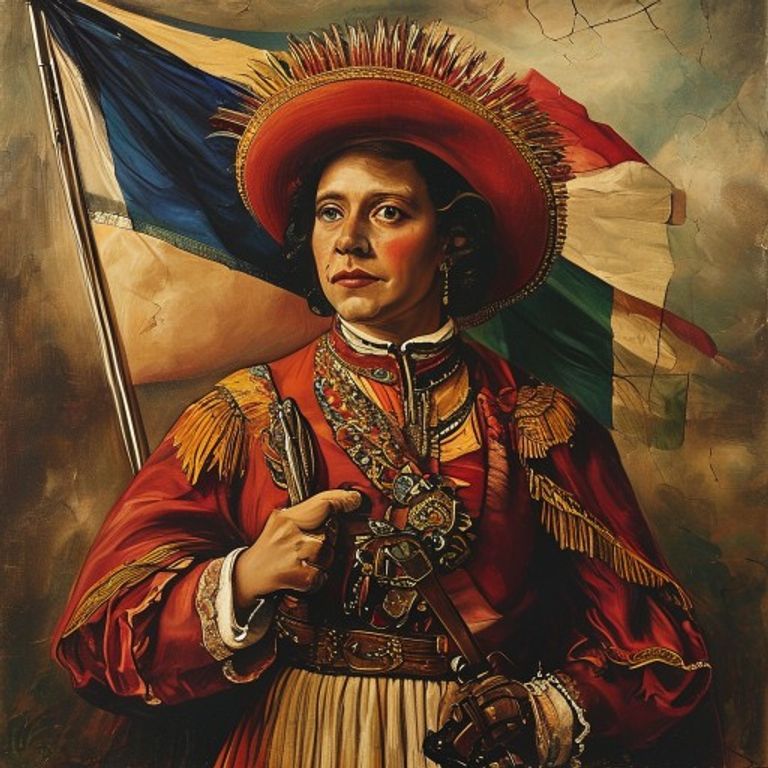
The armed conflict that began in 1910, which overthrew the dictatorship of Porfirio Díaz and resulted in profound agrarian and social reforms under leaders such as Zapata and Villa.
⚠️ Research prepared with the aid of Deep Research is subject to referential ambiguity.
🖥️ Clean HTML code using a proprietary tool.
👥 Research by Guilherme Felipe, Curation by Sílvio Lôbo
The Enigma of the Mexican Revolution: Unraveling the Historical Puzzle
The Mexican Revolution, one of the most transformative events in modern Latin American history, is a melting pot of heroes, villains, grand ideals, and, invariably, mysteries that have persisted for over a century. Among the most intriguing is the so-called "Mexican Revolution Case," a broad term covering a series of disappearances, assassinations, and political upheavals whose causes and perpetrators remain veiled by historical fog and, in some cases, deliberate cover-ups. This article aims to dissect the known elements and speculations surrounding this complex period, separating fact from fiction with the rigor of a journalistic investigation.
1. The Context and the Incident: The Cry That Opened the Chaos
The mystery is not limited to a single incident, but rather a mosaic of events that unfolded between 1910 and 1920. The trigger was widespread dissatisfaction with the dictatorial regime of Porfirio Díaz, who ruled Mexico for over three decades. Social inequality, the concentration of land in the hands of a few, and the lack of political freedom fueled the discontent. The revolution erupted as a cry for justice and democracy but quickly fragmented into various factions with their own, often conflicting, agendas.
The "case" itself emerges from the complexity of this civil war. There is no single initial "incident," but rather the proliferation of inexplicable deaths, the disappearance of key political figures, and the rise and fall of charismatic leaders in a cycle of violence and betrayal. The uncertainty regarding the true authorship of political assassinations, the destruction of documents during the conflicts, and the difficulty of establishing a precise chronology of events created fertile ground for mystery.
2. Timeline of Key Events
Reconstructing the timeline of the Mexican Revolution is a complex exercise, but some milestones are crucial to understanding the context of the mysteries:
- November 20, 1910: Francisco I. Madero launches the Plan of San Luis Potosí, calling the Mexican people to insurrection against Porfirio Díaz.
- 1911: Díaz resigns and Madero assumes the presidency, but the hope for peace is fleeting.
- February 1913: The "Ten Tragic Days" (Decena Trágica) in Mexico City culminates in the assassination of Madero and Vice President José María Pino Suárez, under the command of Victoriano Huerta, who assumes power illegitimately. This event is one of the first great mysteries of the revolution, with doubts regarding the degree of involvement and knowledge of other actors.
- 1913-1914: Led by Venustiano Carranza, constitutionalist forces fight against Huerta. Figures such as Pancho Villa and Emiliano Zapata align with Carranza, but disagreements soon become evident.
- July 1914: Huerta is deposed.
- 1914-1915: The Convention of Aguascalientes attempts to unify the revolutionary factions but fails. War begins between the forces of Carranza (supported by Zapata) and those of Villa.
- April 1919: Emiliano Zapata is assassinated in an ambush in Chinameca, Morelos. The official order is attributed to Colonel Jesús Guajardo, but the circumstances and the true masterminds are the subject of speculation.
- July 1923: Pancho Villa is assassinated in Parral, Chihuahua. The authorship is attributed to a group of armed men, but the motives and sponsors remain obscure.
- 1917: Promulgation of the Mexican Constitution, a milestone of the revolution, but the struggle for power continues.
3. Main Theories
The multiplicity of actors, conflicting interests, and the violence inherent to the period open space for various theories, from the most pragmatic to the most fantastic:
Scientific and Police Theories (Most Likely)
- Betrayal and Political Ambush: The most common explanation for many assassinations, such as those of Madero, Zapata, and Villa, involves betrayal and direct orders from political rivals seeking to eliminate opponents or consolidate power. In the case of Zapata, for example, the ambush orchestrated by Guajardo, who had promised him surrender and amnesty, is seen as an act of perfidy to satisfy the interests of the Carranza government or rival factions. For Villa, theories point to enemies he accumulated throughout his military and political life, possibly linked to agrarian interests or rival factions.
- Disputes for Power and Resources: The Mexican Revolution was also a struggle for control of land, wealth, and political influence. Many assassinations and disappearances can be attributed to groups seeking to eliminate competitors in this fierce dispute. The complex web of alliances and betrayals suggests that individuals and factions could be sacrificed in the name of survival or the expansion of their own interests.
- Order and Disorder: In a civil war scenario, the line between justice and assassination becomes thin. Many deaths may have been summary executions or actions by paramilitary groups acting on behalf of a faction, without due judicial order or official recognition. The lack of rigorous investigations and the destruction of evidence contribute to the difficulty in classifying many deaths as mere "common crimes."
Alternative and Conspiracy Theories
- Foreign Intervention: Some theorists suggest that foreign powers, such as the United States, may have played a more active role behind the scenes, influencing events and even orchestrating the elimination of revolutionary leaders considered threats to their economic or geopolitical interests. Intelligence reports declassified in later decades sometimes reveal significant interest from foreign powers in Mexican dynamics, fueling speculation.
- Internal Factional Conflicts: Beyond the disputes between major leaders, the revolutionary factions themselves were composed of individuals with their own ambitions and grievances. Theories suggest that many "mysterious" disappearances or deaths may have been the result of internal struggles, executions for insubordination, or personal settling of scores within the same army or movement.
- Trafficking and Corruption: Although less historically explored, the possibility that organized criminal elements, taking advantage of the revolutionary chaos, infiltrated and influenced events, including assassinations and disappearances, cannot be completely ruled out.
Paranormal or Supernatural Theories (Extremely Speculative)
Although there is no concrete evidence accepted by the academic community, in a period of such upheaval and superstition, legends and whispers arise about divine interventions, curses, or even inexplicable manifestations. These theories, inherently unverifiable, tend to be more folkloric than factual, but they reflect the climate of uncertainty and fatalism that hung over many.
4. Controversies and Blind Spots
Official investigations into the events of the Mexican Revolution were, in many cases, superficial, biased, or deliberately concealed. The lack of a consolidated judicial structure during the conflict and the nature of the civil war hindered any type of rigorous inquiry.
- Destruction of Documents: Intense violence and the rotation of power led to the loss or deliberate destruction of crucial archives and documents. Forensic reports, military orders, correspondence, and interrogation records simply disappeared, leaving irreparable gaps.
- Conflicting Testimonies: Key witnesses often offered contradictory accounts, whether out of fear, loyalty to a faction, or simple confusion amidst the chaos. The difficulty in corroborating information made any official investigation highly dubious.
- Biases in Official Investigations: The governments that emerged from the Mexican Revolution often sought to build a favorable official narrative, which could lead to the cover-up of responsibilities or the assignment of convenient blame. The figure of Victoriano Huerta, for example, was promptly blamed for the assassination of Madero, but the degree of involvement of other conspirators remains under debate.
- Ignoring Clues: In a scenario of urgency and the need to make quick decisions, clues that could have been thoroughly investigated were often ignored. The search for justice and the resolution of crimes was secondary to survival and the consolidation of power.
- Deaths Attributed to "Natural Causes" or "Accidents": In some cases, the deaths of important figures were recorded as natural or accidental, when circumstances strongly suggested a planned assassination.
5. Curiosities and Legacy
The "Mexican Revolution Case" is not just a set of historical enigmas; it is a central element of Mexico's cultural and political identity. The figures of Madero, Zapata, and Villa have become popular icons, wrapped in an aura of heroism and mystery, often simplified in songs, films, and literature.
The legacy of these mysteries is the constant reinterpretation and debate over the events. The absence of definitive answers allows the Mexican Revolution to remain a fertile field for historiography, fiction, and speculation. The memory of assassinated leaders and brutal betrayals haunts the national narrative, reminding us that the search for historical truth is a continuous and often tortuous process.
Currently, most cases of disappearance and assassination related to the Mexican Revolution remain "shelved" in terms of formal reopening of criminal investigations, given the practical impossibility of gathering substantial new evidence and the passage of time. However, academic and public interest persists, with researchers continuously reviewing archives, declassifying documents, and seeking new perspectives to illuminate the dark corners of one of the most dramatic chapters in Mexican history.





