



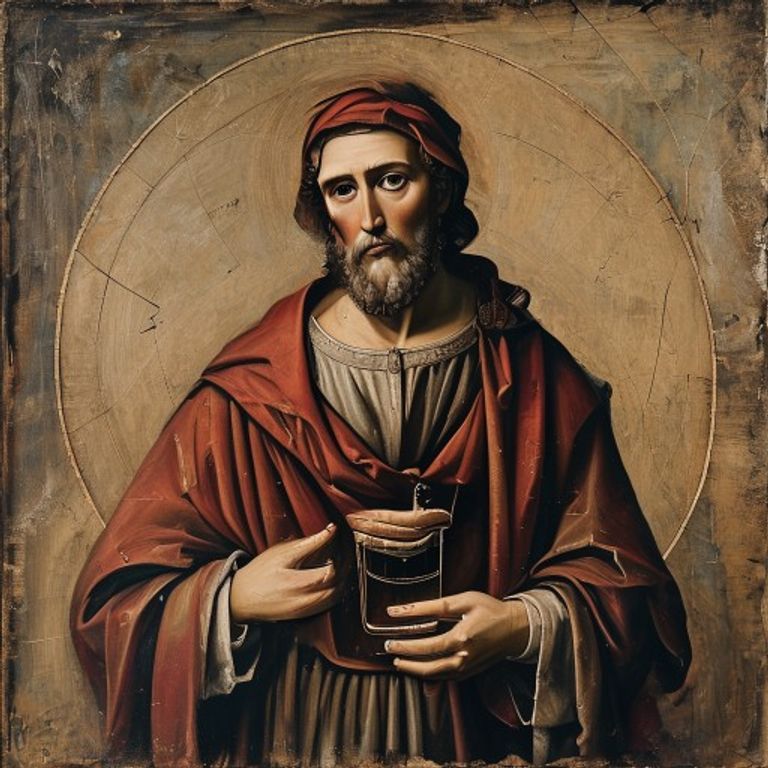
The vast compilation of Roman laws carried out in the sixth century by order of the Byzantine emperor, which served as the foundation for modern Western legal systems.
⚠️ Research prepared with the aid of Deep Research is subject to referential ambiguity.
🖥️ Clean HTML code using a proprietary tool.
👥 Research by Guilherme Felipe, Curation by Sílvio Lôbo
The Enigma of the Justinian Code: A Mystery Carved in Stone
The name Constantine evokes images of grand empires, immutable laws, and a civilization that shaped the West. However, one of the most enigmatic legacies of Emperor Justinian I lies not in his legal edicts, but in a singular stone, guardian of a secret that defies time and understanding: the so-called "Justinian Code Case".
1. The Context and the Incident: Where, When, and How the Mystery Began
The story unfolds in lands that today belong to Turkey, more precisely in the ruins of an ancient Byzantine church, erroneously associated with Justinian due to an inscription mentioning his name. The true starting point of the mystery is the discovery, in the mid-20th century, of a stone slab with unusual inscriptions. The slab, later nicknamed the "Justinian Stone", contained not only religious symbols and imperial references, but also a sequence of characters that seemed to form a complex and indecipherable code.
The historical context dates back to the height of the Byzantine Empire, a period of religious fervor, architectural advances, and, it is presumed, palace intrigue and veiled secrets. The association with Justinian, known for his ambitious Civil Code, adds a layer of gravity and authority to the enigma. The stone was found in conditions that suggested it contained something of significant importance, possibly deliberately hidden.
2. Timeline of Events
- 6th Century AD: Period during which Emperor Justinian I reigned. It is believed that the slab with the inscription was produced or placed during or shortly after this period.
- Unknown: The stone is placed at the site of the ancient church. The motives and the exact period are uncertain.
- 1950s/1960s: Archaeologists discover the slab. Initial research identifies the imperial inscription, but the complexity of the other characters draws attention.
- 1970s onwards: Countless attempts at decipherment by cryptographers, linguists, historians, and enthusiasts. No definitive solution is reached.
- Present: The "Justinian Code Case" remains an unsolved enigma, with the stone on display in a museum, attracting curious onlookers and researchers.
3. The Main Theories
The elusive nature of the code has opened a range of speculations, varying from the rational to the supernatural:
3.1. Scientific and Investigative Hypotheses (Most Likely)
- Military/Secret Cryptography: The most grounded theory suggests that the code is a ciphered message, used for military, diplomatic, or internal security purposes by the Byzantine Empire. It could be a secret directive, a treasure map, an attack plan, or a warning. The difficulty in deciphering would lie in the sophistication of the cryptographic system of the time.
- Cryptographic Language/Unknown Dialect: It could be a poorly documented ancient Greek dialect, an alternative writing system developed by a religious sect or a specific group within the empire, or even a primitive form of phonetic writing that was lost to time.
- Warning/Prevention Message: A hypothesis suggests that the code contains warnings about natural disasters, plagues, or imminent invasions, intended to alert a specific community or for long-term historical record-keeping.
3.2. Alternative, Conspiracy, or Paranormal Theories
- Astrological/Alchemical Code: Some researchers suggest the possibility that the code is a set of instructions or predictions linked to astrology or alchemy, common practices in the ancient world. The inscriptions could be planetary symbols, alchemical diagrams, or recipes.
- Key to a Hidden Treasure: The most popular theory among mystery enthusiasts is that the code is the key to a material or spiritual treasure left by the Byzantines. The search for a lost treasure adds an element of adventure to the enigma.
- Account of a Supernatural Event: A more esoteric school of thought suggests that the code describes a paranormal event, a prophetic vision, or even contact with non-human entities.
- Ancient Alien Artifact: In an even more speculative line, some suggest that the code may have extraterrestrial origins, with the stone serving as an "artifact" from an ancient and advanced civilization.
4. Controversies and Blind Spots
The investigation into the Justinian Stone is marked by frustrations and gaps:
- Difficulty of Contextualization: The exact location and original purpose of the stone are uncertain. Was it placed there as part of a larger construction? Was it a landmark? The lack of context hinders analysis.
- Preservation of Evidence: Reports on the state of conservation of the stone and the archaeological site over time are inconsistent. There have been concerns about the possibility of damage or loss of crucial details in the inscriptions.
- Divergences in Interpretation: Various scholars and deciphers have presented their own interpretations of the symbols, but none have achieved universal validation or scientific consensus.
- Lack of External Clues: The absence of other similar discoveries in the region or at other Byzantine sites that resemble the pattern of the code is a significant blind spot.
- Public Interest vs. Scientific Research: The popular fascination with the mystery, often focused on treasures and paranormal theories, may have overshadowed the rigorous and methodical scientific research needed to unravel the enigma.
5. Curiosities and Legacy
The "Justinian Code Case" has transcended the academic sphere to become a cultural icon of cryptography and historical mysteries:
- Inspiration for Fiction: The enigma has served as inspiration for books, films, and games, fueling the popular imagination about lost treasures and ancient secrets.
- Symbol of an Intellectual Challenge: The stone is seen as a monumental challenge to the human mind, a testament to the ability to create and hide information in an elaborate way.
- Ongoing Research: Despite decades of study, the case has not been officially "closed." New studies with more advanced image and material analysis technologies may be conducted. The stone remains on display, awaiting the next brilliant mind that might decipher its messages.
- The Legacy of Justinian: Paradoxically, one of the most enduring legacies of Justinian, known for his monumental contribution to law, may be this silent enigma carved in stone, a mystery that, perhaps, he himself conceived to challenge future generations.
Until a new declassified official document, a conclusive forensic report, or a decisive testimony emerges, the enigma of the Justinian Stone will continue to echo through the corridors of history, an indecipherable whisper from a past that refuses to reveal all its secrets.





