



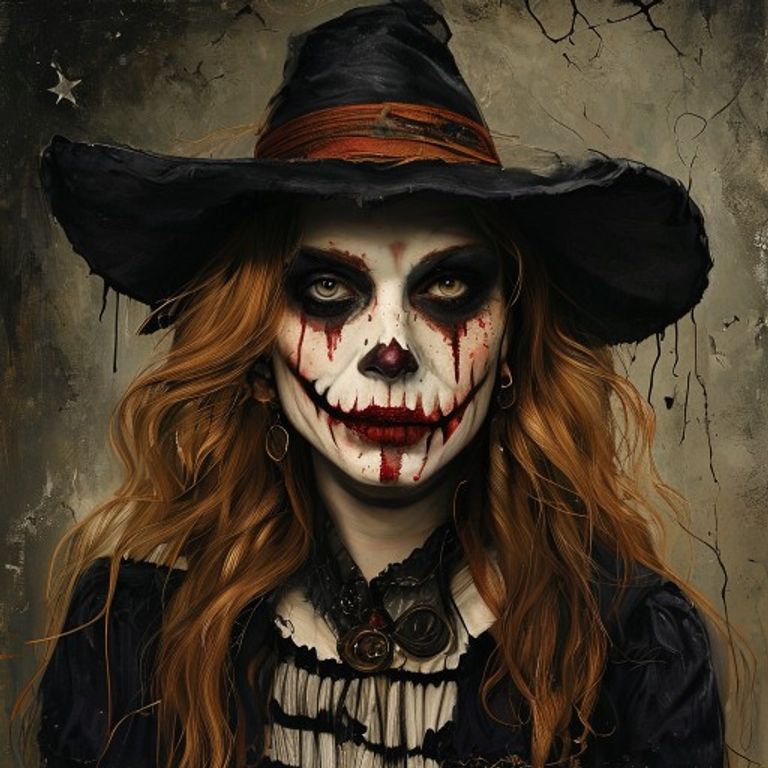
The series of murders of women in the Whitechapel district of London in 1888, committed by an unidentified criminal who sent mocking letters to the police.
⚠️ Research conducted with the aid of Deep Research is subject to referential ambiguity.
🖥️ Clean HTML code using a proprietary tool.
👥 Research by Guilherme Felipe, Curation by Sílvio Lôbo
The Jack the Ripper Case: A Veil of Blood and Mystery over Whitechapel
In London, in the autumn of 1888, the darkness of Whitechapel was not merely the absence of light. It became the stage for a series of brutal crimes that would haunt the collective imagination for over a century. The name Jack the Ripper, immortalized in anonymous letters that became part of the city's dark folklore, symbolizes one of the most persistent and disturbing mysteries in criminal history.
1. The Context and the Incident: Where, When, and How the Mystery Began
The Whitechapel district, in London's East End, was at the time a labyrinth of dark streets, overcrowded tenements, and extreme poverty. A marginalized area of Victorian society, it was also a breeding ground for prostitution, crime, and despair. It was in this setting that the nightmare began, unfolding in a succession of murders that shocked the nation and exposed the social wounds of the metropolis.
The first crime widely attributed to Jack the Ripper was the murder of Mary Ann Nichols on August 31, 1888. Her body was found in Buck's Row, with her throat cut and signs of abdominal mutilation. The horror of the injuries, especially the crude and precise details, suggested a disturbing anatomical knowledge and a terrifying coldness.
2. Timeline of Events: A Chronological Reconstruction of the Main Facts
The chronology of the murders, commonly referred to as the "canonical five" (although the police investigated other similar cases at the time), is essential to attempt to unravel the killer's pattern:
- August 31, 1888: Murder of Mary Ann Nichols, found in Buck's Row.
- September 8, 1888: Murder of Annie Chapman, found in the courtyard of Hanbury Street. Again, grotesque mutilations.
- September 30, 1888: What became known as the "Double Event." The body of Elizabeth Stride was found in Osborne Street, with her throat cut, but without the more extreme abdominal mutilations. Shortly thereafter, Catherine Eddowes was found in Mitre Square, with injuries similar to those of Annie Chapman. The geographical and temporal proximity of these two murders raised the hypothesis that the killer had been interrupted in the Stride case and proceeded with Eddowes.
- November 9, 1888: Murder of Mary Jane Kelly, found in her home in Miller's Court. This was the most brutal and graphic crime, with the body almost unrecognizable, evidencing extreme rage and sadism.
It is important to note that the attribution of these crimes to a single individual was never officially confirmed by Scotland Yard, although the pattern of violence and the geography of the attacks were highly suggestive.
3. Main Theories: Possible Explanations
Over the years, hundreds of theories have emerged, attempting to identify the "Ripper." They range from police investigations based on concrete evidence to fantastic speculations.
Probable Police and Scientific Theories
- The Local Killer: The most grounded hypothesis is that the killer was someone familiar with the streets and alleys of Whitechapel, capable of disappearing quickly after the crimes. This could include a local resident, a worker in the area, or someone with knowledge of the region's geography.
- The Killer with Medical/Surgical Knowledge: The precise mutilations, especially on Annie Chapman and Catherine Eddowes, led to speculation that the killer could have had knowledge of anatomy, perhaps a doctor, a butcher, or a slaughterman. The press of the time even suggested that the killer could be a surgeon.
- The Common Man: Some recent investigations, based on the analysis of documents and criminal profiles, suggest that the killer could have been an apparently ordinary man, with a double life, capable of blending into society without raising suspicion.
Alternative and Conspiracy Theories
- Royal Conspiracy Theory: A persistent theory suggests that the killer could have been a member of the British royalty or aristocracy, possibly linked to the royal family or prominent figures. The idea is that the police covered up the killer's identity to avoid a public scandal and protect the monarchy's reputation. Declassified documents, such as the "Sir William Gull File," have been interpreted by some as evidence of this conspiracy, although most historians consider them forgeries or misunderstandings.
- Masonic Theory: Another line of speculation points to a possible connection with Freemasonry, with theories about rituals and secrets that would have led to the murders.
- The Crimes of Other Serial Killers: Some theories suggest that the Whitechapel murders may have been erroneously attributed to a single individual, and that other serial killers operated in the same area and period, mixing the crimes in public and police perception.
Paranormal and Supernatural Theories
Although less common in serious investigative circles, some speculations include the possibility of a supernatural or demonic phenomenon behind the crimes. These theories lack any proven factual basis.
4. Controversies and Blind Spots: Inconsistencies in Official Investigations
The Jack the Ripper investigation was marked by failures, contradictions, and the inability to identify a concrete suspect, which contributed enormously to the persistence of the mystery.
- Inconsistencies in Suspect Description: The few witness reports about the suspect were vague and frequently contradictory, describing men of different appearances, heights, and ages.
- Ignored Clues: Many argue that the police failed to follow important leads or to consolidate information effectively. The lack of communication between different departments and public pressure may have hindered the investigation.
- The "Jack" Letters: A series of letters sent to the press and police, some signed by "Jack the Ripper," added fuel to the mystery. However, the authenticity of most of these letters is widely contested, and it is believed that many were sent by copycats or pranksters. The famous "From Hell" letter, which contained a piece of a human kidney, is one of the few considered potentially authentic by some investigators.
- Lost or Damaged Evidence: In an era with rudimentary forensic technology, the preservation of evidence was precarious. Reports indicate that some important materials may have been lost or damaged over time.
- Hasty Conclusion of the Investigation: After the murder of Mary Jane Kelly, the crimes attributed to Jack the Ripper ceased abruptly. This led the police to gradually archive the case as unsolved, without ever having a formally accused suspect.
5. Curiosities and Legacy: Cultural Impact and Current Status
The Jack the Ripper case transcended the boundaries of criminology to become a pop culture icon, fueling countless books, films, TV series, and debates.
- The Birth of Criminal Profiling: The case is frequently cited as one of the first examples of the rudimentary application of criminal profiling, where investigators attempted to deduce characteristics of the killer based on his crimes.
- Fascination and Fear: The figure of Jack the Ripper evokes a morbid fascination and a primal fear, representing the hidden evil that can lurk beneath the surface of civility.
- Dark Tourism: Whitechapel today attracts tourists who seek to relive the atmosphere of the era and explore the crime scenes, perpetuating the killer's dark legacy.
- Current Status: The case remains officially unsolved. Although new theories and alleged "discoveries" continue to emerge periodically, and some individuals have been pointed out as more prominent suspects (such as Aaron Kosminski, a Polish Jewish immigrant who suffered from mental health issues), no definitive proof has ever led to a formal charge. Scotland Yard closed the active investigation long ago, but the files remain open for any new evidence that may arise.
Jack the Ripper, the name whispered in the shadows of Whitechapel, continues to be an enigma, a dark reminder that not all mysteries in history have a definitive answer, and that some veils of blood and mystery remain, forever, without being completely unraveled.





