



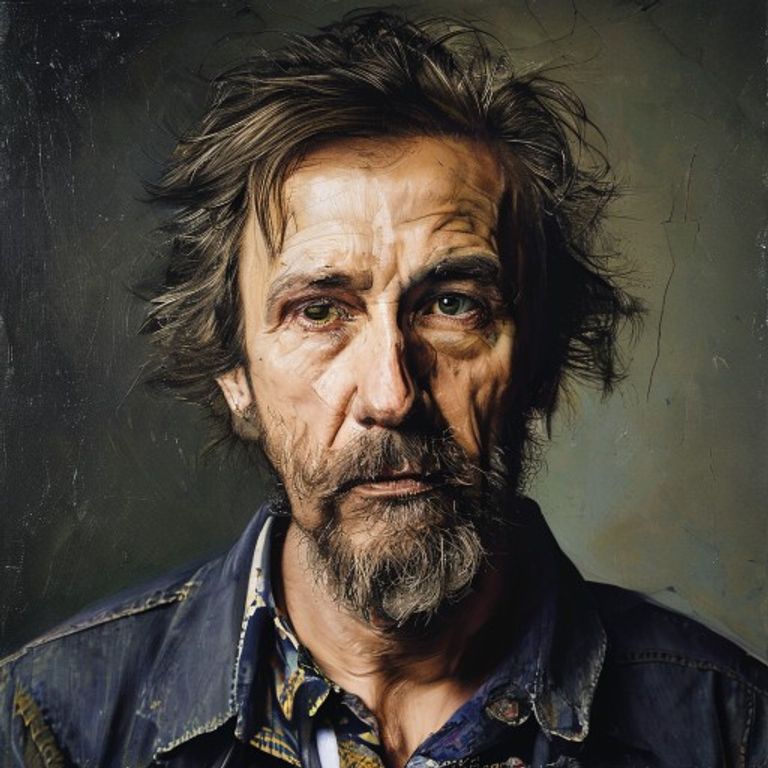
The guitarist of the band Manic Street Preachers who vanished in 1995 after leaving his car near a Welsh bridge, becoming the subject of various unconfirmed sightings in distant countries.
⚠️ Research conducted with the aid of Deep Research is subject to referential ambiguity.
🖥️ Clean HTML code using a proprietary tool.
👥 Research by Guilherme Felipe, Curation by Sílvio Lôbo
The Disappearance of Richey Edwards: A Rock Icon Plunged into the Abyss of Mystery
On February 1, 1995, the music world lost one of its most enigmatic poets. Richey Edwards, the charismatic and introspective rhythm guitarist and primary lyricist for the Welsh band Manic Street Preachers, vanished without a trace, plunging his family, friends, and millions of fans into an abyss of uncertainty and speculation. The case, officially classified as a disappearance, has become one of the greatest unsolved mysteries in rock history, fueled by scarce clues, conflicting testimonies, and a profound existential anguish that seemed to permeate Edwards' work.
The Context and the Incident: The Last Wave of a Turbulent Spirit
The story of Richey Edwards and his disappearance unfolds at the epicenter of the Manic Street Preachers' meteoric rise. The band, known for its politically charged, dark, and confessional lyrics, was about to release its acclaimed album The Holy Bible, a work that explored themes such as violence, mental illness, and the fragility of human existence. Edwards, a central figure in the group's lyrical and aesthetic conception, publicly struggled with mental health issues, including depression and anorexia, exacerbated by the pressure of fame and the hardships of his personal life.
The last time Richey Edwards was seen was in the early hours of February 1, 1995. He had left the Embassy Court hotel in London, where he was staying with the rest of the band. According to reports, Edwards took his car, a blue Ford Sierra, with the intention of driving back to his homeland in Wales to visit his sister. However, he never reached his destination. His car was found abandoned days later near the infamous Severn Bridge, a location known as a suicide spot. The car key was in the ignition, and Edwards' luggage, including his passport, had been removed.
Timeline of Events: Fragments of an Incomplete Puzzle
- January 1995: The Manic Street Preachers finish recording the album The Holy Bible. Richey Edwards expresses in interviews his deep dissatisfaction with the music industry and his personal problems.
- January 23, 1995: During an interview with Select magazine, Edwards self-inflicts cuts on his arm with a razor blade, forming the phrase "4 REAL" on his skin. This act, which shocked the public and the press, is seen as a reflection of his growing anguish and emotional instability.
- January 31, 1995: The band performs in London. Richey Edwards participates in the show, but his behavior is described as distant and melancholic.
- Early hours of February 1, 1995: Richey Edwards leaves the Embassy Court hotel in London. It is the last time he is seen by witnesses.
- February 1, 1995: The disappearance is noted when Edwards fails to appear for scheduled band commitments.
- February 7, 1995: Richey Edwards' car, a blue Ford Sierra, is found abandoned near the Severn Bridge in Gloucestershire. The circumstances of the abandonment raise suspicions.
- February 1995 onwards: Several searches are conducted in the Severn Bridge area and surroundings, without success. The police launch a formal investigation.
- 2008: Richey Edwards is officially declared presumptively dead.
The Main Theories: Unraveling Possible Explanations
The absence of concrete evidence has allowed various theories to flourish around the disappearance of Richey Edwards. They range from more pragmatic and criminal explanations to more esoteric and speculative hypotheses.
-
Suicide Theory
This is perhaps the most prevalent and socially accepted theory, given Edwards' history with depression and his self-destructive behaviors. The discovery of his car near the Severn Bridge, a known suicide spot, reinforces this hypothesis. The logic here is that, in a moment of deep emotional crisis, Edwards decided to take his own life. The absence of a body can be explained by the strong currents of the River Severn or the difficulties in finding remains in remote areas after a long period.
-
Escape and Voluntary Seclusion Theory
Some believe that Edwards, overwhelmed by fame and personal problems, orchestrated his own disappearance to start a new life away from the spotlight. The removal of his luggage from the car, including his passport, could be seen as an indication of planning for an escape. This theory suggests he may be living under a false name somewhere in the world, seeking peace and anonymity.
-
Irregular Accident Theory
Although less likely, the possibility of a bizarre accident cannot be completely ruled out. If Edwards were under the influence of some substance or in a state of deep mental confusion, he could have suffered an unintentional accident near the bridge, with the body not being recovered later. However, the lack of signs of a struggle or damage to the car makes this explanation difficult.
-
Homicide or Crime Theory
Although there is no evidence of third parties involved, the possibility of a crime has never been fully ruled out by the authorities. However, the absence of any clue or concrete suspicion makes this theory less robust. If a crime had occurred, the motive and the perpetrators remain completely unknown.
-
Alternative and Paranormal Theories (Conspiracy)
The fascination surrounding Richey Edwards and the inexplicable nature of his disappearance have given rise to more fantastic theories. These range from involvement with secret cults and alien abduction to the belief that he is hiding on some remote island with his idol, the writer Philip K. Dick. These theories lack any factual basis but reflect the desire to find answers in an information vacuum and the human tendency to seek extraordinary explanations for inexplicable events.
Controversies and Blind Spots: Shadows in the Investigation
The official investigation into the disappearance of Richey Edwards was marked by several criticisms and blind spots that fuel controversy to this day.
-
Delay in Investigation and Search
Some argue that the police were slow to act with the necessary urgency, especially considering Edwards' mental health history and the location where his car was found. The initial search in the Severn Bridge area, although extensive, may not have been as meticulous as it could have been, leaving open the possibility that something important was overlooked.
-
Incomplete or Missing Reports
Details about the forensics of the car and the location where it was found were not always fully disclosed to the public, generating speculation. The lack of a detailed official report on the searches conducted in the river area also contributes to the opacity of the case.
-
Conflicting Testimonies and Speculation
Although many have spoken out over the years, some testimonies from people close to Edwards, especially regarding his final days and weeks, presented nuances and contradictions that made it difficult to build a clear narrative. The band itself, in moments of grief and despair, even fueled speculation that was later denied or questioned.
-
The Passport and Luggage
The removal of the passport and luggage from the car is one of the most intriguing points. If the intention was suicide, why take the passport? If it was an escape, why leave the car abandoned so close to a known suicide spot? This duality is a knot that the investigation has never been able to fully untie.
Curiosities and Legacy: An Eternal Echo in the Music Universe
The disappearance of Richey Edwards transcended the realm of music to become a cultural phenomenon. His figure, always wrapped in a halo of mystery and melancholy, has inspired countless songs, books, and debates.
-
Constant Presence
Despite his disappearance, Edwards continues to be a vital presence in the Manic Street Preachers. The band never officially replaced him, keeping his legacy alive through his lyrics and his sonic influence. Edwards' lyrics continue to be analyzed and interpreted, revealing new layers of meaning in light of his uncertain fate.
-
Sightings and Rumors
Over the years, dozens of alleged sightings of Richey Edwards have emerged in various corners of the world, from Greenland to India. None of these sightings have ever been definitively proven, but they fuel the hope and the legend surrounding his figure.
-
Case Status
Officially, the Richey Edwards case has been reopened a few times based on new information or sightings, but none have led to a resolution. In 2008, he was declared legally dead, allowing his family to move on. However, the mystery remains, and the hope for a definitive answer, for many, never fades.
-
Poetic Legacy
The greatest legacy of Richey Edwards lies in his lyrical work. His words, loaded with anguish, intelligence, and a deep observation of the human condition, continue to resonate with new generations. His verses on alienation, hope, and despair have become anthems for many who feel misunderstood or marginalized.
The disappearance of Richey Edwards is a poignant reminder that, even in an increasingly connected and monitored world, mystery can persist. The echo of his disappearance continues to reverberate in the songs of the Manic Street Preachers and in the minds of those who were touched by his art and his enigma. Until an irrefutable truth emerges, Richey Edwards will remain a ghost in the corridors of rock history, an eternal traveler in the mist of the inexplicable.





