



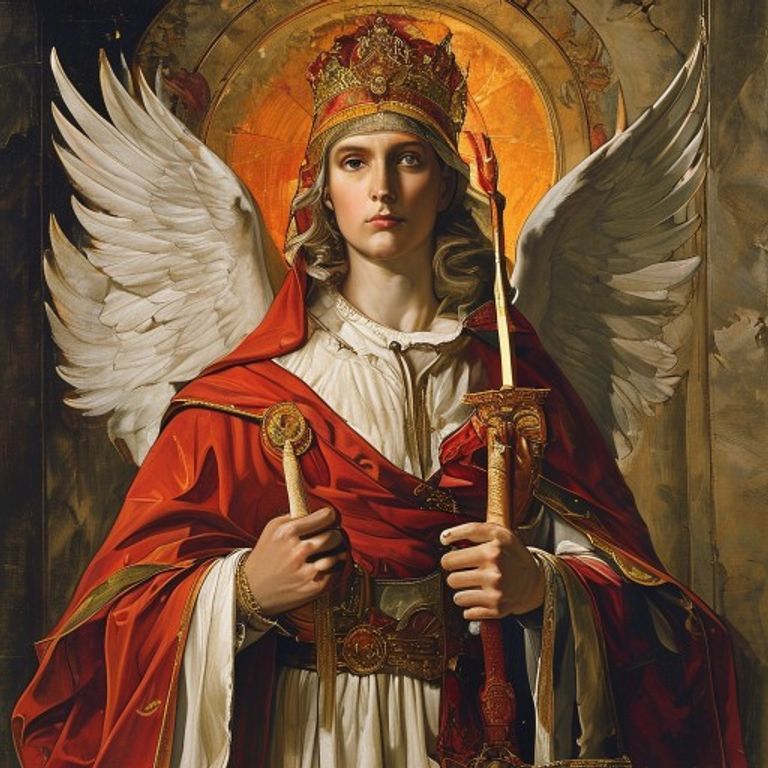
An eighteenth-century adventurer who claimed to be immortal and possess the secret of eternal youth, being spotted in various European courts for over a hundred years.
⚠️ Research conducted with the aid of Deep Research is subject to referential ambiguity.
🖥️ Clean HTML code using a proprietary tool.
👥 Research by Guilherme Felipe, Curation by Sílvio Lôbo
The Immortal Count: Unraveling the Eternal Enigma of Saint Germain
In a world where truths often hide under veils of mystery, few historical enigmas capture the imagination and defy logic like that of the Count of Saint Germain. An enigmatic figure who moved through the halls of European royalty in the 18th and 19th centuries, his existence became a kaleidoscope of legends, facts, and speculations. This investigative article aims to dissect this case, separating the dust of time from tangible facts, in search of a deeper understanding of the man who refused to die, or at least, to be forgotten.
1. The Context and the Incident: Where, When, and How the Mystery Began
The mystery of the Count of Saint Germain does not boil down to a single "incident" in the traditional criminal sense. On the contrary, the enigma lies in his very elusive nature and the extraordinary claims associated with him. His rise to prominence occurred in 18th-century Europe, a period marked by political revolutions, incipient scientific advances, and a growing fascination with esotericism and alchemy.
Saint Germain first appeared in Paris around 1745, presenting himself as a man of vast experience and knowledge, with seemingly unlimited wealth and remarkable skills. Physical descriptions portray him as a middle-aged man with fine features, a piercing gaze, and an aura of distinction. He spoke several languages fluently, composed music, painted, and demonstrated encyclopedic knowledge in various fields, from history to chemistry. His ability to create jewelry, including the removal of imperfections from diamonds, and his supposed mastery in the manufacture of wines and liqueurs, fueled the fascination surrounding his figure.
The crucial point of the mystery is not a specific death or disappearance, but rather the absence of a record of his definitive death and the claims of his supernatural longevity. Accounts from people who claimed to have known him in times long before the 18th century, and later sightings attributed to him after his supposed death, form the basis of the enigma that persists to this day.
2. Timeline of Events: A Chronological Reconstruction
The chronology of Saint Germain is notoriously difficult to establish with precision, given his tendency to mystify his own history and the lack of consistent official records. However, we can outline some milestones:
- Early 18th century: First sightings and rumors about his existence, with some sources pointing to a birth in 1696 or earlier.
- 1745-1762: Period of greatest activity and visibility in the French court, especially during the reign of Louis XV and Madame de Pompadour. He becomes a popular figure in Parisian salons.
- 1762: Leaves France, possibly to escape political intrigue.
- 1770s: Appears in Germany, where he is received by nobles and princes, including the Landgrave of Hesse-Kassel.
- 1780-1784: Documented presence in Hamburg, where he engages in alchemical and diplomatic activities.
- 1784: His "death" is announced by Prince Karl of Hesse-Kassel, who claims that Saint Germain passed away in his domains. This is the most controversial point, as many believe he faked his death or that the information is incorrect.
- Late 18th and 19th centuries: Countless reports of sightings and appearances of Saint Germain in various parts of Europe and even on other continents, by people who swear they recognized him.
3. The Main Theories: Deciphering the Enigma
The explanations for the longevity and skills attributed to the Count of Saint Germain range from the plausible to the transcendental. Let us analyze the most prominent hypotheses:
3.1. Scientific and Police Hypotheses
- Multiple Identity and Succession of People: The most pragmatic theory suggests that "Saint Germain" was not a single person, but a title or pseudonym used by different individuals over time. Successors would have assumed the identity, perpetuating the myth. This would explain the reports of sightings in different places and times, without the need for immortality. The lack of a clear birth and death record favors this hypothesis.
- Fraud and Sleight of Hand: Many of the skills demonstrated by Saint Germain, such as alchemy (supposedly transmuting metals) and the removal of imperfections in precious stones, could have been the result of advanced chemical knowledge and parlor tricks. His intelligence and charisma would be tools to create an aura of mystery and impress his contemporaries.
- Information Network and Political Influence: It is possible that Saint Germain was a secret agent or an informal diplomat, using his network of contacts and knowledge to influence political and financial events. His travels and appearances in European courts could be part of an intelligence operation.
3.2. Alternative, Conspiracy, or Paranormal Theories
- Alchemist and Immortal: The most widespread theory, and the one that fueled the myth, is that Saint Germain was an alchemist who discovered the secret of the Philosopher's Stone and/or the Elixir of Life, granting him immortality or extraordinary longevity. This belief is fueled by his own accounts and the admiration of his followers.
- Member of Secret Societies (Rosicrucians, Freemasonry): Some theories associate him with esoteric societies such as the Rosicrucians or Freemasonry, suggesting that he possessed occult and secret knowledge transmitted through these organizations.
- Agent of a Larger Conspiracy: A conspiratorial strand suggests that Saint Germain was part of an occult elite that manipulates world events from the shadows, influencing kings and governments. His longevity would be a tool to maintain this influence over the centuries.
- Reincarnation: A more spiritualist perspective suggests that Saint Germain could be an ancient soul that reincarnates periodically, manifesting in different eras.
4. Controversies and Blind Spots
The investigation into Saint Germain is marked by a series of inconsistencies and gaps, which leave room for diverse interpretations:
- The Supposed Death of 1784: The announcement of Saint Germain's death by Prince Karl of Hesse-Kassel is one of the murkiest points. There is no official death certificate, and the prince, an enthusiast of Saint Germain, could have had motives to sustain this narrative, whether out of belief or other interests.
- Lack of Reliable Official Records: The Count of Saint Germain was notoriously evasive about his origin and history. He left no clear documentary traces regarding his birth, family, or death. Many of the records of his time are anecdotal or based on letters and diaries of third parties, subject to bias and interpretation.
- Ignored or Lost Clues: Over the centuries, the large volume of legends and fantastic accounts may have obscured more concrete evidence that could have helped clarify his identity. Historical archives may contain relevant information that was lost in time or misinterpreted.
- Conflicting Testimonies: Over the years, several people claimed to have met or known Saint Germain at different times and contexts, often describing him in different ways or attributing contradictory feats to him. The difficulty lies in verifying the credibility of each testimony.
5. Curiosities and Legacy
The cultural impact of the Count of Saint Germain is undeniable. His figure transcended history to become an archetype of the mystic, the immortal, and the knower of ancestral secrets.
- Literary and Artistic Inspiration: Saint Germain inspired countless literary works, films, television series, and even music. He is often portrayed as a mysterious, wise character endowed with supernatural powers.
- Followers and Cults: Over the centuries, groups and societies have emerged that venerate him as a spiritual master or an enlightened being.
- Luxurious Lifestyle: His life was marked by ostentatious luxury, which raised questions about the origin of his wealth, further fueling the mystery surrounding his figure. He was known for his rare jewels and the sophistication of his clothing.
- Current Status: The case of the Count of Saint Germain is not a "case" to be reopened in the legal sense. It remains in the field of history, legend, and esoteric research. Although no official investigation has delved into his "death" (since there is no apparent crime), historians and researchers continue to debate and analyze the fragments of his life. The mystery, like his supposed longevity, seems destined to persist.
The Count of Saint Germain continues to be a ghost in the pantheon of history, a whisper in the corridors of time. Whether a man who discovered the secrets of alchemy, a master of dissimulation, or simply the product of a legend created by generations, he reminds us that some mysteries are more fascinating when they remain without complete solution, challenging our incessant search for answers and keeping the flame of wonder alive.





