



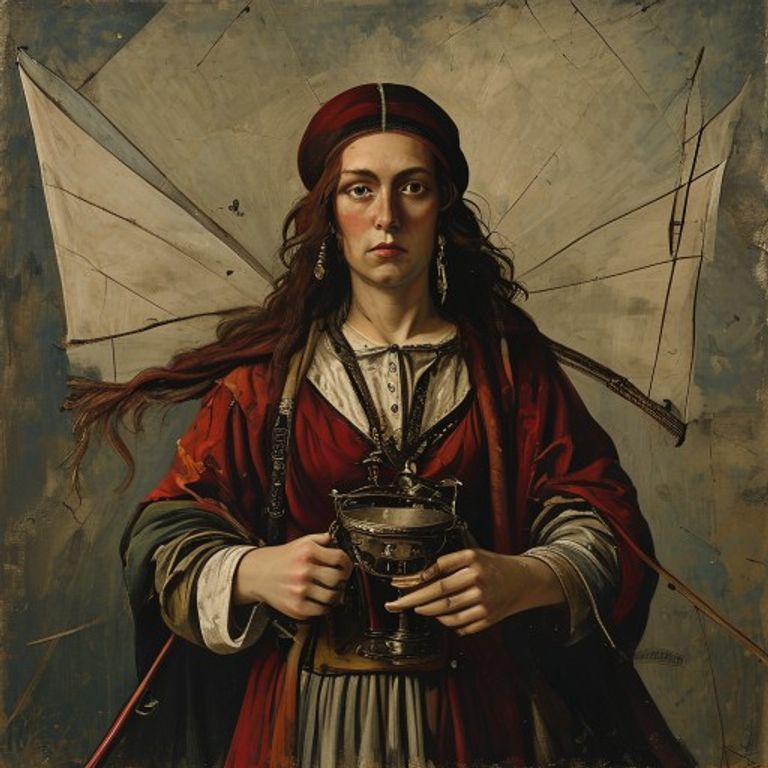
Also known as the Bahian Conspiracy, it was a popular movement in 1798 that proposed the independence of Brazil, the abolition of slavery, and free trade.
⚠️ Research conducted with the aid of Deep Research is subject to referential ambiguity.
🖥️ Clean HTML code using a proprietary tool.
👥 Research by Guilherme Felipe, Curation by Sílvio Lôbo
The Enigma of the Revolt of the Búzios: A Mystery Shipwrecked in History
By [Your Senior Investigative Journalist Name]
The history of Brazil, rich in events of great social and political impact, holds mysteries in its depths that defy time and logic. Among the most enigmatic is the Revolt of the Búzios – an uprising that, although brief, echoed through the centuries, leaving a trail of unanswered questions. What really happened on that dawn of August 17, 1799, in Salvador, Bahia? What motivated the rapid and brutal repression that silenced the ideals of freedom that seemed to sprout in that fertile soil?
1. The Context and the Incident: The Cradle of Dissatisfaction
The end of the 18th century in Bahia was a boiling cauldron. Dissatisfaction with Portuguese rule, deep social inequality, colonial exploitation, and the growing spread of Enlightenment ideas from Europe created an environment conducive to the emergence of emancipationist movements. The Revolt of the Búzios, also known as the Bahian Conspiracy or the Tailors' Revolt, emerges in this scenario as a cry of popular discontent, with more radical and comprehensive aspirations than the Minas Conspiracy, which occurred years earlier.
The incident that triggered the repression occurred on the dawn of August 25, 1799 (although August 17 is often mentioned as the start date, the effective repression and arrests occurred days later, culminating on August 25 with the discovery of the plans and the arrest of many involved). Pamphlets inciting revolt were scattered throughout the city of Salvador, calling the people to fight against the colonial yoke, to proclaim a republic, to end slavery, and to achieve racial equality. The authorities' reaction was immediate and relentless.
2. Timeline of Events: A Trail of Broken Clues
Reconstructing the exact chronology of the Revolt of the Búzios is a complex exercise, as official records of the time, focused on repression and punishment, may have obscured or distorted precursor events. However, the main confirmed milestones are:
- Years Prior to 1799: Growing popular dissatisfaction in Salvador, influenced by Enlightenment ideas and the spread of clandestine pamphlets. Formation of discussion and planning groups among different layers of society.
- Late July / Early August 1799: Intensification of the rebels' coordination. Preparations for the dissemination of pamphlets and the call for insurrection.
- August 25, 1799: Authorities receive reports about the existence of pamphlets and the imminence of an uprising. Start of arrests of suspects. The rapid and violent repression prevents the actual outbreak of the revolt.
- Days and Weeks Later: Mass detentions, interrogations, torture, and hasty trials. Official investigation to identify all those involved and their motivations.
- November 20, 1799: Start of the formal judicial process, known as the Auto de Inquirição e Devassa (Inquiry and Investigation Record).
- 1799-1800: Convictions and punishments. The trial is marked by speed and severity, with sentences ranging from exile to hanging.
3. Main Theories: Attempts to Unravel the Mystery
The mystery of the Revolt of the Búzios lies not only in the difficulty of identifying all its leaders and the extent of its network, but also in the motivations and true objectives of the conspirators, especially considering the social diversity of those involved. The theories that seek to explain the phenomenon are varied:
Scientific and Police Theories (Most Likely Hypotheses):
- Organized Popular Movement: The theory most accepted by traditional historiography points to a genuine movement of popular dissatisfaction, articulated by members of the literate elite, tailors, soldiers, and even freed slaves, who sought greater political and social autonomy. The discovery of the pamphlets would be concrete proof of the organization.
- Influence of Foreign Ideas: The diffusion of the ideas of the French Revolution and the independence of the United States served as direct inspiration, providing a model and a vocabulary for the yearnings for freedom and equality.
- Protest Against Economic Crisis and Colonial Oppression: Food shortages, tax increases, and colonial exploitation were determining factors for the outbreak of discontent, catalyzed by a desire for radical change.
Alternative and Conspiracy Theories:
- External Manipulation: Some speculate about the possible influence or funding by foreign powers (such as revolutionary France) in the organization of the movement, aiming to destabilize Portuguese power in the colony. However, there is a lack of robust documentary evidence to support this thesis.
- Internal Conflict in the Elite: Another hypothesis suggests that part of the Bahian elite, dissatisfied with the concentration of power and wealth in the hands of a few, used popular discontent as a tool for their own political ambitions.
Paranormal or Supernatural Theories (Least Supported):
- Divine Intervention or Signs: Although there is no concrete evidence, in some popular narratives, the "silence" of the revolt or the rapid divine intervention in the repression can be interpreted in mystical ways. This line of thought is mostly disregarded in rigorous historical analyses.
4. Controversies and Blind Spots: The Gaps in the Investigation
The official investigation of the Revolt of the Búzios, conducted by colonial authorities, is full of controversies that fuel the mystery to this day. The main blind spot lies in the difficulty of determining with precision the degree of participation and leadership of each individual, especially the humbler participants.
- Lack of Complete Record of Those Involved: Many names mentioned in reports or interrogations do not appear in official records, raising the suspicion that a significant portion of the participants and organizers remained unknown and, therefore, unpunished.
- Testimonies Obtained Under Coercion: It is widely accepted that testimonies were collected under strong pressure, torture, and threats, which may have led to forced confessions and the denunciation of accomplices to avoid harsher punishments. This compromises the veracity of many statements.
- Disappearance of Documents: There are indications that some original documents and pamphlets, which could shed more light on the extent and intentions of the revolt, were lost or deliberately destroyed after the repression. Police and intelligence reports of the time, such as those likely compiled by Governor D. Fernando José de Portugal, contain valuable information, but not all have been publicly declassified or preserved in their entirety.
- The Nature of the "Secret": The speed with which the revolt was discovered and stifled suggests that there were infiltrated informants or that the conspiracy lacked the secrecy necessary for its survival. Who did these informants serve? Why did the organization become so vulnerable?
5. Curiosities and Legacy: The Echo of a Silenced Cry
The Revolt of the Búzios, despite its tragic outcome, left an indelible legacy in the historical memory of Brazil. The significant participation of free blacks and slaves, and the inclusion of the abolition of slavery in its agenda, differentiates it from other movements of a more elitist nature.
- Popular Name: The name "Revolt of the Búzios" (Revolt of the Cowrie Shells) is said to have arisen due to the use of these objects in African religious practices, which many of the rebels practiced, and which served as symbols of resistance and cultural identity. The association of cowrie shells with Afro-Brazilian religiosity is a crucial point for understanding the racial and cultural dimension of the movement.
- Heroes and Martyrs: Figures such as Luiz Gonzaga das Virgens (a black soldier), Luís José de Mattos (a tailor), and João de Deus do Nascimento (a free mulatto), despite having been executed or exiled, became symbols of the fight for freedom and dignity.
- Current Status: The case of the Revolt of the Búzios is considered a historical chapter, with the official investigation closed and the punishments applied at the time. However, the mystery about the total extent of the organization and the true intentions of all those involved remains. Historians continue to analyze available documents and seek new interpretations, keeping the flame of investigation alive. The lack of a formal reopening of the case does not prevent continuous analysis and debate about its complexities.
The enigma of the Revolt of the Búzios serves as a grim reminder of how fragile the ideals of freedom can be in the face of established power and how deep the gaps left by history can be when the voices of the oppressed are silenced before they can be fully heard. What really drove that uprising? Who were all the conspirators? The complete answer may have been buried under the rubble of repression, but the questions continue to echo, instigating the search for a truth that, perhaps, is still hidden between the lines of ancient documents.





