



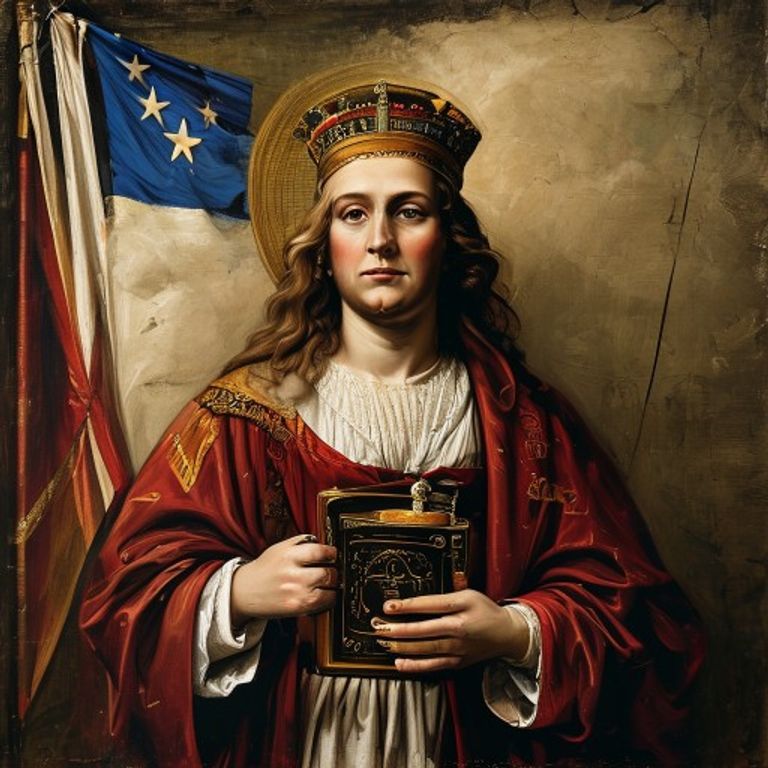
The event of September 7, 1822, on the banks of the Ipiranga Brook, which severed the colonial ties between Brazil and Portugal, founding the Empire of Brazil.
⚠️ Research conducted with the aid of Deep Research is subject to referential ambiguity.
🖥️ Clean HTML code using a proprietary tool.
👥 Research by Guilherme Felipe, Curation by Sílvio Lôbo
The Enigma of the Silent Cry: Unraveling the Case of the Proclamation of Independence
Official history tells us of a grand moment, a turning point for our nation. But, behind the scenes of September 7, 1822, a disturbing silence hangs over the events that culminated in the Proclamation of the Independence of Brazil. Far from the solemnity of textbooks, a mystery hides that, to this day, challenges historians and investigators: what really happened to the messenger who supposedly carried the letter that would seal the fate of a nation?
1. The Context and the Incident: Where, When, and How the Mystery Began
Brazil was experiencing political turmoil. The Courts of Lisbon demanded the return of Dom Pedro to Portugal, while the Brazilian elite clamored for greater autonomy. Amidst this tension, Archduchess Leopoldina, wife of Dom Pedro and an astute political figure, convened the Council of State. It was in this conclave, on September 2, 1822, that the decision for the independence of Brazil was made. The crucial news, consolidating the decision and sending instructions to Dom Pedro, was to be communicated to the Prince Regent, who was traveling in the Town of São Paulo (current-day São Paulo).
The incident that gave rise to the mystery lies in the communication of this message. The official narrative describes that the letter from Archduchess Leopoldina and the Council of State was handed to a messenger. However, from that point on, the trail becomes murky. There is no clear and unequivocal record of this messenger's identity, their exact route, or any mishaps they may have faced. What is known is that, days later, Dom Pedro, receiving other information from different sources, uttered the famous cry on the banks of the Ipiranga River.
2. Timeline of Events
- September 2, 1822: Meeting of the Council of State in Rio de Janeiro. Archduchess Leopoldina and the council members draft the letter declaring independence and sending it to Dom Pedro.
- From September 3, 1822: The message is supposedly dispatched from Rio de Janeiro toward the Town of São Paulo. The identity of the messenger and the exact circumstances of the dispatch are the core of the mystery.
- September 6, 1822: Dom Pedro, on his journey, receives communications from his wife and other individuals confirming the gravity of the situation and the need for a firm stance.
- September 7, 1822: Dom Pedro, allegedly, upon receiving the news and letters, proclaims the independence of Brazil on the banks of the Ipiranga River.
- Subsequent days and weeks: The Proclamation is spread throughout the country, marking the formal beginning of the independence process.
3. The Main Theories
The absence of a detailed account regarding the messenger and the communication leads to various speculations, ranging from pragmatic explanations to more exotic hypotheses.
Scientific and Investigative Theories (Most Likely)
- Theory of Loss or Natural Delay: The most plausible explanation, in terms of the history and logistics of the time, is that the messenger faced difficulties inherent to the journey: precarious roads, bad weather, highway robbery, or even a health setback. The letter may have arrived late, and Dom Pedro, impatient or informed through other channels, made the decision before formally receiving it. Period reports on the security of postal routes are scarce but indicate that such risks were common.
- Theory of Multiple Communication: It is possible that the communication strategy was deliberately fragmented. In addition to the official letter, other messages, perhaps more urgent or direct, could have been sent by different means and messengers, ensuring that the news reached Dom Pedro from various sources. The formal letter would be just one component of the information.
Alternative, Conspiracy, or Paranormal Theories
- Sabotage Theory: A messenger might have been intercepted by forces loyal to the Portuguese Crown, preventing the letter from reaching Dom Pedro. This theory suggests a plan to undermine the independence initiative. Declassified files on the activities of Portuguese agents in Brazil are frequently cited, but there is no direct evidence of such specific sabotage.
- "Human Factor" Theory: The messenger, due to incompetence, fear, or even having been bribed, might have failed in their mission. This hypothesis, although less dramatic, is equally difficult to prove or refute due to the lack of records about the individual.
- "Deliberate Information Vacuum" Theory: Some historians suggest that Archduchess Leopoldina's letter may have been temporarily withheld by Dom Pedro's allies in Rio de Janeiro, so that the Prince Regent would feel the pressure and make the decision more autonomously and decisively, strengthening his image as a leader. This is speculation based on political analyses of the time.
- Paranormal/Mystical Theories: Although without any proven scientific or historical basis, speculations arise about supernatural influences or premonitions that might have guided Dom Pedro, regardless of written communication. These theories are rarely taken seriously in formal investigations.
4. Controversies and Blind Spots
The main blind spot of the Case of the Proclamation of Independence lies in the scarcity and fragmentation of documentary evidence regarding the dispatch of the official letter. Official reports of the time, when they exist, focus more on the decision itself and the public event than on the logistical details of the communication.
- Absence of Messenger Identification: No official document or key witness account clearly identifies the messenger tasked with carrying Archduchess Leopoldina's letter. This leaves room for countless assumptions.
- Conflicting or Incomplete Testimonies: Accounts regarding the arrival of news to Dom Pedro are often vague or contradict each other in details, focusing on the reception of multiple pieces of information, but not on the primacy of the official letter.
- Ignored Clues: It is possible that, in the rush of historical events, details about the messenger or incidents on their route were not recorded because they were not considered crucial at the time, but which today would be fundamental for the investigation.
- Lack of Forensics: In the absence of a crime scene or a clearly configured crime, there were no forensic examinations. The "forensics" would, in fact, be documentary and contextual analyses.
5. Curiosities and Legacy
The Case of the Proclamation of Independence, although not a "case" in the criminal sense, carries immense cultural weight. The uncertainty regarding the official communication only reinforces the aura of personal decision and courage of Dom Pedro, but it also fuels debates about the effective participation of other actors and the complexity of the events.
- Cultural Impact: The legend of the messenger who may have failed or been prevented contributes to a sense of mystery surrounding one of the most important moments in Brazilian history. This is explored in literary and artistic works, and even in academic debates.
- Current Status: The case is not an "open case" in terms of police investigation. Historically, it is a topic of ongoing debate among historians. There are no formal efforts to "reopen" the investigation, but research and analysis of documents continue, always seeking to fill gaps. The declassification of new historical archives, although rare for this specific period, could eventually shed new light on the facts.
- The Nature of History: This enigma serves as a powerful reminder that history, even the most celebrated, is built from fragments, gaps, and interpretations, where the truth does not always present itself in a clear and unequivocal way.





