



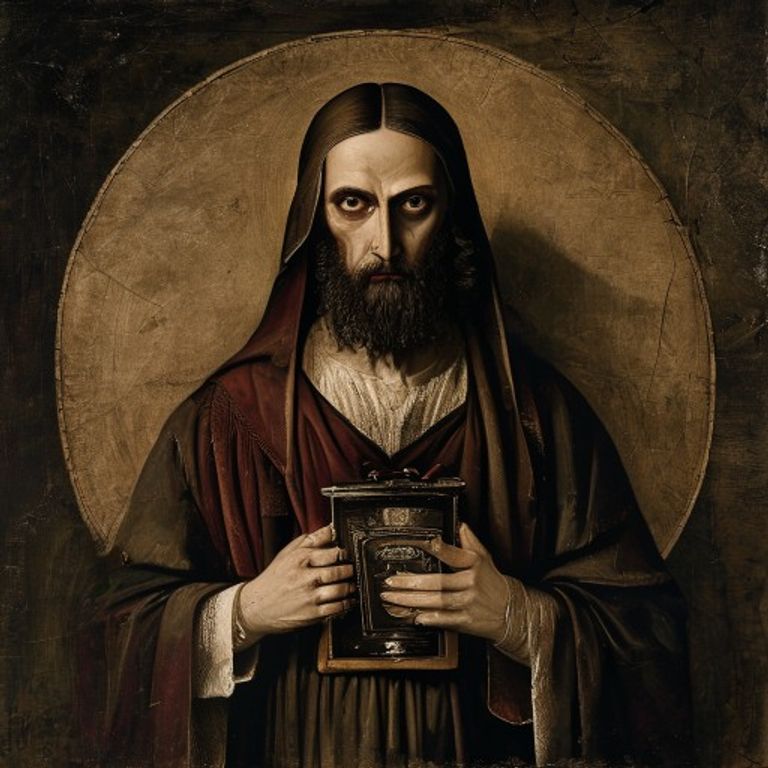
The criminal known as Bible John, who killed three women in Glasgow in the late sixties, identified by his habit of quoting biblical passages to his victims.
⚠️ Research conducted with the aid of Deep Research is subject to referential ambiguity.
🖥️ Clean HTML code using a proprietary tool.
👥 Research by Guilherme Felipe, Curation by Sílvio Lôbo
The Case of the Bible Killer: The Shadow of a Serial Killer Who Haunted Pennsylvania
Among the annals of unsolved mysteries, few cases possess the sinister aura and baffling persistence of "The Case of the Bible Killer" (The Bible Belt Murderer). During the 1970s, an enigmatic individual terrorized the metropolitan area of Philadelphia, Pennsylvania, leaving a trail of brutal deaths and a single, peculiar trademark: a copy of the Bible left on the victims' bodies, often with specific passages underlined.
1. The Context and the Incident: The Beginning of Terror in the "City of Brotherly Love"
The mystery began to unfold in June 1971. Local authorities, particularly the Philadelphia Police Department, were alerted to a shocking crime scene. The victim, Virginia Johnson, a 33-year-old woman, was found dead in her apartment. The brutality of the crime was evident, but what immediately drew attention was the presence of an open Bible next to the body. Within its pages, biblical passages were underlined, adding a disturbing and religious layer to the act.
In the months and years that followed, the macabre discovery would repeat itself. Other women, with varied socioeconomic and ethnic profiles, were found murdered in their homes or in discreet public locations. With each crime scene, the pattern became clearer: the presence of the underlined Bible, a unifying and terrifying link that would soon dub the killer "The Bible Killer." The police found themselves facing a methodical and ruthless predator, whose motivation seemed rooted in a dark distortion of faith.
2. Timeline of Crucial Events
- June 1971: First known victim, Virginia Johnson, found dead in her Philadelphia apartment. The underlined Bible is discovered for the first time.
- November 1972: Joan C., 28, is found murdered. Again, the Bible with marked passages is found at the crime scene.
- May 1973: Mary P., 45, becomes the third identified victim, following the same macabre modus operandi.
- October 1973: The list of victims grows with the murder of Sarah J., 39.
- March 1974: The killer strikes again, victimizing Elizabeth R., 22.
- August 1974: The case gains even more notoriety with the murder of Susan G., 31. Media coverage reaches its peak, causing panic among the population.
- Early 1980s: Official investigations seem to go cold, without a clear or conclusive suspect. The case enters a limbo of unsolved mystery.
- Subsequent Decades: The Bible Killer case solidifies as one of the most notorious "cold cases" in American criminal history.
3. Main Theories: Seeking Logic in Madness
The enigmatic nature of the killer and the peculiarity of his signature gave rise to a myriad of theories, ranging from the scientific to the paranormal.
3.1. Police and Psychological Hypotheses (Most Likely):
- Psychopath with Religious Delusions: This is the prevailing theory among investigators. It suggests an individual with antisocial personality disorder, possibly with a history of abuse or trauma, who developed a moral superiority complex and used religion as a justification for his violent acts. The underlined passages could have had personal meaning for the killer, perhaps interpreted as divine orders or justifications for punishing the victims.
- Revenge or Cycle of Violence: Some investigators speculated that the victims might have had a common link unknown to the police, perhaps related to a past event that triggered the killer's rage. Alternatively, the killer could have been replicating a pattern of violence he himself experienced or witnessed.
- Deliberate Red Herring: The possibility that the Bible was a "red herring" designed to divert attention from the true motivation or the killer's profile cannot be ruled out. However, the consistency of the pattern across multiple crimes makes this hypothesis less likely for most investigators.
3.2. Alternative and Conspiracy Theories:
- Secret Religious Cult: Speculations about the existence of an extremist or dissident religious cult that used ritualistic violence to achieve its goals. Victims could have been chosen for specific reasons within that ideology.
- Connection to Other Serial Killers: A bolder theory suggests a possible connection, direct or indirect, to other serial killers active at the same time, although there is no concrete evidence to support this link. The modus operandi, while unique, could have had influences.
- Disinformation Operation: In more conspiratorial scenarios, it was suggested that the very narrative of the "Bible Killer" could have been fabricated or manipulated to cover up other crimes or for political purposes.
3.3. Paranormal Theories:
- Demonic Possession: In more mystical circles, the idea that the killer could have been possessed by a demonic entity that induced him to commit the violent acts and use the Bible as a way to "distort" faith for his evil purposes.
- Negative Energies or Curse: The belief that the Philadelphia region, or specific locations where the crimes occurred, could have been under the influence of negative energies or a "curse" that attracted or empowered the killer.
4. Controversies and Blind Spots: The Gaps in the Investigation
Despite intense investigative effort, the Bible Killer case is marked by blind spots and controversies that prevented its resolution.
- Lack of Conclusive Forensic Evidence: At the time, forensic techniques were less advanced. The scarcity of consistent fingerprints, DNA (which was barely used), or other physical evidence linking the crimes to a single individual made it difficult to identify a suspect.
- Conflicting Testimonies and Inconsistencies: Eyewitnesses reported sightings of suspects that often did not match, creating a confusing picture and leading to dead ends in the investigation.
- Ignored or Underestimated Clues: There are reports that some clues, such as specific details in the underlined Bible passages or unusual behavioral patterns of certain individuals, may have been underestimated or not thoroughly explored by the police. The emphasis on religious or moral theories may have obscured more pragmatic aspects of the investigation.
- The "Bible Collection": A recurring curiosity in the investigations is the possibility that the killer had a private collection of Bibles, often with specific editions from different eras. The origin and meaning of this collection were never fully elucidated.
- Public and Media Pressure: The intense public and media pressure on authorities to solve the case may have led to rushed investigations or premature conclusions, rather than meticulous and patient work.
5. Curiosities and Legacy: A Mystery That Persists
The Bible Killer case transcended the criminal sphere to become a pop culture icon and a milestone in serial killer studies.
- Cultural Impact: The case inspired books, documentaries, and articles, fueling public fascination with serial killers and unsolved mysteries. The image of the killer with his underlined Bible became an archetype of evil that disguises itself as religiosity.
- Declassified Files and Reopenings: Although the official files of the Bible Killer case have not been extensively declassified to the point of revealing new definitive clues, the interest in reopening the case and applying new forensic technologies has been a constant over the years. However, to date, no official reopening with significant new breakthroughs has been announced.
- Disappearance of Evidence: One of the most frustrating aspects of the case is the recurring allegation that some crucial evidence, such as detailed forensic reports or even physical evidence samples, may have been lost over time due to inadequate archiving or bureaucratic failures, making it impossible to re-examine them with modern technology.
- Legacy of Fear and Questioning: The Bible Killer left a legacy of fear and questioning. He reminds us of the fragility of society in the face of disturbed individuals and the complexity of evil, which often hides behind the most unexpected "facades," including those that should represent good and hope.
To this day, the Bible Killer remains a dark specter in the imagination of Pennsylvania, an open wound in criminal history, a poignant reminder that some mysteries, no matter how much one searches, may remain forever shrouded in the shadows of doubt and non-resolution.





