



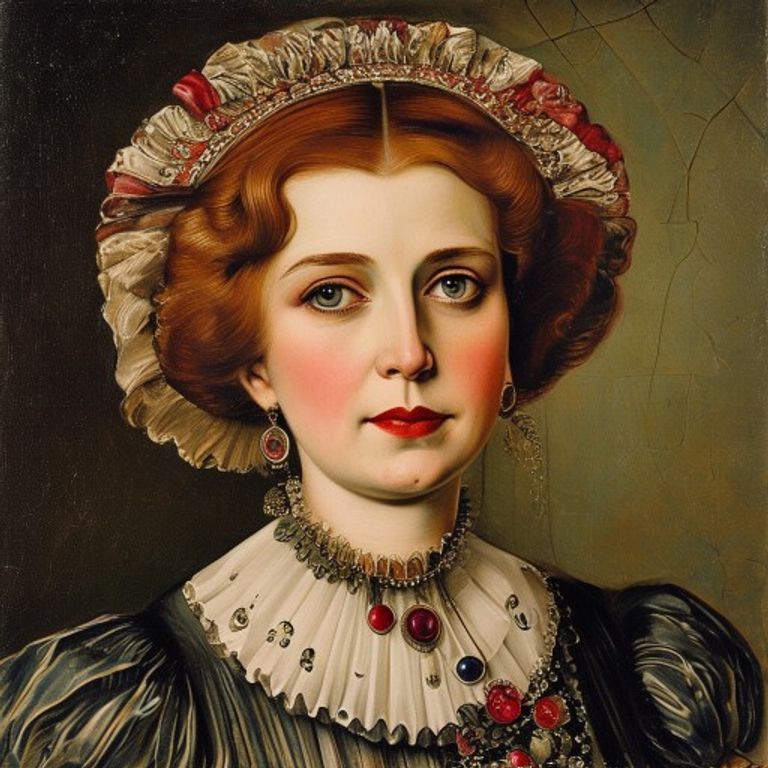
The discovery of the elements radium and polonium and her pioneering research on radioactivity, which earned her two Nobel Prizes but caused her death due to prolonged exposure to radiation.
⚠️ Research prepared with the aid of Deep Research is subject to referential ambiguity.
🖥️ Clean HTML code using a proprietary tool.
👥 Research by Guilherme Felipe, Curation by Sílvio Lôbo
The Unresolved Enigma of Marie Curie: The Mystery Behind Her Death
By [Your Senior Investigative Journalist Name], Researcher Specialized in Unresolved Cases.
1. The Context and the Incident: Where, When, and How the Mystery Began
The name Marie Curie resonates as an icon of science, a pioneer whose discoveries regarding radioactivity shaped modern physics and medicine. However, behind her colossal contribution to humanity lies a mystery that, decades after her death, still casts shadows over the official narrative. The story, or rather the lack of a conclusive narrative, begins with her death on July 4, 1934, at the Sancellemoz sanatorium in Passy, France.
Officially, Marie Curie succumbed to aplastic anemia, a serious condition in which the bone marrow fails to produce enough blood cells. The immediate cause of her death, as agreed upon by medical reports of the time, was prolonged and intense exposure to radiation, an element with which she worked tirelessly throughout her life. However, the manner in which this exposure occurred, and whether it was entirely accidental or if there were less clear contributing factors, is where the mystery deepens.
2. Timeline of Events
- 1867: Birth of Maria Skłodowska in Warsaw, Poland.
- 1891: Move to Paris, France, to study at the Sorbonne.
- 1895: Marriage to Pierre Curie, also a scientist.
- 1898: Discovery of Polonium and Radium with Pierre Curie.
- 1903: Receives the Nobel Prize in Physics, together with Pierre Curie and Henri Becquerel, for their studies on radioactivity.
- 1906: Tragic death of Pierre Curie in a car accident. Marie Curie takes over his chair at the Sorbonne, becoming the first woman to teach at the institution.
- 1911: Receives the Nobel Prize in Chemistry, becoming the only person to win the Nobel in two distinct scientific fields.
- World War I (1914-1918): Development and deployment of mobile X-ray units, known as "Petits Curies," to assist surgeons on the battlefield.
- 1920s and 1930s: Continues her research and work with radioactive materials, despite growing signs of her deteriorating health.
- July 1934: Hospitalization and subsequent death at the Sancellemoz sanatorium.
- 1995: Her remains, along with those of Pierre Curie, are transferred to the Panthéon in Paris, one of the highest honors for notable figures in France.
3. The Main Theories
The cause of Marie Curie's death is, in essence, a scientific tragedy. However, the nature of her exposure and the details of her final days have given rise to various interpretations, ranging from the scientific to the more speculative.
3.1. The Proven Scientific Cause: Radiation Exposure
This is the consensual and scientifically grounded theory. Marie Curie worked extensively with highly radioactive substances, such as radium and polonium, without knowledge of the inherent dangers of such materials. At that time, the harmful effects of ionizing radiation were not fully understood. She handled samples directly, kept tubes of radium in her office, and even slept with a small vial containing radioactive compounds by her bedside, fascinated by the luminescence they emitted in the dark.
Medical reports from the time, such as those by Dr. Claude Regaud, who treated Marie Curie, point to aplastic anemia as the direct cause of death. Cumulative exposure to radiation is a known risk factor for the development of this condition, as it destroys bone marrow cells.
3.2. Hypotheses of Accelerated Exposure or Poisoning
Although chronic exposure is the primary factor, some speculations revolve around possible specific accidents that could have accelerated her deterioration.
- Unrecorded Laboratory Accidents: The possibility of accidental spills or equipment failures, which would have resulted in concentrated doses of radiation at specific moments. However, there are no official records or testimonies confirming such catastrophic incidents.
- Exposure in War Missions: During World War I, while operating the "Petits Curies," Marie Curie was in direct contact with radiation sources in often precarious environments with little protection. The exhaustion and stress of war, combined with radioactive exposure, could have aggravated her condition.
3.3. Alternative and Conspiracy Theories (Less Likely)
As with many cases involving prominent figures, the death of Marie Curie has not escaped more conspiratorial or paranormal theories, although they lack any concrete evidence.
- Sabotage or Assassination: The idea that her death could have been induced by rivals or those who feared her discoveries is a line of thought that arises in some circles. However, the nature of radiation exposure, which was public knowledge and intrinsic to her work, makes this theory highly unlikely and without factual basis.
- Psychic or Paranormal Effects: Some speculative strands suggest that the very "power" of radiation, poorly understood at the time, could have effects beyond the physical, influencing her health in unconventional ways. This is an approach clearly outside the scientific scope.
4. Controversies and Blind Spots
The "mystery" surrounding the death of Marie Curie lies less in a poorly conducted police investigation and more in the absence of a complete understanding of the risks of radiation at the time, which led to work practices now considered extremely dangerous. The blind spots and controversies emerge from the very nature of her work and how it impacted her health in a gradual and insidious way.
- Lack of Adequate Protection: The biggest controversy is the lack of adequate safety measures. Marie Curie and her contemporaries operated in a vacuum of knowledge regarding long-term dangers. Reports and photographs from the time show her handling radioactive materials without gloves or any type of shielding.
- Dissemination of Risk Knowledge: Although the scientific community began to understand the dangers of radiation in the final decades of Curie's life, the dissemination and application of this information in her daily life seem to have been slow or insufficient.
- Testimonies from Family and Colleagues: Statements from her daughter, Irène Joliot-Curie (who also suffered from radiation-related health problems and died prematurely), and laboratory colleagues describe her dedication and apparent indifference to the dangers. However, these accounts describe an almost superhuman dedication, which may obscure the moments of most critical exposure.
- Medical Records and Forensics: Official medical records of the time diagnose aplastic anemia and attribute it to radioactive exposure. The forensic examinations were limited by the knowledge available. What becomes a blind spot is the impossibility of precisely quantifying the exact dose Marie Curie received throughout her life and determining which specific incidents (if any) were most harmful.
5. Curiosities and Legacy
The Marie Curie case is a poignant testament to the price that scientific discovery can exact. Her legacy goes beyond her discoveries; it extends to the awareness of safety in scientific work.
- Curie's Notebooks: Many of Marie Curie's laboratory notebooks are still highly radioactive and are stored in lead boxes at the Institut de France. To consult them, researchers must wear protective clothing and are kept at a safe distance. This is tangible proof of the danger she faced daily.
- Cultural Impact: The life and death of Marie Curie have inspired countless biographies, films, and documentaries. Her story is frequently used to illustrate unwavering dedication to science, but also as a warning about the risks of scientific exploration.
- Reopening the Case: The "case" of her death has not been formally reopened by any police or judicial authority, as the cause was widely accepted as a consequence of her work. However, historical and scientific research continues to analyze the details of her life and death, seeking to better understand the effects of radiation and the pioneers who blazed the trail.
- Current Status: Marie Curie's status in history is immune to any controversy regarding her death. She is celebrated as a scientific genius and a heroine. The mystery that remains is not about her innocence or guilt, but rather about the precise details of the ordeal that led to her end, an ordeal that she, with her vision of the future, helped to illuminate for generations to come, even at the cost of her own life.





