



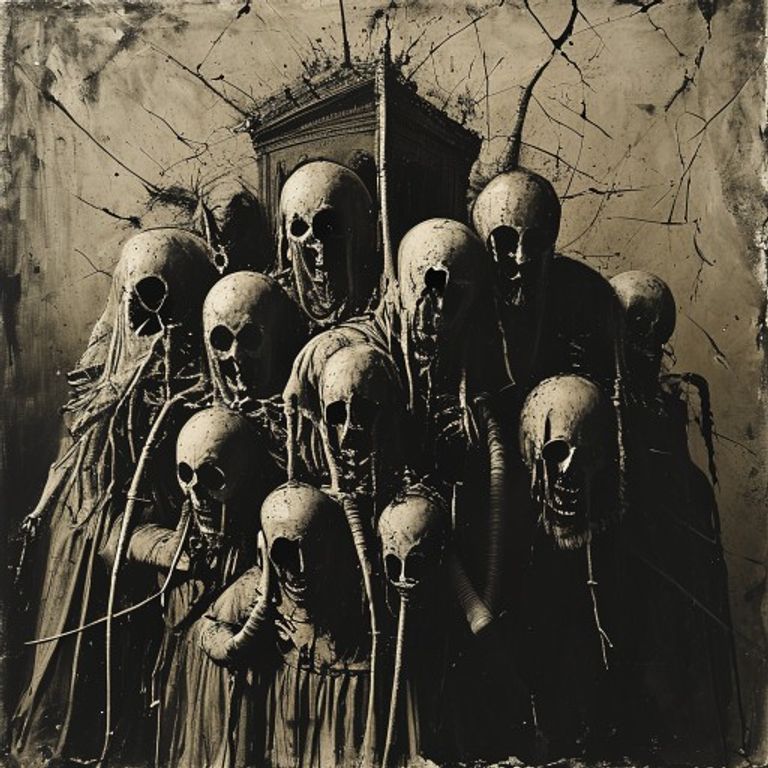
The murder of more than eight thousand Bosnian Muslims in 1995 during the Bosnian War, considered the greatest war crime and genocide to occur on European soil since the Second World War.
⚠️ Research conducted with the aid of Deep Research is subject to referential ambiguity.
🖥️ Clean HTML code using a proprietary tool.
👥 Research by Guilherme Felipe, Curation by Sílvio Lôbo
The Dark Veil of Srebrenica: A Massacre That Still Echoes
In the bowels of recent European history, amidst the brutal fragmentation of Yugoslavia, one event stands out for its savagery and the questions that, even decades later, continue to haunt the global conscience: the Srebrenica Massacre. What began as a safe haven under the protection of the United Nations turned into the stage for one of the most horrendous acts of genocide since World War II. This article seeks to unravel the layers of tragedy, politics, and omission surrounding Srebrenica, separating indisputable facts from the shadows of uncertainty.
1. The Context and the Incident: Where, When, and How the Mystery Began
The Srebrenica Massacre took place in July 1995, in the town of Srebrenica, located in Bosnia and Herzegovina. During the Bosnian War (1992-1995), the Srebrenica region, mostly inhabited by Bosnian Muslims (Bosniaks), was an enclave surrounded by Bosnian Serb forces. In April 1993, the city was declared a "safe area" by the United Nations, with the installation of a peacekeeping base composed of Dutch soldiers from UNPROFOR (United Nations Protection Force). The goal was to protect the civilian population from the conflict ravaging the region.
The incident that triggered the massacre was the capture of Srebrenica by Bosnian Serb forces, under the command of General Ratko Mladić, on July 11, 1995. What followed was a systematic operation to separate Bosniak men and boys from women, children, and the elderly. While women and children were forced to leave the city, the men and boys were detained, transported to isolated locations, and executed en masse. The death toll, confirmed by various forensic investigations and international tribunals, exceeds 8,000 men and boys.
2. Timeline of Events: A Chronological Reconstruction of Key Facts
- April 1993: Srebrenica declared a "safe area" by the UN.
- July 6, 1995: Start of the Serb offensive against Srebrenica.
- July 11, 1995: Fall of Srebrenica to Serb forces. General Ratko Mladić enters the city, announcing to the Bosniaks that they were "safe" while the massacre was about to begin.
- July 11-22, 1995: Forced separation of men and boys from other civilians. Mass executions at various locations.
- July 23, 1995: The UN Security Council condemns the massacre.
- 1996: Start of excavations and identification of the first mass graves.
- 1998-2002: Reports from the International Criminal Tribunal for the former Yugoslavia (ICTY) document the crimes.
- 2001: The ICTY convicts General Radislav Krstić for complicity in genocide.
- 2015: The ICTY convicts Ratko Mladić for genocide, war crimes, and crimes against humanity.
- 2017: The ICTY convicts Radovan Karadžić for genocide, war crimes, and crimes against humanity.
3. Main Theories: Possible Explanations and Hypotheses
Although the genocidal nature of the massacre is widely accepted and proven by international tribunals, the analysis of the "mystery" in Srebrenica lies in the layers of responsibility, the failures of the international community, and the details that may still emerge. Theories about what really happened and why unfold at different levels of depth and evidence.
3.1. Main Theory (Proven Fact): Planned Systematic Genocide
This is the theory endorsed by international tribunals, such as the ICTY and the International Court of Justice (ICJ). It is based on vast forensic evidence, declassified Serbian military documents, testimonies from survivors and perpetrators, and analysis of military communications. The logic is clear: Bosnian Serb forces, under the command of Mladić and with the knowledge and, in some cases, support of elements of the Serbian government of the Republika Srpska, planned and executed the ethnic cleansing of the Bosniak population in the region, culminating in the systematic elimination of adult men and boys to prevent their future reconstitution.
3.2. Theory of Omission and Failure of the International Community (Proven Fact)
This theory focuses on the responsibility of the UN and peacekeeping forces. Official documents and reports from parliamentary committees indicate that UNPROFOR, especially the Dutch contingent (Dutchbat), was at a great numerical and armament disadvantage to defend Srebrenica. The lack of a robust mandate, political hesitation to intervene militarily, and reluctance to authorize NATO airstrikes against Serb forces are pointed out as crucial factors that allowed the city to fall and the massacre to unfold. The decision not to provide more robust air support and the underestimation of the threat by some UN officials are blind spots that have been investigated.
3.3. Alternative and Conspiracy Theories (Speculation)
It is important to note that, although the massacre itself is an established fact, some theories seek to obscure or distort reality, minimizing Serbian responsibility or attributing blame to other actors. These theories, often disseminated by denialist groups, lack concrete evidence and are widely rejected by historians and the international judicial system.
- Theory of "Proportionality" of Violence: Some denialist narratives attempt to argue that the violence exerted by Serb forces was a "response" to Bosniak actions. This line of reasoning ignores the scale and systematic nature of the massacre, which was classified as genocide.
- Theory of "Confusion" and "Chaos" of War: Although the war was a chaotic period, the organization of the separation and execution of the men in Srebrenica demonstrates deliberate planning, not a mere result of confusion.
There are no paranormal or alternative scientific theories that explain the events of Srebrenica in a plausible way, given the volume of concrete evidence regarding deliberate human action.
4. Controversies and Blind Spots
Despite the vast documentation and judicial verdicts, Srebrenica still presents controversies and blind spots that fuel ongoing investigation and the search for complete justice.
- The Responsibility of the Serbian Government in Belgrade: While international tribunals focused responsibility on the military and political leadership of the Republika Srpska, the extent of the involvement and knowledge of the government of Serbia (then the Federal Republic of Yugoslavia) in the preparation and execution of the massacre remains a subject of debate and investigation. Reports suggest a more direct role than initially admitted.
- The Failure to Protect Refugees at the Potocari Base: In the town of Potocari, where many Bosniak civilians took refuge under the protection of Dutch troops, there were reports of violence and harassment against women and children as they were forced to leave the area. How the withdrawal was managed and whether there was active omission in protecting these civilians is a sensitive point.
- Complete Identification of Victims: Although thousands of victims have been identified through DNA testing in mass graves, the total number of missing persons is higher, and the identification of all remains and the location of all mass graves is a continuous and painful process.
- The Disappearance of Evidence: There have been allegations regarding the disappearance of crucial evidence and the destruction of documents by perpetrators to cover up their crimes. The investigation and recovery of this evidence is a constant challenge.
5. Curiosities and Legacy
The Srebrenica Massacre left an indelible legacy in contemporary history, shaping the international perception of genocide, state responsibility, and the effectiveness of UN peacekeeping missions.
- Cultural Impact: Srebrenica has become a global symbol of genocide and the failure of the international community to prevent atrocities. The memory of the victims is kept alive through memorials, documentaries, and ongoing educational efforts.
- Current Status of the Case: The Srebrenica case is not closed. On the contrary, the convictions at the ICTY established important precedents for international justice. However, the search for justice continues, with the enforcement of sentences and the continuation of investigations to identify everyone involved.
- Potocari Memorial: The Potocari Memorial and Cemetery, located near Srebrenica, is a place of pilgrimage and reflection, where identified victims are buried. Each tomb represents a life brutally interrupted.
- Debates on Humanitarian Intervention: The massacre intensified debates about the necessity and limits of humanitarian intervention and the responsibility to protect civilian populations in conflicts.
The Srebrenica Massacre Case is a grim reminder of what can happen when ethnic hatred meets political weakness and moral failure. Investigations continue, the search for truth and justice remains, and the history of Srebrenica serves as a perpetual warning to humanity.





