



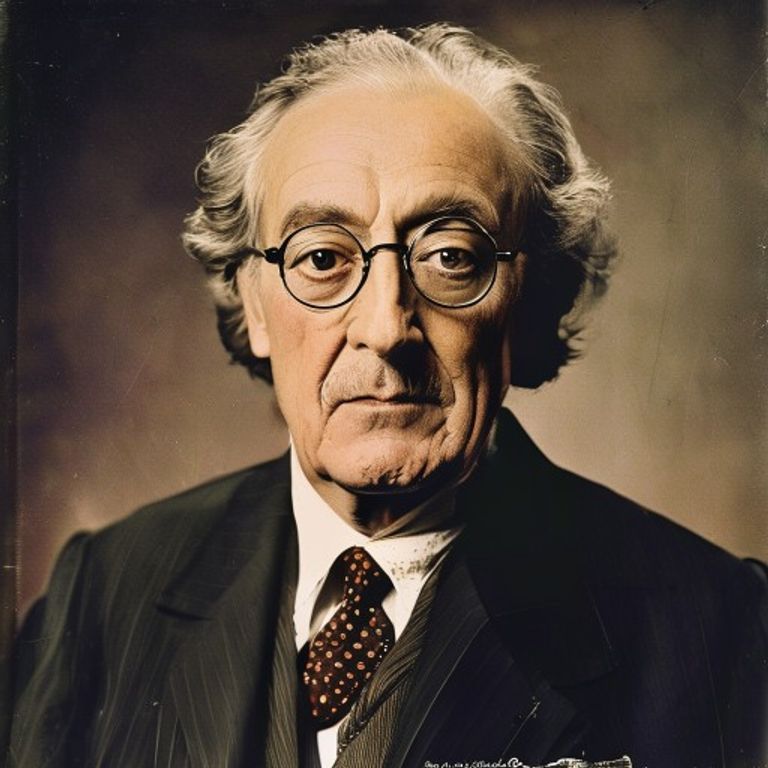
The young man who committed millions in fraud and assumed false identities as a pilot, doctor, and lawyer in the sixties, inspiring the film 'Catch Me If You Can'.
⚠️ Research conducted with the aid of Deep Research is subject to referential ambiguity.
🖥️ Clean HTML code using a proprietary tool.
👥 Research by Guilherme Felipe, Curation by Sílvio Lôbo
The Golden Chameleon: Unraveling the Enigma of Frank Abagnale Jr.
In the labyrinth of stories that defy logic and the law, few cases capture the imagination like that of Frank Abagnale Jr., the man who lived multiple lives, forged complex identities, and deceived authorities on a global scale, all before turning 20. This documentary article investigates the intricacies of one of history's greatest impostors, separating myth from reality with journalistic and analytical rigor.
1. The Context and the Incident: Where, When, and How the Mystery Began
The "mystery" of Frank Abagnale Jr. does not begin with a single incident, but rather with a web of interconnected frauds that unfolded primarily in the United States during the 1960s. Born in New York on April 27, 1948, the young Abagnale began his criminal journey at a surprisingly early age, driven by a sharp intelligence and a lack of scruples remarkable for his years.
The starting point of his most audacious activities is often associated with his first check forgeries. Initially, he exploited flaws in banking systems and check printing, but quickly evolved into more sophisticated counterfeiting. Abagnale's "magic" lay in his ability to infiltrate different social and professional environments, assuming convincing personas and exploiting the inherent trust of the systems he set out to deceive.
The mystery is intensified by the diversity of his personas. He presented himself as a Pan Am airline pilot, a doctor, a lawyer, and a professor, always with impeccable fake documents and a poise that allowed him to move through circles of power and prestige. The audacity of his actions, combined with the apparent ease with which he escaped detection, created a trail of disbelief and admiration in the criminal underworld and in the minds of investigators.
2. Timeline of Key Events
The chronological reconstruction of Frank Abagnale Jr.'s exploits is a complex exercise, given the clandestine nature of his activities and the lack of detailed real-time official records. However, based on confessions, police reports, and subsequent interviews, we can outline his trajectory:
- 1963: Start of small-scale check forgeries. Abagnale Jr., still a teenager, begins exploring techniques to deceive banks.
- 1964-1965: The evolution of fraud. He perfects his forgery techniques and begins using false identities to obtain credit and evade debts.
- 1966: The emergence of the pilot persona. Abagnale Jr. forges a Pan Am uniform and ID badge, posing as a pilot to fly for free on courtesy flights and stay in hotels. This became one of his most famous identities.
- 1967-1968: Expansion into other professions. He assumes the roles of a doctor at a Georgia hospital and an assistant prosecutor in Louisiana, demonstrating impressive adaptability and research skills to sustain his facades.
- 1969: Initial arrest. Abagnale Jr. is finally arrested in New York after an operation coordinated by FBI agents, including agent Carl Hanratty (a central figure in his eventual collaboration).
- 1970: Escapes and new identities. Even after his arrest, Abagnale Jr. demonstrates an ability to escape, recidivating in his fraudulent activities across different jurisdictions.
- 1974: Definitive capture and deal with the FBI. After a new pursuit and arrest, Abagnale Jr., facing a long sentence, agrees to cooperate with the FBI in exchange for a reduced sentence.
3. The Main Theories
The case of Frank Abagnale Jr., due to its extraordinary nature, has generated several theories to explain his meteoric rise and escapes. We have separated the most plausible from the most speculative:
Police and Psychological Theories (Most Likely):
- Impostor Syndrome and Search for Identity: One of the most recurring explanations suggests that Abagnale Jr. suffered from a deep need for validation and self-acceptance. His constant changes of identity would be a way of seeking a persona that pleased him, an escape from a sense of inadequacy in his personal life, possibly exacerbated by his parents' divorce. His intelligence and sociability were tools to mask this fragility.
- Opportunism and Systemic Failures: The most direct and proven theory points to Abagnale Jr.'s opportunism and the glaring flaws in the security and identity verification systems of the time. The absence of integrated communication networks, slow bureaucracy, and excessive trust in appearances allowed his forgeries to thrive. He exploited every loophole with surgical precision.
- Exceptional Intelligence and Observational Capacity: Abagnale Jr. possessed a sharp intelligence and a remarkable capacity for observation and memorization. He studied behaviors, protocols, and appearances, replicating them with mastery. This ability, combined with a great deal of courage, allowed him to adapt to radically different environments with ease.
Alternative and Speculative Theories:
- The "Black Hole" of Information: Some investigators and theorists raise the possibility that Abagnale Jr. did not act alone. The scale and sophistication of his operations could suggest the involvement of a support network or mentors who instructed him in forgery and evasion techniques. However, there is no concrete evidence to support this hypothesis.
- Psychotropic Influence or Hypnosis (Marginal Theory): In more conspiratorial circles, there is speculation about the use of substances or hypnosis techniques to facilitate victim trust. This theory lacks any scientific foundation or material proof and is widely dismissed by experts.
- The "Key Person" Theory for the FBI: A speculative line of thought suggests that the FBI, unable to capture Abagnale Jr. for years, might have "developed" the case as a "laboratory" to improve their fraud investigation techniques, allowing him to remain active under veiled surveillance. This theory, while intriguing, is not corroborated by declassified documents.
4. Controversies and Blind Spots
The narrative of Frank Abagnale Jr., especially after his collaboration with the FBI and the popularization of his story, is marked by controversies and blind spots that fuel the debate over the veracity of his deeds:
- The Exaggeration of the Narrative: Critics and even investigators point out that Abagnale Jr.'s story, as told in his autobiographical book and cinematic adaptations, may contain exaggerated or fictional elements. The very definition of "mystery" may have been amplified for marketing and media interest purposes.
- The Absence of Detailed Official Reports: During the height of his activities, the lack of a centralized fraud reporting system and Abagnale Jr.'s rapid mobility made it difficult for authorities to create a complete and coherent dossier. Many initial reports may have been lost or considered in isolation.
- Conflicting Testimonies: In some cases, testimonies from victims or witnesses may have diverged on specific details, whether due to the confusion of the moment, the influence of Abagnale Jr.'s later narrative, or the difficulty in recalling events after so many years.
- "Missing" or Unrecovered Evidence: Given Abagnale Jr.'s modus operandi, which involved the destruction or disposal of evidence and the creation of fluid identities, it is likely that much physical proof of his forgeries has been lost over time. The speed with which he changed locations and personas made evidence collection a Herculean task.
- The Credibility of "Rehabilitation": Abagnale Jr.'s transformation from criminal to security consultant and speaker is, in itself, a point of debate. Although he provided valuable service to the FBI, the question of complete redemption and the veracity of his active participation in combating fraud after his detention still generate skepticism in some circles.
5. Curiosities and Legacy
The case of Frank Abagnale Jr. transcended police headlines to become a cultural phenomenon, inspiring books, films, and documentaries. His legacy is complex and multifaceted:
- Cultural Impact: Abagnale Jr.'s story captured the public's imagination through his audacity, intelligence, and "gentleman thief" persona. The film Catch Me If You Can, by Steven Spielberg, starring Leonardo DiCaprio as Abagnale Jr. and Tom Hanks as agent Hanratty, cemented his legend in popular culture.
- Collaboration with the FBI: His decision to cooperate with the FBI after being arrested in 1974 is one of the most intriguing aspects of his trajectory. He spent years working with the agency, using his knowledge to train agents and develop methods to combat fraud and forgery.
- Current Status of the Case: Frank Abagnale Jr.'s criminal case was largely closed with his conviction and subsequent cooperation agreement with the FBI. However, the legend and controversies surrounding his exploits continue to be the subject of analysis and debate. There are no records of the case being reopened as an unsolved mystery, but rather as a continuous case study on the nature of fraud, identity, and redemption.
- The Perpetuation of the Legend: Even decades after his deeds, Frank Abagnale Jr. remains a figure of fascination. His ability to reinvent himself, deceive systems, and inspire such an engaging narrative positions him as one of history's most notable impostors, a walking enigma whose boundaries between truth and fiction remain, in many respects, intentionally obscure.





