



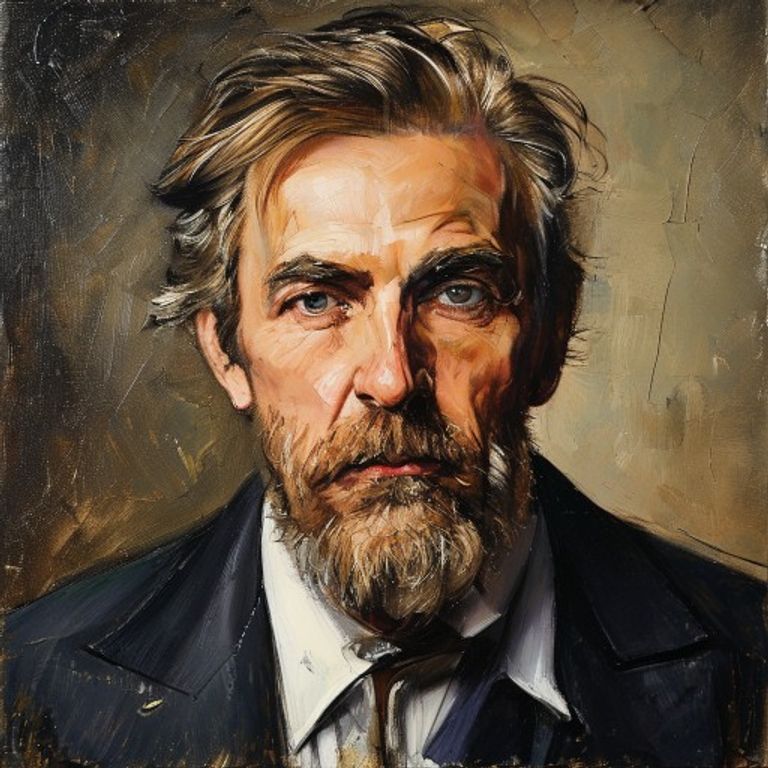
The official eighteenth-century military and medical investigation in Serbia regarding a soldier who allegedly returned after death, serving as one of the historical records for the myth of vampirism.
⚠️ Research conducted with the aid of Deep Research is subject to referential ambiguity.
🖥️ Clean HTML code using a proprietary tool.
👥 Research by Guilherme Felipe, Curation by Sílvio Lôbo
The Case of Arnold Paole: The Shadow of Vampires in Imperial Serbia
A name echoes in the annals of paranatural investigation and dark folklore, a tale that transcends generations and borders, fueling nightmares and fascination: the case of Arnold Paole. This is not a mere macabre fairy tale, but a series of events that, in the heart of the Austro-Hungarian Empire in the 18th century, unleashed genuine panic, triggering official investigations and inspiring legends about the most feared of nocturnal creatures: the vampire.
1. The Context and the Incident: Where, When, and How the Mystery Began
The story of Arnold Paole unfolds in the small and remote village of Medveđa, in Serbia, then part of the Austro-Hungarian Empire, around 1727. Paole was a Serbian soldier who, after his service, allegedly became the victim of a vampire bite, or so he claimed before his death under mysterious circumstances. What began as an isolated incident soon turned into a collective nightmare. After Paole's death, the local population began to report an alarming increase in sudden and violent deaths in the village and surrounding areas. The victims, for the most part, died inexplicably, and many showed unusual marks, such as two small holes in the neck, and their bodies appeared to have suffered post-mortem disfigurement.
Fear and superstition took hold, and the rumor that Arnold Paole had returned from the dead as a vampire spread like wildfire. It is believed that, driven by panic and the belief in his guilt, the villagers acted according to the folkloric rituals of the time to "deal" with a vampire: they exhumed his body and executed him with a stake.
2. Timeline of Events
- ~1717: Arnold Paole, a Serbian soldier, supposedly contracts a "disease" in combat which, according to him, was caused by a vampire's bite.
- 1727: After returning to his home village of Medveđa, Paole dies of a fever or injury, possibly related to his previous condition.
- 1727-1731: An inexplicable number of sudden and violent deaths occur in Medveđa and neighboring villages. The victims exhibit symptoms that lead to the popular belief that they are being attacked by a vampire.
- 1731: Panic reaches its peak. It is believed that the body of Arnold Paole was exhumed and subjected to a ritual to eradicate his supposed vampiric condition, possibly with the use of a stake.
- 1732: An Austrian official, Baron von Freintzberg, documents the events in an official report, which would become the basis for the spread of the case.
- ~1732-1734: Other similar and frightening cases of alleged vampires emerge in the region, increasing the concern of imperial authorities. The case of Peter Plogojowitz, a peasant from a nearby village, becomes particularly notorious and is investigated by the imperial army surgeon, Johannes Flückinger.
- 18th Century onwards: The case of Arnold Paole, along with other similar incidents, contributes significantly to the formation of the modern image of the vampire in Western culture.
3. Main Theories
The case of Arnold Paole, due to its nebulous nature and the lack of conclusive evidence, gave rise to several theories, ranging from scientific explanations to the supernatural.
Scientific and Medical Theories
- Infectious Diseases: The most accepted theory among historians and scientists suggests that the deaths in Medveđa were caused by one or more infectious diseases. Epidemics such as the bubonic plague, typhoid fever, or rabies could explain the symptoms of weakness, fever, inexplicable bites (scratches or bites from rabid animals), and the rapid spread of the "curse." The decomposed state of the bodies and the "frightening" appearance during exhumations can be normal results of decomposition under certain climatic or soil conditions.
- Parasites and Worms: Some researchers suggest the possibility of infestations by parasites, such as tapeworms, which could cause exhaustion, anemia, and the sensation of "blood being drained" from the bodies. In advanced stages, dehydration and post-mortem autolysis could give a pale and "bloated" appearance to the corpses.
- Psychosocial Disorder: Collective hysteria and a strong belief in vampires may have induced behaviors that were subsequently interpreted as acts of vampirism. Fear may have led villagers to see signs of vampirism where none existed.
Folkloric and Paranormal Theories
- Genuine Vampirism: The classic folkloric theory, which was the basis for the belief at the time, posits that Arnold Paole truly became a vampire after his death. This belief was fueled by the strong oral tradition and superstition in the region. The exhumations and rituals performed aimed to eliminate a supernatural threat.
- The Influence of Folkloric Vampirism: The very narrative of the Paole case, upon being documented and disseminated, may have influenced the perception of other events and fueled fear. The line between reality and cultural interpretation becomes thin.
Conspiracy and Alternative Theories
- Manipulation by Authorities: Although less likely, some alternative theories suggest that imperial authorities may have exploited or exacerbated the panic to exert control over the rural population or to justify the military presence in the region. The official documentation could have been written with a specific bias.
- Ritualistic Contamination: A speculative scenario is that the exhumation rituals, which involved piercing the bodies, could have introduced bacteria or other agents that accelerated decomposition or created abnormal appearances, reinforcing the belief in vampirism.
4. Controversies and Blind Spots
The investigation and documentation of the Arnold Paole case, although notable for the time, are far from immune to criticism and gaps.
- Limited Scientific Rigor: The "examinations" performed on the bodies, such as those described in Johannes Flückinger's report on the Peter Plogojowitz case (often associated with Paole by the press and researchers), lacked modern scientific rigor. The pre-existing belief in vampires inevitably influenced the interpretation of evidence. The presence of blood in the mouth or the decomposition of a body could easily be misinterpreted.
- Collective Testimonies and Hysteria: Eyewitness accounts were often influenced by collective fear and established belief. What one person "saw" could be shaped by what the community believed. The documentation of these "witnesses" may have been superficial and lacking critical analysis.
- Lost or Missing Evidence: Given the nature of the events and the era, it is almost certain that crucial physical evidence, if it ever existed, has been lost over time. The exhumed bodies, the instruments used in the rituals, and even the original reports in their entirety may no longer exist or be inaccessible.
- Variations in Reports: Although Baron von Freintzberg's report is the most cited primary source, other accounts and rumors may have emerged, creating inconsistencies in the general narrative. The way the story was passed down and translated may have introduced distortions.
- The Lack of Direct Correlation of Paole with Other Cases: Although frequently linked to other cases of vampirism in Serbia, such as that of Peter Plogojowitz, the direct and explicit connection of Arnold Paole as the "patient zero" of a specific outbreak is based on interpretations and chronologies that may have been simplified to create a more cohesive narrative.
5. Curiosities and Legacy
The case of Arnold Paole transcended the borders of a small Serbian village to become a pillar in the mythology of the modern vampire.
- The Official Archive: The best-known report on the case, which popularized it, was compiled by Baron von Freintzberg in 1732. This document, which detailed the events and exhumations, reached the hands of authorities and academics, fueling the discussion about vampirism on the continent.
- Influence on Literature and Cinema: The story of Paole, along with other similar cases investigated by imperial authorities, directly influenced how the vampire came to be portrayed in Western culture. The idea of the dead returning to haunt the living, and the need for rituals to combat them, were crucial elements that were consolidated with these reports. Without these incidents, Bram Stoker's Count Dracula, for example, might have had a very different face.
- Contribution to Parapsychological Investigation: The Arnold Paole case is one of the first documented examples of an "official" investigation into alleged paranormal phenomena. Although limited, this approach set a precedent for the analysis of inexplicable events, even if under the lens of the superstition of the time.
- Current Status: The case of Arnold Paole is, for all practical purposes, "shelved" from a legal or criminal standpoint. There are no ongoing official investigations. However, its legacy lives on in historical, folkloric, and anthropological studies, and, of course, in popular culture. It continues to be a point of reference for those who study the history of vampirism and how society deals with the fear of the unknown. The mystery remains, a perpetual shadow that hangs over the village of Medveđa and over the very nature of reality.





