



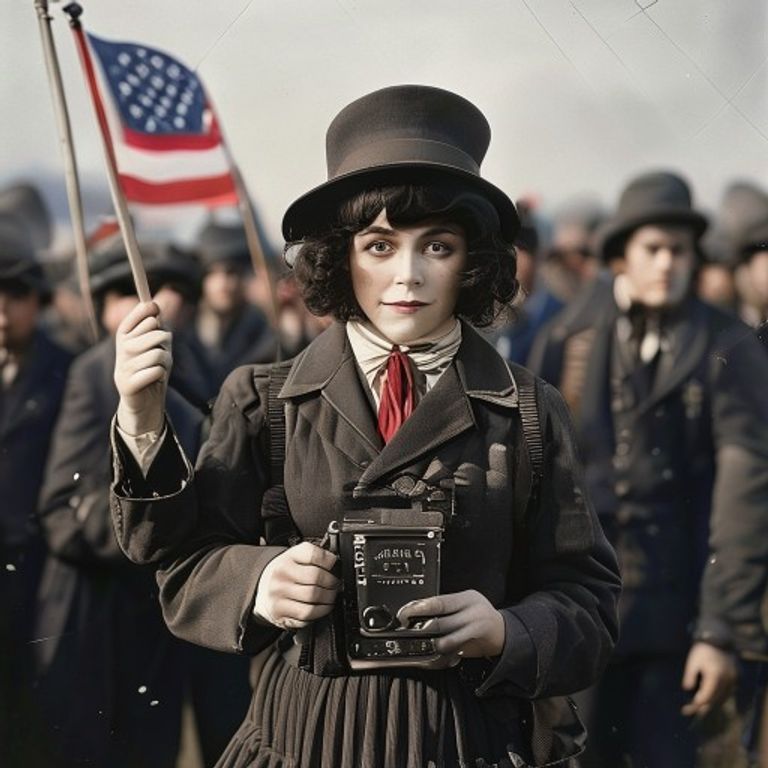
The first major strike movement in Brazilian history, which began in São Paulo, paralyzed the industry and demanded better working conditions and wages.
⚠️ Research prepared with the aid of Deep Research is subject to referential ambiguity.
🖥️ Clean HTML code using a proprietary tool.
👥 Research by Guilherme Felipe, Curation by Sílvio Lôbo
The 1917 Strike Case: Shadows and Silences Amidst the Workers' Revolt
The year 1917, a watershed moment in world history, was the stage for events that would shape the future. In Brazil, social tensions were boiling over, culminating in one of the darkest and most enigmatic chapters of the labor movement: the so-called "1917 Strike Case". More than just a simple work stoppage, this strike, which shook industrial centers like São Paulo and Rio de Janeiro, hides in its interstices a mystery that has persisted for over a century, marked by inexplicable disappearances, failed investigations, and a veil of silence that defies logic.
1. The Context and the Incident: The Muffled Cry of the Working Class
The beginning of 1917 in Brazil was a cauldron of dissatisfaction. World War I, although geographically distant, impacted the national economy, raising the cost of living and worsening the misery of the working class. The incipient industrialization, with its precarious conditions, long hours, and low wages, fueled a growing anarchist and socialist sentiment, driving the organization of unions and strikes. In July 1917, the spark was lit in São Paulo. Under the pretext of protesting against the rising price of bread and poor working conditions, workers from various factories paralyzed their activities. What was expected to be a peaceful demonstration quickly devolved into a broader conflict, with clashes between strikers and public forces, looting, and fires.
However, the mystery does not lie in the outbreak of the strike itself, but in the subsequent consequences. Amidst the chaos and brutal repression, several workers and union leaders disappeared. There are no records of deaths in direct clashes that explain the absence of so many individuals. The official version, always vague and laconic, spoke of "dispersed detainees" or "fugitives from justice." Nevertheless, the families and comrades of the missing knew that something much more sinister had occurred.
2. Timeline of Events: Fragments of a Collective Memory
The exact reconstruction of events is hindered by the scarcity and fragmentation of official records and the lack of direct testimonies regarding the disappearances. However, the main facts can be outlined:
- Early July 1917: Worsening of living and working conditions, increase in the cost of basic goods. Intensification of union and anarchist activities.
- July 10, 1917: Start of the general strike in São Paulo, with the participation of thousands of workers.
- July 11 to 15, 1917: Clashes between strikers and the police and army. Looting, fires, and the declaration of a state of siege in some areas. Repression intensifies.
- Mid-July 1917 onwards: Reports of disappearances of union leaders, militants, and common workers. Families seek information but find closed doors and evasive answers.
- August 1917: Smaller, scattered strikes in other cities, such as Rio de Janeiro, also marked by repression.
- Subsequent Decades: The case falls into official oblivion but endures in the memory of labor organizations as a symbol of State violence against the labor movement.
3. The Main Theories: Between Reason and Enigma
The absence of a body, confessions, or an official closure for the disappearance of so many individuals has given rise to various speculations and theories. We have separated the most relevant ones:
3.1. Police and Scientific Theories (Most Likely):
- Summary Executions and Disposal of Bodies: The most plausible, albeit grim, theory points to extrajudicial executions carried out by security forces. Under the pretext of restoring order, groups of dissidents could have been detained, taken to isolated locations, and summarily executed, with their bodies subsequently hidden to avoid any type of record or investigation. The police brutality of the era, documented in other contexts, corroborates this hypothesis. Partially declassified police reports mention "shock operators" and "extreme measures" to contain the strike.
- Imprisonment and Forced Exile: A variation of the previous theory suggests that, instead of execution, the most influential union leaders and militants could have been arrested and forced into exile, either to other regions of Brazil or even abroad, without any official record. This would have been a strategy to dismantle the movement without the need for deaths that could generate martyrs.
- Actions of Death Squads (Linked to Industrialists): Some reports, although more difficult to prove documentarily, point to the activity of paramilitary or death squads, possibly funded by influential industrialists, who would have acted to silence the most radical leaders of the strike, eliminating them discreetly.
3.2. Alternative, Conspiracy, or Paranormal Theories (Speculative):
- Unrelated Mass Disappearances: A less likely theory suggests that the disappearances, although coinciding with the strike, could be isolated and unrelated events, the result of accidents, common crimes, or mass emigration for reasons unrelated to the strike, and that the association with the historical event would be mere coincidence or historical distortion.
- Foreign or Secret Intervention: Conspiracy hypotheses suggest the intervention of foreign powers interested in destabilizing the country or controlling the emerging labor movement. The lack of detailed information about the missing fuels the belief in secret and undocumented operations.
- Paranormal Phenomena or Inexplicable Explanations: In more esoteric circles, there is speculation about the possibility of inexplicable phenomena, such as dimensional portals or abductions, that would have taken the missing. This line of reasoning, although without scientific basis, reflects the desperation and lack of concrete answers for such a traumatic event.
4. Controversies and Blind Spots: The Silence of Official Sources
The major obstacle to resolving the 1917 Strike Case lies in the deep gaps and inconsistencies of the official investigations:
- Vague and Incomplete Official Reports: The few official documents that survive are notably imprecise regarding the names of the missing, the circumstances of their arrests, or the investigations conducted. Many reports were lost or deliberately destroyed.
- Ignored or Silenced Testimonies: Families and fellow strikers tried to obtain information, but their testimonies about excessive police violence and arbitrary arrests were frequently ignored by the authorities. There are reports of witnesses who suffered intimidation or threats.
- Hidden or Destroyed Clues: The lack of forensic analysis at potential execution sites, the absence of prisoner transfer records, and the disappearance of material evidence suggest a deliberate action to erase traces.
- The Denunciation of Luiz de Carvalho and José Chagas: Intellectuals and anarchist leaders of the time, such as Luiz de Carvalho and José Chagas, publicly denounced the violence and disappearances. Their publications and pamphlets, although recognized by the labor community, were marginalized and disregarded by the authorities.
- The Silent "Blacklist": There are indications, based more on collective memories than on documents, that a "blacklist" of militants dangerous to the established order had been drawn up, and that the missing were part of it.
5. Curiosities and Legacy: An Enigma that Persists
The 1917 Strike Case transcended the political and social sphere to become an enduring symbol of state repression and the fight for justice. Its legacy is complex:
- Cultural Impact: The strike and the subsequent disappearances inspired various literary, theatrical, and musical works, which portray the brutality of the era and the courage of the workers. The memory of these events shaped the identity of many social movements in Brazil.
- Historical Memory and the Fight for Truth: Human rights organizations and historians continue to search for declassified archives and testimonies that can shed light on what really happened. The case is frequently cited in discussions about the history of repression in Brazil.
- Current Status: Officially, the "1917 Strike Case", regarding the disappearances, remains open. There has been no formal reopening of investigations, but the pressure for memory and justice is constant. The lack of definitive answers keeps the flame of investigation alive, a grim reminder that not all stories are told and not all crimes are punished.
The enigma of the missing from the 1917 strike is a grim reminder that, behind every great social revolt, there may be secrets hidden that time and silence try, in vain, to bury forever.





