



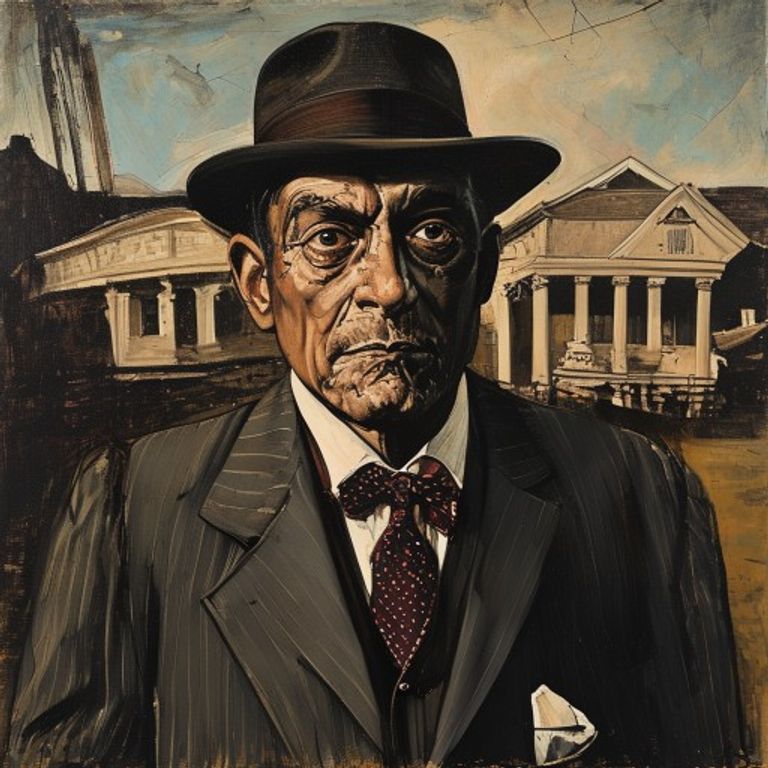
The mass suicide and murder of over nine hundred people in a cult in Guyana in 1978, led by Reverend Jim Jones, remains one of the greatest American traumas.
⚠️ Research conducted with the aid of Deep Research is subject to referential ambiguity.
🖥️ Clean HTML code using a proprietary tool.
👥 Research by Guilherme Felipe, Curation by Sílvio Lôbo
The Abyss of Jonestown: A Documentary on the Largest Mass Suicide in History
The humid jungle of Guyana, in South America, was the stage for one of the darkest and most enigmatic events of the 20th century: the Jonestown Massacre. On November 18, 1978, more than 900 people, most of them Americans, died in an act of collective despair orchestrated by cult leader Jim Jones. What led so many followers to drink a deadly cocktail of cyanide mixed with Kool-Aid? The story of Jonestown is a tangle of psychological control, religious fanaticism, official negligence, and a mystery that, decades later, still echoes in the shadows.
1. The Context and the Incident: Where, When, and How the Mystery Began
Jonestown, officially known as the Peoples Temple, was a utopian community established in 1974 in the heart of the Guyanese jungle. Founded by Jim Jones, the Peoples Temple presented itself as a progressive organization, offering a refuge for the disadvantaged and minorities, promising racial, social, and economic equality. The promise of an earthly paradise, far from the ills of American society, attracted thousands of followers. However, behind the facade of altruism lay a regime of absolute control, psychological manipulation, and physical and sexual abuse.
The crisis culminated in 1978, when U.S. Congressman Leo Ryan, accompanied by a team of journalists and relatives of Temple members, traveled to Jonestown to investigate reports of mistreatment and abuse. On November 18, as Ryan and his entourage were leaving the community, they were ambushed and brutally murdered by Temple members. A few hours later, Jim Jones himself ordered his followers to gather in the central square. What followed was the order for "revolutionary suicide." Vats of Kool-Aid, mixed with cyanide and sedatives, were distributed. Children were the first to be forced to drink, followed by the adults. The event, which lasted several hours, resulted in the death of 909 people, including 304 children.
2. Timeline of Key Events
- 1950s: Founding of the Peoples Temple by Jim Jones in Indiana, USA.
- 1970s: Exponential growth of the Temple, with expansion to California and Venezuela.
- 1974: Establishment of Jonestown in Guyana.
- Mid-1977 - 1978: Increase in reports of abuse and control by former members and concerned families.
- November 1978: Visit by Congressman Leo Ryan and his team to Jonestown.
- November 18, 1978: Murder of Leo Ryan and four others at Port Kaituma. Simultaneously, the massacre occurs in Jonestown.
- November 19, 1978: Discovery of the tragedy by Guyanese and American authorities.
3. Main Theories
The catastrophic and shocking nature of the events in Jonestown generated several theories, ranging from explanations based on social psychology to more fantastic speculations.
Psychosocial and Cult Control Theories:
- Brainwashing and Mind Control: This is the prevailing theory among psychologists and cult experts. It is argued that Jim Jones used extreme psychological manipulation techniques, such as sleep deprivation, social isolation, constant interrogations, rewards and punishments, and the creation of emotional and psychological dependence among followers. The external threat (the "corrupt capitalist world") and the promise of salvation in Jonestown would have solidified this control. FBI reports and academic studies cite the use of "shock therapies" and the creation of an environment of constant fear to maintain obedience.
- Mass Stockholm Syndrome: Some experts suggest that Jim Jones's followers developed a form of Stockholm Syndrome, where the hostages (the followers) develop emotional bonds with their captors (Jim Jones and the Temple leadership) due to fear and dependence.
- Despair and Escape from Reality: Many Jonestown followers were marginalized individuals with histories of abuse, poverty, or social alienation. The promise of a paradise and the strong group identity offered by the Peoples Temple may have been an irresistible refuge. When the utopia began to crumble and repression increased, the mass suicide may have been seen as the final way to escape "oppression" and achieve "transcendence."
Conspiracy and Alternative Theories:
- CIA/U.S. Government Involvement: One of the most persistent theories is that the CIA or other government agencies had some kind of involvement, whether by deliberately ignoring reports to avoid scandals or, in more extreme versions, even facilitating the massacre to eliminate potential dissidents or conduct social experiments. This theory is based on reports that the Peoples Temple had informal contacts with government agents in the past. However, there is no concrete evidence to support this claim.
- Alien or Paranormal Influence: Although marginal, some theories speculate about non-human external influences or paranormal energies that led the followers to despair. These theories lack any scientific or empirical basis and are generally rejected by serious investigators.
- Coordinated Action by External Forces: A less common strand suggests that the massacre was orchestrated by forces external to Guyana or the Temple, aiming to discredit the United States or create instability in the region. Again, the lack of concrete evidence makes this hypothesis highly unlikely.
The Criminal and Police Hypothesis:
- Direct Order from Jim Jones: This is the most direct and widely accepted explanation by investigators. Jim Jones, feeling that his empire was collapsing and fearing reprisals for the death of Leo Ryan, decided that the end would be an act of "revolutionary martyrdom." Witness accounts and audio recordings from that day indicate that Jones delivered inflammatory speeches inciting suicide. The distribution of the poison was supervised by members loyal to the leadership.
4. Controversies and Blind Spots
The investigation into Jonestown was marked by failures, inconsistencies, and dark areas that fuel the mystery.
- Delay in Official Response: The delay by Guyanese and American authorities in reaching the site after the massacre is a point of strong criticism. Some argue that this allowed the crime scene to be compromised.
- Destruction of Evidence: There are allegations that much crucial evidence, including documents and recordings, was destroyed or misplaced before it could be properly analyzed. The difficulty in obtaining full access to all declassified FBI files on the case remains a source of frustration for researchers.
- Conflicting Testimonies: Survivor accounts are often contradictory, influenced by trauma, brainwashing, and the pressure to defend or blame the Temple leadership. The interpretation of audio recordings from that day is also complex and subject to different readings.
- The Responsibility of American Authorities: Questions about the failure of agencies like the FBI and CIA to intervene earlier in the face of growing reports of abuse and control raise serious doubts about the surveillance and preventive action of the U.S. government in cases of dangerous cults. Subsequent reports pointed to communication and coordination failures between the agencies.
- The Fate of Some Children: Despite the official death toll, there are persistent questions about the whereabouts of some children, with theories about escapes or kidnappings, although no concrete evidence has emerged.
5. Curiosities and Legacy
The Jonestown Case transcended the limits of criminal investigation and became a landmark in popular culture, a cautionary tale about the dangers of fanaticism and manipulation.
- Cultural Legacy: Jonestown is frequently cited in films, books, and documentaries as an extreme example of religious fanaticism and cult control. The phrase "Drinking the Kool-Aid" has become a metaphor for blindly accepting something destructive.
- The Fate of Survivors: The few hundred survivors faced social stigma, difficulty reintegrating into society, and the psychological trauma of having participated in or witnessed the events. Many took years to recover.
- Current Status of the Case: The Jonestown case is considered officially closed by the authorities. However, for historians, researchers, and the victims' families, the mystery persists, fueled by gaps in the investigation and the complexity of the human mind under extreme pressure. Files related to the Peoples Temple continue to be declassified sporadically, but a complete "closure" to the mystery seems distant. The legacy of Jonestown serves as a somber reminder of the fragility of the human mind and the collective responsibility to identify and combat manipulations and abuses of power.





