



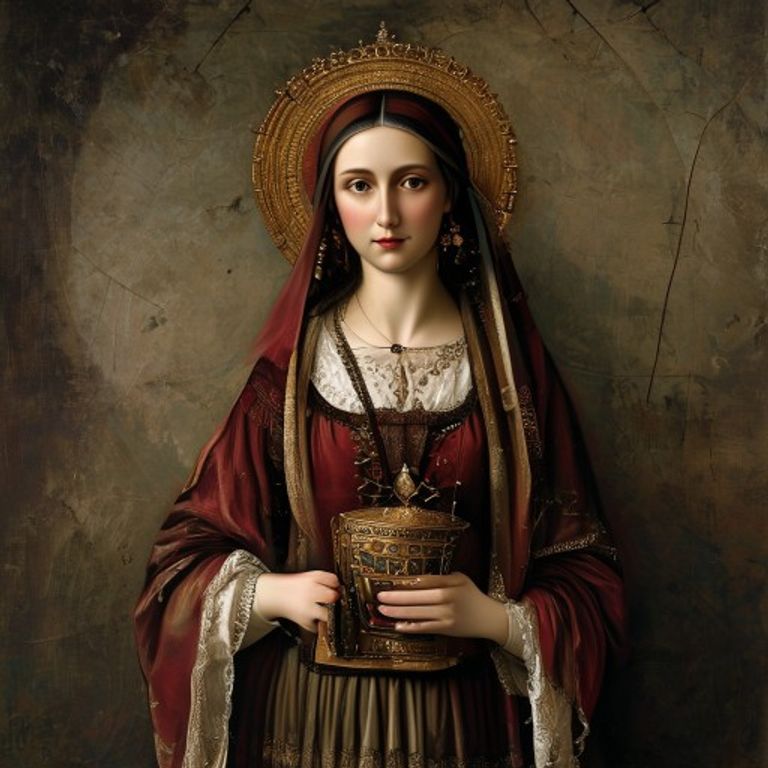
Luminous apparitions over a church in Egypt in 1968 that were seen by millions of people, including Christians, Muslims, and the country's own president.
⚠️ Research conducted with the aid of Deep Research is subject to referential ambiguity.
🖥️ Clean HTML code using a proprietary tool.
👥 Research by Guilherme Felipe, Curation by Sílvio Lôbo
The Luminous Enigma of Zeitoun: A Marian Apparition in the Heart of Egypt
In the labyrinth of densely populated streets in Cairo, a singular event blossomed in 1968, defying rational explanations and echoing through the decades. The Case of Our Lady of Zeitoun is not merely a story of faith, but an intricate puzzle that blends mass sightings, religious interpretations, and a persistent veil of mystery that official investigations have, to this day, failed to fully dissipate. It is a phenomenon that has captivated and divided, fueling both devotion and skepticism.
1. The Context and the Incident: Where, When, and How the Mystery Began
The narrative of Zeitoun unfolds in the neighborhood of the same name in Cairo, a place of vibrant contrasts, where daily life pulses amidst historic and modern buildings. The epicenter of the phenomenon was the Coptic Church of Saint Mark, a significant religious landmark for the Egyptian Coptic Christian community. The first manifestations were reported on the night of April 2, 1968.
The widely accepted version describes a luminous female figure, described by countless witnesses as the Virgin Mary, appearing over the roof of the church. The apparition, for many, was not a static image, but an entity that moved with grace and emitted an intense, ethereal light. The news spread rapidly, attracting ever-growing crowds of Copts, Muslims, and even curious individuals of other faiths, who gathered in the surrounding streets, eager to witness the celestial spectacle.
2. Timeline of Events
The chronological reconstruction of the events in Zeitoun reveals a pattern of apparitions that spanned several months, with varying intensities and frequencies:
- April 2, 1968: First reported apparition, involving the luminous figure over the Church of Saint Mark. About 250 people reportedly witnessed the initial event.
- April - May 1968: The apparitions become more frequent and visible, attracting thousands of people and generating extensive local and international media coverage.
- June - December 1968: The phenomenon continues, albeit with less intensity. Reports of sporadic apparitions persist, maintaining public interest and devotion.
- 1969 onwards: The apparitions cease definitively, but the site becomes a center of pilgrimage and the memory of the event is consolidated.
3. The Main Theories
The extraordinary nature of the phenomenon in Zeitoun has engendered a multiplicity of theories, ranging from the scientific to the supernatural. Rigorous analysis of each hypothesis is crucial to demystify or, at least, contextualize what occurred.
3.1. Scientific and Police Hypotheses (Most Likely)
- Atmospheric or Optical Phenomena: This is one of the most pragmatically investigated explanations. Theories include:
- Reflections and Light Illusions: The possibility that streetlights, car headlights, or even flashlight reflections created large-scale optical illusions. The layout of the buildings and Cairo's night atmosphere could have contributed to this effect.
- Manipulated or Misinterpreted Photographs: In a pre-digital era, photo manipulation was possible, although the scale of the event and the number of real-time witnesses make this hypothesis less convincing to explain the totality of the sightings.
- Luminescence Phenomena: Certain chemical compounds, under specific conditions of humidity and temperature, can exhibit luminescence. However, the absence of any identified material that could generate an event of this magnitude over a public building is a weak point.
- Deliberate Hoax: The hypothesis of an orchestrated fraud. Someone (or a group) could have used light sources or other means to create the illusion of an apparition. The motivation could range from financial gain to the acquisition of religious or political influence. However, the vast number of witnesses, including figures of authority and clergy, and the prolonged nature of the phenomenon make it difficult to sustain this theory without concrete evidence of fraud.
3.2. Alternative, Conspiracy, or Paranormal Theories
- Authentic Marian Apparition: The most direct explanation for the faithful. The belief in Marian apparitions is a pillar in many Christian traditions. Proponents of this theory point to the consistency of the reports, the absence of definitive scientific explanations, and the profound spiritual impact the event had on the witnesses. The Coptic Church itself has never officially denied the phenomenon, which lends weight to this interpretation.
- Paranormal Phenomenon of Unknown Origin: A broad category that encompasses other unidentified manifestations. It could be a type of unknown energy, a manifestation of a collective consciousness, or even interference from another dimension. These theories are, by their nature, difficult to prove or refute.
- Conspiracy Theories: Although less prominent in the Zeitoun case, conspiracy theories could suggest that the event was orchestrated by governments or secret organizations for purposes of social control, religious manipulation, or to divert attention from other events. The lack of any concrete evidence makes these theories highly speculative.
4. Controversies and Blind Spots
The official investigation surrounding the Case of Our Lady of Zeitoun presents several gaps and points of controversy that fuel the mystery:
- Lack of Robust Independent Police Investigation: Although the police were notified and the event generated public concern, there are no extensive records of a detailed forensic police investigation, as would be expected for such a public and large-scale phenomenon. The authorities, rather than investigating as a crime or a security incident, tended to observe and record the flow of people.
- Officially Endorsed, Yet Vaguely Detailed Reports: The Egyptian government, under the regime of Gamal Abdel Nasser and, later, Anwar Sadat, did indeed produce reports on the event. The most notorious is the report from the Ministry of Scientific Research and the Ministry of the Interior, which concluded that there was "no evidence of a supernatural apparition, but rather a phenomenon that defies conventional scientific explanation." However, these reports do not detail the forensic examinations performed or the methods used to reach this conclusion, leaving many questions unanswered about how exactly the phenomenon was analyzed.
- Conflicting Testimonies and Selection of Evidence: Although most reports describe a luminous female figure, details about the color, shape, and movement of the apparition could vary slightly among witnesses. In many cases, the media and proponents of the event tended to focus on reports that aligned most closely with the Marian narrative, potentially neglecting or minimizing descriptions that could suggest other explanations.
- Limited and Controversial Photographic Documentation: Although photographs of the event exist, the quality and authenticity of some of them have been questioned over time. In a case of limited digital surveillance, the authenticity of old images can be difficult to confirm conclusively.
- Absence of Rigorous Field Examinations: The lack of detailed examinations of the apparition site (the church roof) in search of physical traces, unusual light sources, or any type of device that could have been used to create the phenomenon, represents a significant blind spot.
5. Curiosities and Legacy
The Case of Our Lady of Zeitoun transcended the borders of Egypt, leaving a lasting legacy in culture and faith:
- Cultural and Religious Impact: The event became a symbol of hope and faith for millions of Coptic Christians, further consolidating devotion to the Virgin Mary in Egypt. Zeitoun transformed into a site of pilgrimage, with many believing they were healed or spiritually touched by the divine presence.
- International Repercussion: The story generated worldwide interest, appearing in international newspapers and documentaries. The scientific community and ufologists also showed interest, seeking explanations for the phenomenon.
- Current Status of the Case: The Case of Our Lady of Zeitoun remains, in large part, a mystery. The apparitions ceased, and there has been no official reopening of the investigation in a police or scientific sense. The phenomenon is generally accepted by the Coptic community as a miraculous event, while skeptics and researchers continue to debate possible explanations, often without reaching a definitive consensus. The story of Zeitoun is a testament to the power of faith, the complexity of human perception, and the persistent capacity of certain events to challenge our attempts at understanding.





