



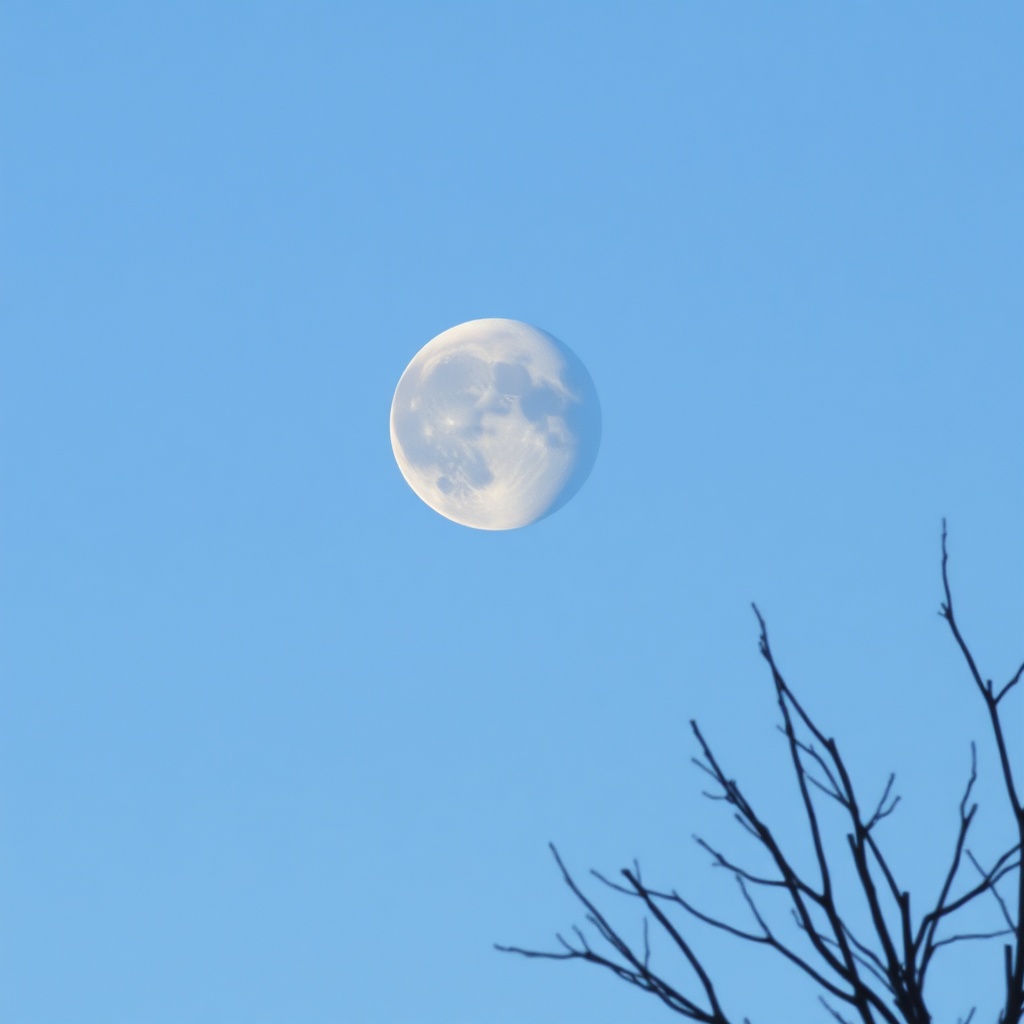
While for some a lunar eclipse is nothing more than the moon’s simple passage through Earth’s shadow cone, for others it will be a grand spectacle. In these moments, many will spend hours in scientific discernment, others in mystical meditation, but most will be living warm moments.
The moon will be the focus of the night. Not the war, not the terrorist attacks, not Dona Vilma. Everyone will forget their problems with their eyes fixed on it. Tonight is a night for confession, for meditation, for a warm hug, for affection. The night will be a catharsis without tears, without melancholy, only joy...
Sílvio Lôbo
⚠️ Research elaborated with the help of Deep Research is subject to referential ambiguity.
🖥️Clean HTML code with the use of proprietary tool.
👥 Research by Guilherme Felipe, Curation by Sílvio Lôbo
The Fascinating Phenomenon of the Lunar Eclipse
The lunar eclipse, a celestial spectacle that has captivated humanity since time immemorial, is an astronomical event of rare beauty and significance. It occurs when the Earth positions itself between the Sun and the Moon, casting its shadow upon the lunar surface and obscuring it totally or partially. Far from being a mere blockage of light, a lunar eclipse is a tangible demonstration of the orbital dynamics of our celestial bodies and offers a window into understanding our place in the cosmos.
The Mechanics of a Lunar Eclipse
For a lunar eclipse to occur, three main conditions must be met:
- Solar-Terrestrial-Lunar Alignment: The Earth must be precisely between the Sun and the Moon, in a straight or nearly straight line.
- Moon Phase: The Moon must be in the Full Moon phase. During the New Moon, the Moon is between the Earth and the Sun, which prevents a lunar eclipse.
- Orbital Node: The Moon must cross the plane of the Earth's orbit around the Sun (the ecliptic) at one of its two orbital nodes. Without this specific alignment, even when in the Full Moon phase, the Earth's shadow will pass above or below the Moon.
The Earth's shadow is composed of two distinct parts: the umbra, the darkest and innermost region of the shadow, where sunlight is completely blocked, and the penumbra, a lighter and outer region, where sunlight is only partially blocked.
Types of Lunar Eclipses
Depending on which part of the Earth's shadow falls upon the Moon, we distinguish three main types of lunar eclipses:
- Total Lunar Eclipse: Occurs when the Moon completely passes through the Earth's umbra. During totality, the Moon does not disappear entirely but takes on a reddish or orange hue, a phenomenon we will explain in more detail later.
- Partial Lunar Eclipse: Happens when only a portion of the Moon enters the Earth's umbra. Part of the Moon becomes dark, while the rest remains illuminated.
- Penumbral Lunar Eclipse: Occurs when the Moon passes only through the Earth's penumbra. This type of eclipse is the most subtle, resulting in a slight and often imperceptible dimming of the Moon, frequently being mistaken for a normal Full Moon phase.
The Fascination of the Red Moon: The Color During Totality
One of the most stunning and disorienting aspects of a total lunar eclipse is the reddish or orange color the Moon acquires. This hue is a result of the refraction of sunlight by the Earth's atmosphere. While blue light is scattered in all directions by the atmosphere (which gives the sky its blue color), red light, with its longer wavelength, manages to pass through it and is refracted towards the Moon.
It is as if the Earth's atmosphere acts as a giant lens, filtering sunlight and projecting a reddish glow onto the natural satellite. The intensity and nuance of the color can vary significantly from one eclipse to another, depending on the atmospheric conditions of the Earth at that moment. An atmosphere with more dust or clouds can result in a darker Moon, while a cleaner atmosphere can produce a brighter, more orange tone.
Curious and Strange Aspects of a Lunar Eclipse
Throughout history, the lunar eclipse has been a source of myths, legends, and even fear. Various cultures attributed sinister meanings to these events:
- Ancient Myths and Beliefs: In many ancient civilizations, a lunar eclipse was interpreted as a bad omen, a sign of misfortune, or the wrath of the gods. In some Eastern cultures, it was believed that a monster devoured the Moon during the eclipse, and it was necessary to make noise to scare it away.
- The Absence of Danger for Observers: Unlike a solar eclipse, which can cause permanent vision damage if viewed without adequate protection, a lunar eclipse is completely safe to appreciate with the naked eye. There is no emission of harmful radiation from the Moon during the event.
- The Inversion of Illumination: Observing a Full Moon gradually being obscured, culminating in a reddish sphere, can be a visually disorienting and deeply impactful experience. It is a temporary inversion of the familiar celestial landscape.
- The Color of the "Blood Moon": The term "Blood Moon" is often associated with total lunar eclipses due to their reddish coloration. While poetic, this designation can evoke dark connotations, adding an air of mystery and strangeness to the phenomenon.
- The Scientific Role: Despite ancient superstitions, the lunar eclipse has always been an object of study for astronomers. Observations during eclipses have helped refine our understanding of Earth's atmosphere and lunar composition through the analysis of the light that passes through it.
Predictability and Frequency
Thanks to advances in astronomy and the understanding of Kepler's and Newton's laws, lunar eclipses are highly predictable events. Astronomical calendars accurately indicate when they will occur and in which regions of the globe they will be visible. Although the occurrence of total lunar eclipses is less frequent than that of partial or penumbral eclipses, they happen in regular cycles, providing several opportunities for observation over the years.
In summary, a lunar eclipse is much more than a simple blockage of light. It is a testament to the cosmic dance between the Earth, the Sun, and the Moon, an event that inspires admiration, stimulates scientific curiosity, and connects us with ancient traditions of sky observation. The Red Moon, in particular, remains one of the most enigmatic and beautiful natural spectacles the universe offers us.





