



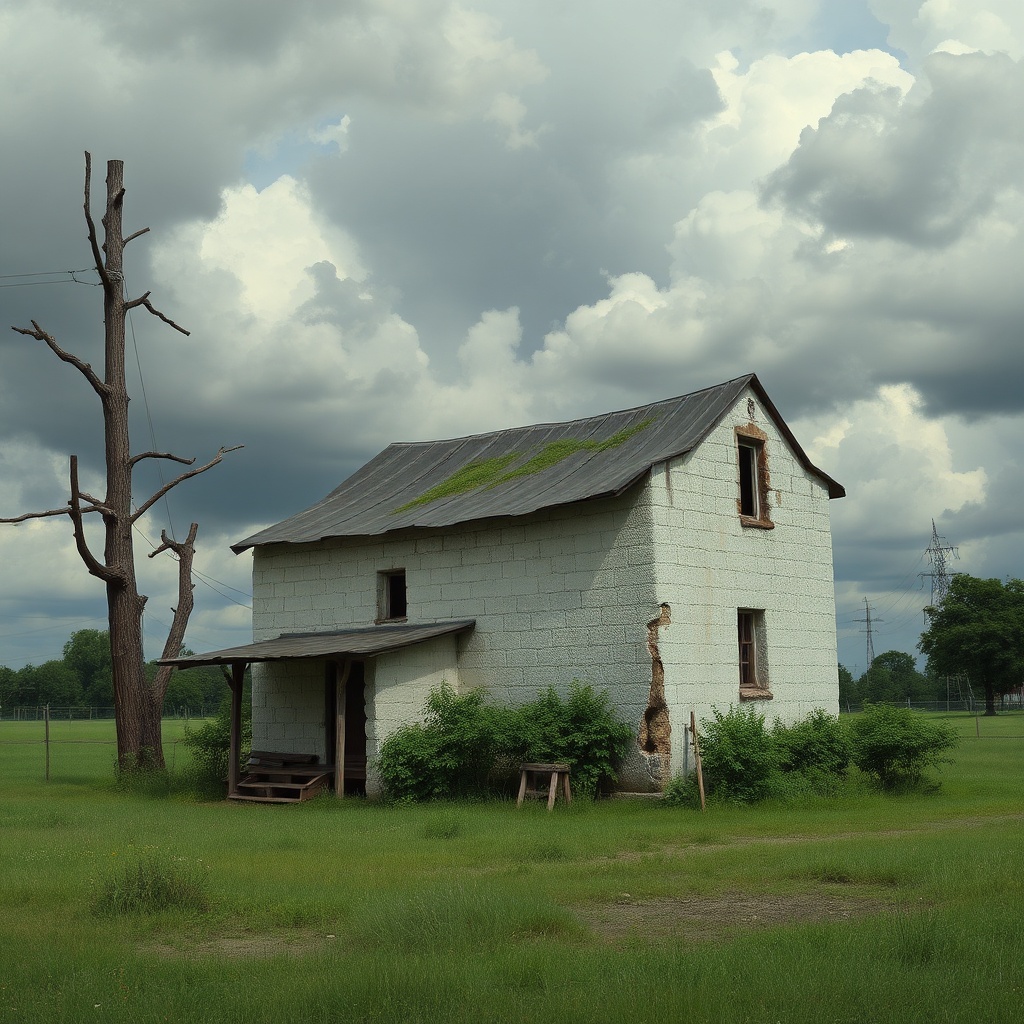
Usucapio (adverse possession) is a fundamental institution of Civil Law, specifically within the scope of Property Law, operating as an original mode of acquiring ownership and other real rights through the exercise of prolonged, uninterrupted possession qualified by legal requirements. Its primary purpose is to confer legal status upon a factual situation consolidated by time, fulfilling the constitutional principle of the social function of property and promoting legal certainty within the national legal system.
1. Definition, Concept, and Legal Nature
Usucapio is the legal institution that allows for the acquisition of ownership or other real rights (such as usufruct or easement) through the prolonged possession of an asset, provided that the requirements established by law are met. In legal doctrine, it is defined as "acquisitive prescription," as opposed to extinctive prescription.
The legal nature of usucapio is that of an original acquisition. This classification is of paramount practical relevance, as it implies that the property is acquired without any link to the previous owner. Consequently, there is no transmission of burdens, liens, or propter rem obligations that previously encumbered the property, except for legal tax exceptions. Unlike derivative acquisition (such as purchase and sale), in usucapio, there is no causal relationship between the title of the former owner and that of the acquirer, breaking any previous chain of succession.
2. Historical Evolution and Comparative Law
The genesis of the institution dates back to Roman Law, specifically the Law of the Twelve Tables (Usucapio), which provided for acquisition through one year of possession for movable property and two years for immovable property. The institution evolved through praescriptio longi temporis in the Justinian period, merging with classical usucapio.
In Brazilian Law, the 1916 Civil Code established long periods (up to 30 years for extraordinary possession). The 1988 Federal Constitution represented a disruptive milestone by introducing special modalities (urban and rural), reducing timeframes, and focusing on the social function. In comparative terms, the Brazilian system resembles the German and French models, although it possesses unique contours regarding the diversity of species and the facilitation of extrajudicial procedures.
3. Legal Provisions and Fundamental Requirements
The regulatory framework for usucapio is vast, being consolidated in the following statutes:
- Federal Constitution (Arts. 183 and 191): Establishes special urban and rural usucapio.
- Civil Code (Arts. 1,238 to 1,244): Governs extraordinary, ordinary modalities, and general rules for the interruption and suspension of prescription.
- City Statute (Law 10.257/01, Art. 10): Provision for special collective usucapio.
- Code of Civil Procedure (Art. 1,071): Introduced Art. 216-A into the Public Records Law (Law 6.015/73), governing extrajudicial usucapio.
- Law 12.424/11: Inserted Art. 1,240-A into the Civil Code, addressing family usucapio.
The essential requirements (prerequisites) for any modality are:
- Possession ad usucapionem: Must be peaceful, uncontested, uninterrupted, and with animus domini (intent to own).
- Time: The time lapse varies from 2 to 15 years, depending on the type.
- Eligible Object: The asset must be subject to private appropriation (public assets are imprescriptible, according to Supreme Federal Court Súmula 340 and Arts. 183, §3, and 191, sole paragraph of the CF).
4. Modalities and Timeframes
The main types of usucapio for real estate in the current legal system are:
- Extraordinary (Art. 1,238, CC): 15 years, regardless of title and good faith. Reduced to 10 years if the possessor has established a residence or performed productive work.
- Ordinary (Art. 1,242, CC): 10 years, requiring just title and good faith. Reduced to 5 years in case of onerous acquisition subsequently canceled, with residence or investment.
- Special Rural (Art. 191, CF; Art. 1,239, CC): 5 years, area up to 50 hectares, productivity through labor and residence, provided the possessor does not own another property.
- Special Urban (Art. 183, CF; Art. 1,240, CC): 5 years, area up to 250m², residence, provided the possessor does not own another property.
- Family (Art. 1,240-A, CC): 2 years, exclusive possession over urban property of up to 250m² after abandonment of the home by the former spouse or partner.
5. Practical Application and Updated Jurisprudential Understanding
The jurisprudence of the Superior Courts has played a vital role in revitalizing the institution, highlighting the following understandings:
A. Time Calculation During the Lawsuit: The Superior Court of Justice (STJ), in the judgment of REsp 1.818.564/DF (Repetitive Theme 1.024), consolidated that it is fully possible to recognize usucapio when the period required by law is completed during the course of the judicial process, in compliance with Art. 493 of the CPC, provided there is no opposition from the owner after the summons.
B. Usucapio of Assets of Mixed-Capital Companies: The Supreme Federal Court (STF), in RE 596.962 (Theme 245), established the thesis that assets belonging to mixed-capital companies can be subject to usucapio, provided they are not linked to the provision of essential public services, since such entities have the legal nature of private law.
C. Extrajudicial Usucapio: With the advent of the 2015 CPC and the subsequent amendment by Law 13.465/2017, the administrative procedure before the Real Estate Registry Office became the preferred path. Provision 149/2023 of the National Council of Justice (CNJ) consolidated the rules on the subject, establishing that the silence of registered rights holders, after notification, will be interpreted as tacit agreement, significantly de-judicializing the recognition of property.
6. Related Principles and Doctrinal Divergences
The institution is governed by the principles of the Social Function of Property, Legal Certainty, and Sociality. The most pronounced doctrinal divergence lies in the nature of "just title" in ordinary usucapio. Part of the doctrine (restrictive current) requires a formally valid title, but one that is flawed in its substance. Another part (expansive current), accompanied by Statement 86 of the I Civil Law Conference, admits that legal acts lacking the form prescribed by law (such as paid-off and informal purchase and sale promises) can constitute just title for the purposes of usucapio.
7. Contemporary Relevance and Impacts on the Legal System
Usucapio acts as a powerful instrument for urban and rural land regularization (REURB), sanitizing precarious real estate records and allowing access to credit and the dignity of housing. In the current scenario, the emphasis on de-judicialization (extrajudicial procedure) reflects the trend of procedural efficiency, reducing the burden on the Judiciary and providing speed to the titling of properties that, although factually consolidated, lacked registration formality.
Legal and Jurisprudential References
- BRAZIL. Constitution of the Federative Republic of Brazil of 1988. Arts. 183 and 191.
- BRAZIL. Law No. 10.406, of January 10, 2002 (Civil Code). Arts. 1,238 to 1,244.
- BRAZIL. Law No. 13.105, of March 16, 2015 (Code of Civil Procedure). Art. 1,071.
- BRAZIL. Superior Court of Justice. Special Appeal No. 1.818.564/DF. Rel. Min. Ricardo Villas Bôas Cueva. Judged on 06/09/2020.
- BRAZIL. National Council of Justice. Provision No. 149/2023 (National Code of Norms of the National Justice Inspectorate).
- BRAZIL. Supreme Federal Court. Extraordinary Appeal No. 596.962. Theme 245 of General Repercussion.





