



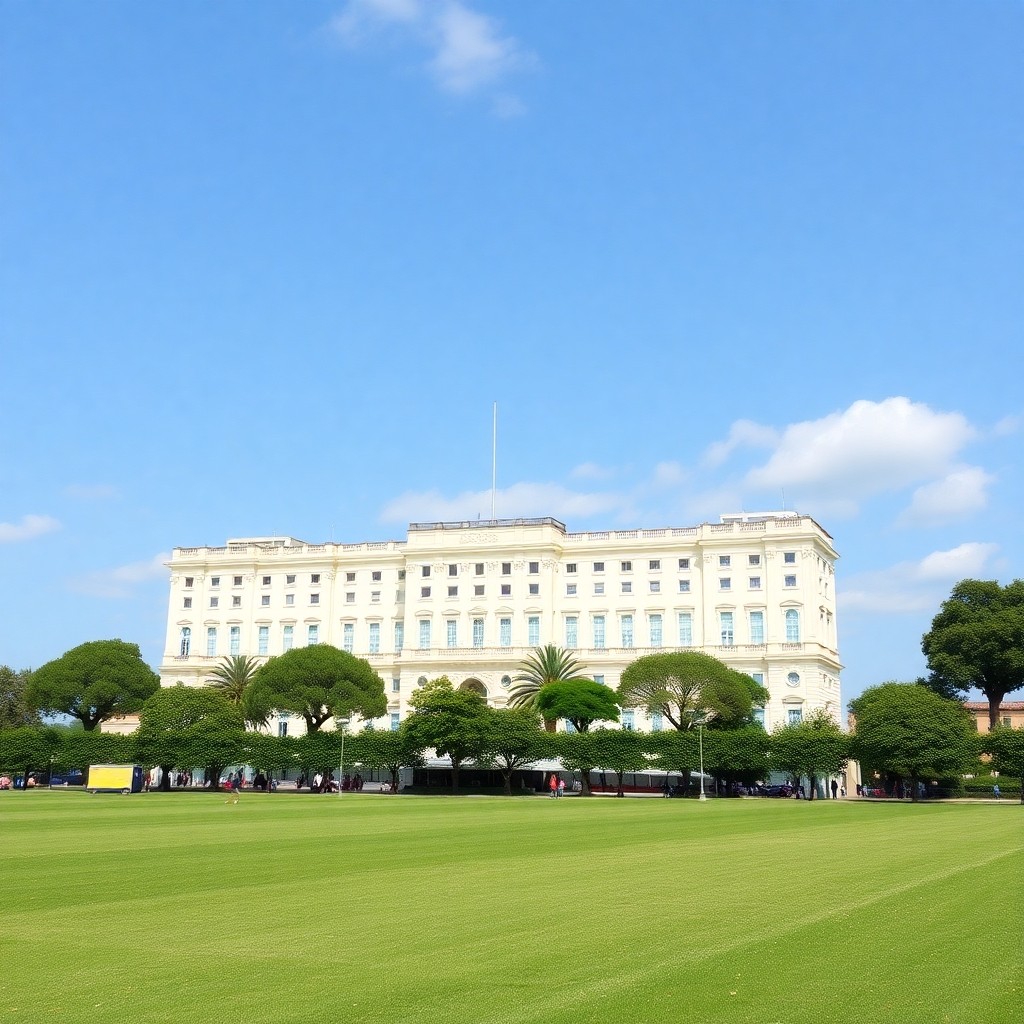
Club Atlético Temperley, affectionately known as "El Gasolero" or "Celeste," is one of the most traditional and resilient institutions in Argentine football. Currently competing in the Primera Nacional (the country's fiercely contested second division), the club from the south of Greater Buenos Aires balances the pursuit of a return to the national elite with the consolidation of a modern institutional project, backed by a fanbase that has historically proven capable of saving the club's very existence.
Club History
1. Origins, Foundation, and the Blood of a Martyr (1912–1924)
The genesis of Club Atlético Temperley dates back to the golden years of football consolidation in the Rio de la Plata region. On November 1, 1912, in an Argentina experiencing the centenary of the May Revolution, a group of young people from the residential neighborhood of Temperley, in the Lomas de Zamora district, gathered with the purpose of founding a sports association. Initially named Club de Foot-ball Centenario, in honor of the country's historic moment, the club adopted red shirts with green details.
The transition from a neighborhood team to an organized civil institution took place under the leadership of figures such as Centurión, Fernández, and, most notably, Alfredo Martín Beranger. In 1921, seeking a deeper identification with its place of origin, the institution officially changed its name to Club Atlético Temperley and adopted the colors that would define its eternal identity: sky blue and white, inspired by the mantle of the Virgin Mary and the national flag.
However, Temperley's history is marked by one of the most tragic and defining episodes in South American football. Alfredo Beranger, elected president and the main architect in obtaining the land where the stadium stands today, fought a fierce battle against land grabbers and railways to secure the property for the club's headquarters. On March 29, 1923, Beranger was cowardly shot to death by Joaquín Castro, an individual who disputed the ownership of a fraction of the club's land. The crime shocked Argentine society. As an eternal tribute to its martyr, Temperley inaugurated its stadium in 1924, naming it Estadio Alfredo Martín Beranger, a temple built upon the blood and determination of its founder.
2. Golden Eras and Historic Campaigns
Temperley built its reputation as a "tough nut to crack" in Argentine football, alternating between the lower divisions and the First Division, but always leaving a deep mark during its stints in the elite.
The "Gasolera" Era and the 1970s
The nickname "El Gasolero" was born in the 1940s. In an era of scarce budgets, the club's board assembled highly competitive squads with minimal investment—a metaphor for diesel engines (gasóleo), which traveled long distances while consuming very little. This mystique of overcoming adversity culminated in the historic 1974 campaign.
Under the technical command of the legendary Jorge Ginarte, Temperley won the Primera B championship in 1974, securing promotion to the First Division. The team, led on the field by figures such as Horacio "El Negro" Coronel, dazzled the country with fast-transition football and unbreakable grit.
The 1983 Peak: National Semifinalists
The highest point of the Celeste's sporting history in the elite occurred in the 1983 National Championship. Managed by Humberto Zuccarelli, Temperley eliminated giants of Argentine football. With a solid backbone that included goalkeeper Héctor Cassé, refined midfielder Mariano Biondi, and top scorer Mario Finarolli, the club reached the tournament semifinals.
Temperley was eventually eliminated by Estudiantes de La Plata (who would go on to be the champions) in two memorable matches. Despite the elimination, that campaign put the small club from the south of Buenos Aires on the map of the great national football powers of that decade.
The Resurrection: From Bankruptcy to the 2014 Miracle
Not everything was glory. In 1989, suffocated by crushing debts, the club was declared bankrupt by judge José María Maldonado. Temperley was judicially closed, its facilities sealed, and professional football suspended for over two years (1991-1993). What seemed like the end of a centenary institution turned into the greatest example of fan loyalty: Temperley supporters occupied the club to prevent the auction of its assets, organized festivals, cleaned the facilities voluntarily, and paid the debts out of their own pockets.
After re-emerging in the lower divisions of metropolitan football, the club performed a true sporting miracle in 2014. Under the tactical direction of the experienced Ricardo Rezza, Temperley achieved two consecutive promotions in the same year: from the Primera B Metropolitana to the Primera B Nacional and, in November 2014, the historic return to the Primera División after a 27-year absence, crowning the reconstruction of a club that had been written off as dead.
3. Context and Current Moment
Currently, Club Atlético Temperley competes in the Primera Nacional (the second division of Argentine football). After relegation from the elite in 2018, the club restructured its finances and focused on modernizing its infrastructure and valuing its youth categories.
In the 2024 season, Temperley returned to international headlines thanks to a historic campaign in the Copa Argentina. On May 21, 2024, at the Malvinas Argentinas Stadium in Mendoza, the Gasolero achieved one of the greatest feats of its recent history by eliminating the giant River Plate in the round of 32. After a 1-1 draw in regular time—with a spectacular bicycle kick goal by defender Fernando Martínez in the 92nd minute—Temperley won the penalty shootout 5-4, with a heroic performance by goalkeeper Francisco Rago.
Institutionally, the club stands out for its strong social involvement in the south of Greater Buenos Aires, offering various sports and keeping the memory of its community resilience against the privatization policies of football alive.
4. Main Idols and Coaches Who Left Their Mark
- Alfredo Beranger: The martyr president. His vision and personal sacrifice founded the physical and moral bases of the club.
- Mariano Biondi: Considered by many the most talented player to wear the sky-blue shirt. A midfielder of classic elegance, peripheral vision, and baffling dribbling who led the 1983 semifinalist team.
- Héctor "El Loco" Cassé: A charismatic goalkeeper with spectacular reflexes. He defended the sky-blue goal during the golden years of the 1980s, becoming a cult figure in Argentine football due to his eccentric personality and his hearing impairment, which never stopped him from shining at the highest level.
- Federico Crivelli: The record-holding goalkeeper. He is the player with the most matches played in the club's history (over 300 games). He was a key piece in the 2014 promotions and is the greatest symbol of modern loyalty to the club.
- Ricardo Rezza (Coach): The strategist behind the double promotion of 2014. With his calm leadership and pragmatic tactics, he returned Temperley to the top tier of Argentine football.
- Humberto Zuccarelli (Coach): Architect of the 1983 team. He assembled one of the most resilient and respected teams in the history of Buenos Aires' interior and metropolitan football.
5. Major Rivalries: The Context of the Classics
The Southern Classic: Temperley vs. Los Andes
Temperley's biggest and most visceral rivalry is against Club Atlético Los Andes, based in the neighboring city of Lomas de Zamora. This clash is known as the true Clásico de la Zona Sur in the sphere of lower-division football.
Origin and Context: The rivalry is strictly geographical and social. The social headquarters and stadiums of both clubs are separated by less than three kilometers. Since the first official confrontation in the 1920s, matches between "Gasoleros" and "Milrayitas" have divided families in the region. Historic clashes are marked by high tension, fierce disputes in the standings, and a deep cultural rivalry over who dominates the heart of the southern zone.
Secondary Rivalries: Banfield and Quilmes
Due to geographical proximity and shared history in the elite divisions, Temperley also harbors intense rivalries with Club Atlético Banfield and Quilmes Atlético Club. Although Banfield's main classic is Lanús, the duels against Temperley carry significant historical weight regarding territorial disputes and regional supremacy on the Roca Line of the Buenos Aires railway system.
6. Organized List of Titles and Achievements
| Competition / Achievement | Level / Category | Year / Season |
|---|---|---|
| Primera B (Champion) | Second Division | 1974 |
| Primera C (Champion) | Third Division | 1994/95 |
| Copa de Honor Segunda División | National Access Cup | 1914 |
| Primera B Runner-up (Direct Promotion) | Second Division | 1982 |
| Promotion to Primera División (Transition Tournament) | Primera B Nacional | 2014 |
| National Championship Semifinalist | First Division | 1983 |
| Copa Argentina Quarter-finalist | National Cup (Highlight Phase) | 2018, 2024 |
Sources Researched
- Asociación del Fútbol Argentino (AFA): Historical archives of tournaments and resolutions regarding the club's bankruptcy and reactivation.
- Clarín Deportes: Journalistic coverage of Temperley's historic triumph over River Plate in the Copa Argentina (May 2024).
- "Historia del Club Atlético Temperley": Official publications from the club's history department and local historians of Lomas de Zamora.
- El Gráfico: Archive articles on the 1983 semifinalist campaign and the profile of Alfredo Beranger.
- Diario Olé: Tactical tracking, squad updates, and daily news of the "Gasolero" in the Primera Nacional.





