



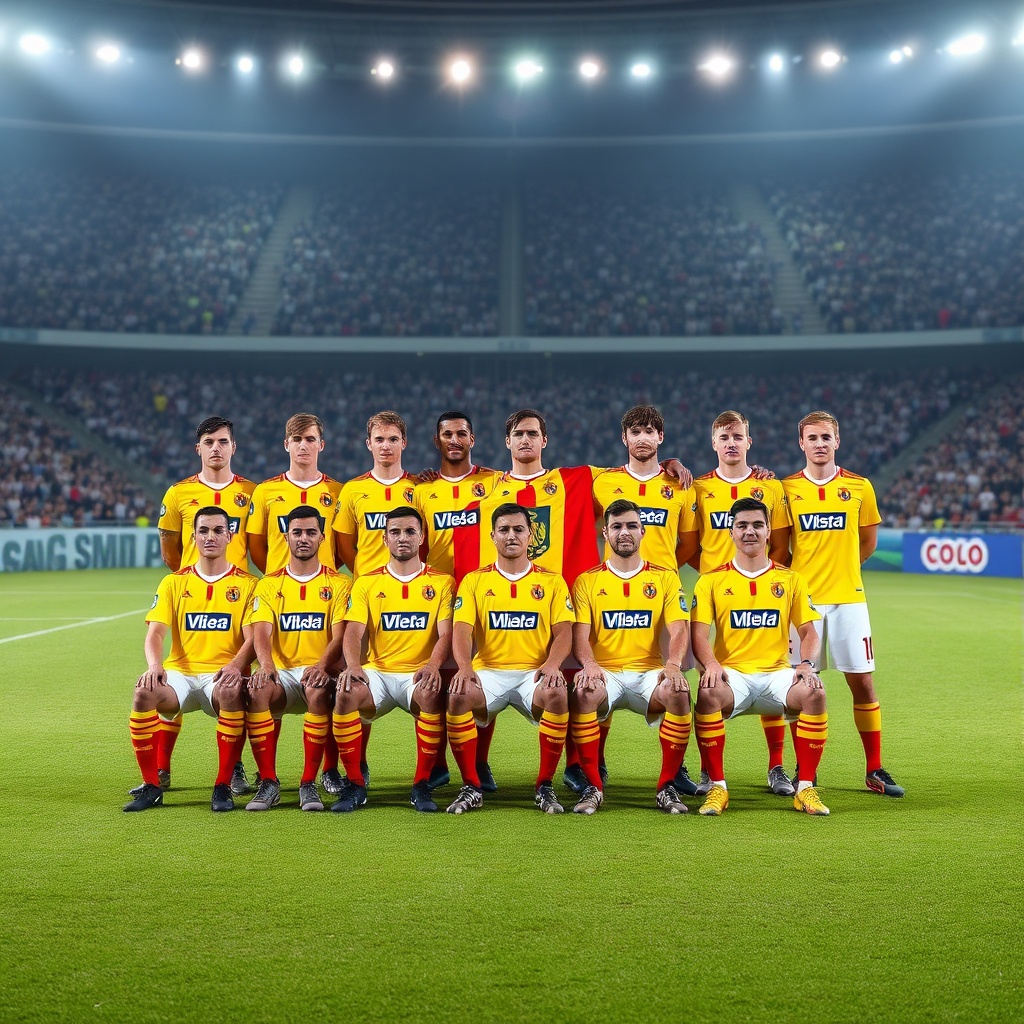
On the geopolitical and sporting map of Europe, Moldova often occupies the margins of public perception. Squeezed between Romania and Ukraine, this former Soviet republic bears the scars of a painful transition to independence, characterized by territorial fractures, economic hardships, and a constant search for identity. In football, this narrative of fragmentation and resilience is reflected with surgical precision. For decades, the Moldova national football team, affectionately known as Tricolorii, was relegated to the role of a bit-player in Euro and World Cup qualifying groups, viewed by the continent's giants as a routine trip and three guaranteed points. However, reducing Moldovan football to this caricature of fragility is to ignore the deep currents of passion, the political knots that bind the sport in the region, and the recent, surprising metamorphosis that has placed the country on the path of international competitiveness.
Moldovan football cannot be explained solely by the four lines of the pitch; it is a byproduct of a complex post-Soviet tapestry. From the self-proclaimed sovereignty of Transnistria—where Sheriff Tiraspol resides, the richest club in the country that ironically dominates the national championship under the Moldovan flag but with its heart turned toward Moscow—to the modest infrastructure of Chișinău, the sport reflects the contradictions of a divided nation. Nevertheless, under the command of coach Serghei Cleșcenco and led by a new generation of athletes who have learned to play abroad, Moldova has begun to rewrite its history. The historic campaign in the Euro 2024 qualifiers, where the team flirted with qualification until the final round and defeated Robert Lewandowski's powerful Poland, proved that Moldovan football is emerging from its long hibernation. This dossier dives into the roots, political dramas, tactical evolution, and the future of a national team that fights daily to assert its existence and dignity on the global sporting stage.
1. Origins and Formation of National Identity
To understand the genesis of football in Moldova, it is imperative to go back to the period when the territory was known as the Moldavian Soviet Socialist Republic (MSSR). Integrated into the Soviet Union after World War II, the region had its sporting culture shaped by Moscow's centralizing directives. Football, far from being just a pastime, was a tool for social cohesion and state propaganda. The epicenter of this development was FC Nistru Chișinău (later renamed Zimbru Chișinău), the club that represented the republic in the elite divisions of Soviet football. Nistru served as an incubator for local talent, although the best Moldovan players were often absorbed by major clubs in Kiev, Moscow, or Leningrad, limiting the development of a purely Moldovan footballing identity.
The Break with the USSR and the Baptism of Fire
With the dissolution of the Soviet Union in 1991, the newly created Republic of Moldova faced the herculean challenge of building institutions from scratch. The Football Association of Moldova (FMF), originally founded in 1990 while still under the Soviet aegis, joined UEFA and FIFA in 1993 and 1994, respectively. The transition was marked by widespread administrative and economic chaos. The country plunged into an inflationary crisis and, worse, an armed conflict in the Transnistria region, a strip of land east of the Dniester River that refused to accept Moldovan independence and cultural rapprochement with Romania.
In this scenario of extreme instability, the Moldovan national team made its official debut on July 2, 1991, in a friendly against Georgia in Chișinău, which ended in a 4-2 defeat. The early years were a painful learning experience. Without financial resources, with precarious training grounds, and a newly created national league that lacked competitiveness, the Tricolorii were mostly composed of players who played in the domestic market or in secondary leagues of the former Eastern Bloc. The lack of a clear tactical identity and the language barrier—with the country divided between Romanian and Russian speakers—were also reflected in the locker room, creating an environment of fragmentation that echoed the divisions of Moldovan society itself.
The Search for a Collective Soul
During the 1990s, the Moldovan team oscillated between the technical influence of the power-and-fast-transition football inherited from the Soviet school and the desire to adopt a more technical and creative style, similar to that of their neighbor and cultural brother, Romania. This duality defined the team's first steps in the qualifiers for Euro 1996 and the 1998 World Cup. Although the results were mostly negative, the team began to forge its Spartan character. Playing in Chișinău, under the hostile climate of the Eastern European autumn and on heavy pitches, became a test of endurance for any European power. Football began to consolidate itself as one of the few elements capable of unifying, albeit temporarily, a population battered by poverty and mass emigration.
2. Golden Era, Great Campaigns, and Eternal Idols
Although Moldova has never qualified for the final stage of a major international tournament, the team's history is punctuated by moments of intense brilliance and campaigns that defied sporting logic. The first great period of national pride occurred during the Euro 1996 qualifiers. Under coach Ion Caras, Moldova shocked the continent by beating Georgia 1-0 in Tbilisi and, even more spectacularly, by defeating Wales 3-2 in Chișinău on October 12, 1994. Goals by Serghei Secu, Serghei Belous, and Valeriu Pogorelov secured a historic victory that showed the young nation would not just be easy prey.
The Brilliance under Igor Dobrovolski
The true peak of Moldova's competitiveness and tactical organization occurred in the mid-2000s, under the technical leadership of Igor Dobrovolski. Born in Ukraine but of Moldovan descent and an Olympic champion for the Soviet Union in 1988, Dobrovolski took charge of the national team in 2007. He injected a professional mentality and tactical rigidity that the team had never experienced. Under his tutelage, Moldova reached its best historical position in the FIFA Ranking, hitting 37th place in April 2008.
In the Euro 2008 qualifiers, Moldova had a memorable campaign. The team earned 19 points in a difficult group that included Greece (then European champions), Turkey, Norway, and Bosnia-Herzegovina. Among the most notable results of that campaign were the 1-0 victory over Bosnia in Sarajevo, the 1-1 draw with Turkey in Chișinău, and a ruthless 3-0 thrashing of Hungary. Dobrovolski managed to extract the maximum from a blue-collar generation, turning the Zimbru Stadium into a feared cauldron.
The Historical Pillars: From Cleșcenco to Epureanu
To understand these moments of glory, it is essential to revere the figures who sustained Moldovan football on the pitch. The first great idol of the modern era was Serghei Cleșcenco. A dynamic striker and opportunistic finisher, Cleșcenco was the first Moldovan player to achieve sustained success abroad, shining at Go Ahead Eagles in the Netherlands and Maccabi Haifa in Israel. He held the record for the national team's top scorer for over two decades, with 11 goals, before being surpassed recently. Cleșcenco personified Moldovan grit, a striker who fought against entire defenses with scarce resources.
Another unavoidable name is Alexandru Epureanu. The central defender is undoubtedly the most talented and consistent player in the country's history. With 100 international caps, Epureanu was the captain and defensive rock of the team for almost 15 years. His quiet leadership, excellent positioning, and ability to anticipate allowed him to have a successful career in Russian football (playing for clubs like Dynamo Moscow and Anzhi) and, later, at İstanbul Başakşehir, where he became a legend and won the Turkish league title. Epureanu gave the Moldovan defense an international respectability that compensated for the creative shortcomings of the midfield.
The New Era: Ion Nicolaescu and the Magic Night against Poland
In recent years, a new name has written his name in golden letters in the history of Moldovan football: Ion Nicolaescu. The striker, known for his physical strength and goal-scoring instinct, became the all-time top scorer for the national team, surpassing Cleșcenco. The defining moment of his career—and of the recent history of Moldovan football—occurred on June 20, 2023, at the Zimbru Stadium, during the Euro 2024 qualifiers. Facing Robert Lewandowski's Poland, Moldova went into the break trailing 2-0, in a scenario that seemed to be heading for another routine defeat.
What followed in the second half was one of the greatest miracles in recent European football. Nicolaescu scored two superb goals, leveling the match and setting the stadium on fire. In the 85th minute, Vladislav Baboglo headed home, sealing a 3-2 victory. The triumph not only broke records but reignited the national pride of a country that realized that, with organization and courage, it could compete on equal terms with the elite of world football.
3. Rivalries, Crises, and Behind-the-Scenes Power
Football in Moldova is inseparable from the geopolitical complexities that define the region. The greatest and most fascinating contradiction of Moldovan football lies in the existence of Sheriff Tiraspol. Founded in 1997 by Victor Gușan and Ilya Kazmaly, two former KGB agents, Sheriff is the sporting arm of a business conglomerate that monopolizes the economy of Transnistria—a pro-Russian separatist region that has its own currency, government, and army, but is not recognized by the international community.
The Sheriff Tiraspol Paradox
Sheriff dominates the Moldovan Super Liga almost absolutely, having won the overwhelming majority of national titles since the turn of the millennium. The paradox is glaring: the richest and most successful club in Moldova, which represents the country in UEFA competitions—including the historic campaign in the 2021/2022 Champions League, where it defeated Real Madrid at the Santiago Bernabéu—operates in a territory that rejects Chișinău's sovereignty. This dynamic creates deep resentment in Moldovan football.
While Sheriff benefits from robust financial resources and a state-of-the-art training complex that cost over 200 million dollars in Tiraspol, "real" Moldovan clubs like Zimbru Chișinău and Dacia Buiucani struggle to survive financially. Furthermore, Sheriff historically uses very few Moldovan players in its main squad, preferring to import low-cost foreign athletes from Africa, South America, and Eastern Europe. This business model enriches the club and its owners in Transnistria but contributes very little to the development of talent for the Moldovan national team, generating constant criticism from local analysts and fans.
Border Rivalries and Identity
On the international stage, Moldova's matches against Romania and Russia transcend the sporting aspect. Against Romania, the relationship is fraternal but loaded with identity tension. A large part of the Moldovan population holds a Romanian passport, shares the same language, and advocates for the unification of the two countries. However, on the pitch, the clashes are marked by the Moldovan desire to prove that they are not just the "little brother" or a lost province. The duels against Russia carry the weight of Soviet history and the current political influence that Moscow still exerts over Moldovan internal politics, especially through the Transnistria issue and natural gas supply.
Administrative Crises and Corruption
The behind-the-scenes of the Football Association of Moldova (FMF) have also been marked by turmoil. For over two decades (1997 to 2019), the federation was chaired by Pavel Cebanu, a former Nistru Chișinău player. Although Cebanu brought some stability and was responsible for building the modern National Teams Training Center in Vadul lui Vodă, his long tenure was frequently criticized for a lack of transparency, excessive centralization of power, and an inability to reform the country's grassroots football.
The Moldovan national league has also been plagued by recurring match-fixing scandals and illegal betting. On several occasions, traditional clubs were punished or went bankrupt due to the involvement of officials and players in corruption schemes aimed at profiting from Asian betting markets. This atmosphere of distrust drove away serious sponsors and the public from the stadiums, creating a vicious cycle of underdevelopment that the current management, led by Leonid Oleinicenco, is trying to combat with structural reforms and greater cooperation with European police authorities and UEFA.
4. The Current Moment: Tactics, Generation, and Challenges
Under the technical direction of Serghei Cleșcenco, who took charge in December 2021, the Moldova national team has undergone a quiet but extremely effective revolution. Cleșcenco, understanding the historical technical limitations of his players and the scarcity of creative talent in midfield, designed a pragmatic tactical system based on solid defensive organization and ultra-fast offensive transitions. The current Moldova plays predominantly in a variation of the 5-4-1 or 3-5-2, depending on the phase of the game.
Cleșcenco's Tactical Architecture
The Moldovan tactical model is based on a low and extremely compact defensive block. The three-man backline, usually led by the experienced Vladislav Baboglo (an athlete of great physical presence who plays in Ukrainian football) and complemented by defenders like Veaceslav Posmac and Denis Marandici, prioritizes protecting the box and aerial play. The wing-backs have a dual role: closing the five-man defensive line without the ball and pushing forward to provide width when the team regains possession.
The great differentiator of this team is the speed and verticality of the transitions. Instead of holding the ball with innocuous horizontal passes, Moldova immediately looks for the wingers or the target man, Ion Nicolaescu. The midfield, anchored by the experience of Vadim Rață and the energy of Artur Ioniță (a veteran with a long stint in the Italian Serie A for clubs like Cagliari and Hellas Verona), works on the second ball, pressing opponents immediately after losing possession to prevent counter-attacks.
The Protagonists on the Board
Beyond Nicolaescu as the offensive reference, the great technical engine of the team is the left-back/wing-back Oleg Reabciuk. Developed in Porto's youth academy and with notable stints at Olympiacos and currently at Spartak Moscow, Reabciuk is the most dynamic and tactically intelligent player on the team. His ability to run the left flank for 90 minutes, offering precise crosses and impeccable defensive recovery, makes him the indispensable piece in Cleșcenco's scheme.
Another vital element is goalkeeper Dorian Răilean. In a team that adopts a defensive stance, the goalkeeper is constantly tested. Răilean has stood out for his security between the posts, leadership in organizing the defense, and ability to make difficult saves in moments of extreme pressure, characteristics that were fundamental to the team's stability during the last qualifying campaign.
The Historic Euro 2024 Campaign
The Euro 2024 qualifiers were the maturity test for this generation. Drawn into a group that included Albania, the Czech Republic, Poland, and the Faroe Islands, Moldova was tipped as a candidate for the bottom spot. However, the team defied all predictions. In addition to the historic victory against Poland in Chișinău, Cleșcenco's men snatched heroic draws against the Poles in Warsaw (1-1) and against the Czech Republic (0-0).
Moldova reached the final round with real, mathematical chances of qualifying directly for the European Championship, something unprecedented in its history. The decisive clash against the Czech Republic, in Olomouc, ended in a 3-0 defeat after a Moldovan player was sent off early in the second half. Despite the disappointment of missing out on the tournament in Germany, the campaign was celebrated as a watershed moment, proving that Moldovan football had finally abandoned its role as the continent's punching bag.
5. Talent Development, Structure, and Future
For the recent success of the national team not to be just a statistical blip, Moldova faces the crucial challenge of reforming its athlete development structures. Historically, the country lacks high-level football academies. With the exception of the Sheriff Tiraspol facilities, which serve mostly the club's private purposes, the infrastructure for young footballers in Chișinău and the provinces is alarming. Most local clubs lack modern synthetic pitches for the winter, performance analysis equipment, or specialized medical departments.
Socioeconomic Impact and Brain Drain
The economic reality of Moldova, one of the countries with the lowest GDP per capita in Europe, directly affects the sport. Mass emigration—it is estimated that almost a third of the Moldovan population lives and works abroad—causes a phenomenon of sporting "brain drain." Many talented children emigrate with their families to countries like Italy, Portugal, Spain, or Romania, starting their training in foreign academies. Although some of these athletes choose to represent the Moldovan national team in the future, the country loses control over the initial development of its main talents.
To mitigate this problem, the Football Association of Moldova recently launched the "Football in Schools" project, an initiative in partnership with the government and UEFA that aims to introduce football practice into the school curriculum for thousands of children across the country. The goal is to expand the base of practitioners and identify talent in rural areas that previously went unnoticed by scouts from the few professional clubs.
The Relationship with Romania and the External Market
The most viable path for the development of young Moldovan players has been early export to Romania. Thanks to geographical and cultural proximity and the ease of obtaining Romanian citizenship, young Moldovan talents are frequently recruited by clubs in Romania's Liga I. The greatest example of this synergy is Gheorghe Hagi's academy (Farul Constanța), widely considered the best training structure in Southeastern Europe. Players who go through this process acquire a competitive tactical and physical background that the Moldovan league simply cannot offer.
Exporting to markets like Russia, Poland, Turkey, and secondary divisions in Italy and Germany is also vital. Playing in more competitive leagues forces the Moldovan player to evolve physically and understand the game at a speed much higher than that practiced in the local championship, where the pace is slow and the intensity is low.
Future Perspectives: Sustainability or Regression?
The future of Moldovan football finds itself at a crossroads of opposite paths. On one hand, the national team has proven that it possesses a competitive tactical model and players capable of performing under pressure at the highest European level. The emergence of young prospects, combined with the experience of established veterans, offers a solid foundation for the next 2026 World Cup qualifiers and the UEFA Nations League, where Moldova seeks to move up a division to face higher-caliber opponents.
On the other hand, without massive and sustained investment in grassroots infrastructure and the professionalization of the national league, the risk of regression is imminent. Excessive reliance on individual flashes or miraculous campaigns does not replace the need for deep structural reform. If the FMF can channel the enthusiasm generated by the Euro 2024 campaign to attract private investment and modernize its academies, Moldova could, in the not-too-distant future, cease to be the eternal underdog and consolidate itself as a respectable mid-tier force on the European football board. The journey is long and arduous, but the first and most difficult step—believing that it is possible to win—the Tricolorii have already taken.





