



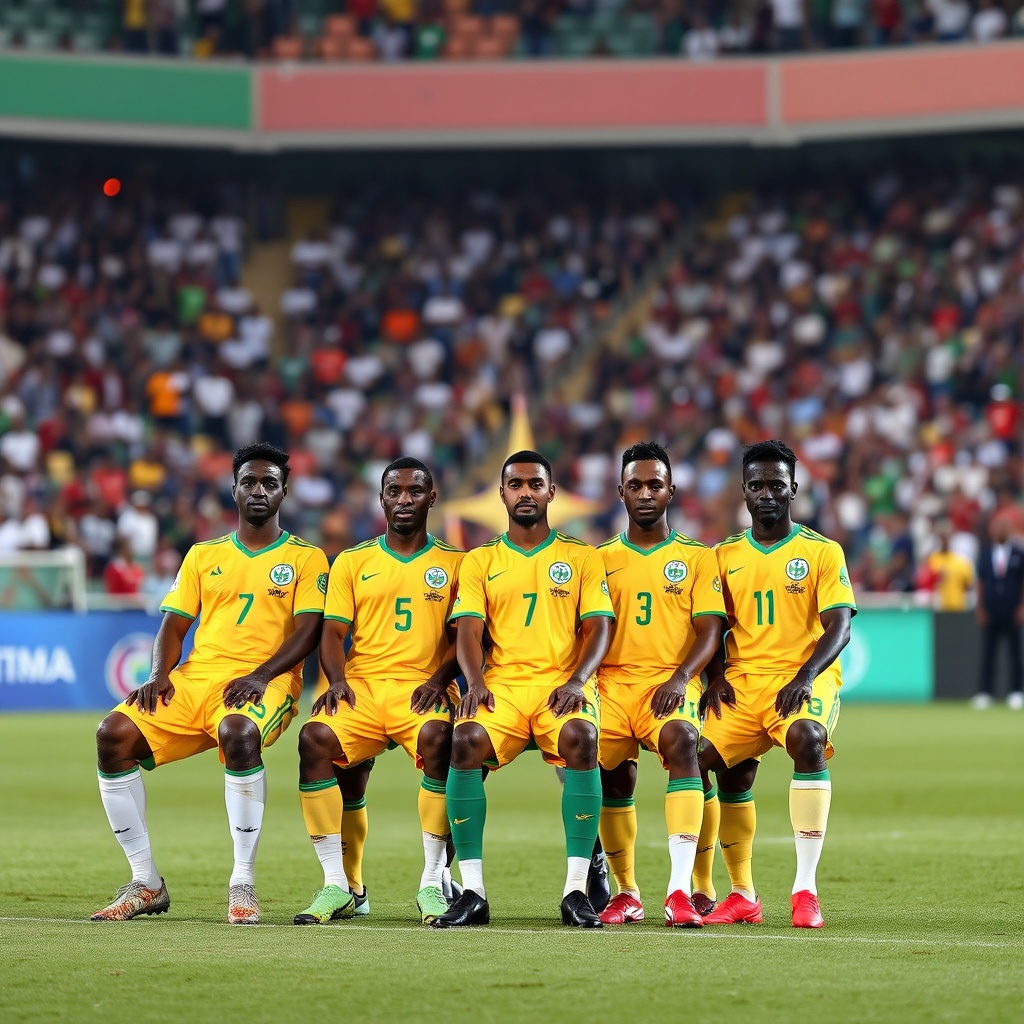
In the vast and silent Sahara Desert, where sand dunes meet the gray vastness of the Atlantic Ocean, football has performed one of the most unlikely miracles of the 21st century. For decades, the Islamic Republic of Mauritania was a forgotten footnote on the geopolitical and sporting maps of African football. Ranked by FIFA in 2012 in a humiliating 206th position—ahead only of island nations plagued by crises or semi-desert territories without any infrastructure—the Mauritanian national team, affectionately known as the Mourabitounes (a reference to the Almoravid dynasty that once ruled the Maghreb and the Iberian Peninsula), was the perfect synonym for amateurism and resignation. Today, the scenario is radically different. By defeating the giant Algeria in the 2023 Africa Cup of Nations (AFCON) and advancing to the round of 16 of the continental tournament for the first time in its history, Mauritania has consummated one of the greatest structural revolutions in the modern history of football. This dossier examines the inner workings of this metamorphosis: from the historical roots of a country fragmented between Arab-Berber and Sub-Saharan African identities, through the relentless administrative reforms of Ahmed Yahya, to the tactical sophistication of Amir Abdou and the challenges of a development model that seeks to consolidate the country as an emerging power on the most competitive continent on the planet.
1. Origins and Formation of National Identity
To understand Mauritania's relationship with football, it is imperative to decipher the complex social, ethnic, and geographical tapestry that makes up the country. Independent from France since 1960, the nation was born under the aegis of a profound duality. To the north and center, the population of Arab-Berber origin (the Beidanes or "white Moors") dominates, historically associated with political and administrative power; to the south, along the fertile Senegal River valley, live the Sub-Saharan black populations (the Halpulaar, Soninké, and Wolof), in addition to the Haratines ("black Moors"), who have been historically marginalized. This ethnic and cultural division shaped not only state policy under the regime of the first president, Moktar Ould Daddah, but also the development of the sport.
In the early post-independence years, football was an essentially urban activity, restricted to the capital Nouakchott—a city founded from scratch in 1957 to replace the old colonial capital of Saint-Louis, in Senegal—and the port city of Nouadhibou. The Football Federation of the Islamic Republic of Mauritania (FFRIM) was founded in 1961, but affiliation with FIFA would only occur in 1970, followed by joining the Confederation of African Football (CAF) in 1976. During this hiatus of nearly two decades, Mauritanian football existed in a limbo of isolation.
The national team's first official match, played in 1961 against the Republic of the Congo (then Congo-Léopoldville), resulted in a 5-1 defeat. It was the harbinger of a lean era. Without a structured national championship and lacking basic infrastructure—matches were played on dirt pitches under heat that often exceeded 45 degrees Celsius—the national team was composed mostly of civil servants, students, and amateur athletes who balanced their love for the game with grueling work shifts.
The first attempt at regional integration occurred in the Amílcar Cabral Cup, a tournament that brought together nations from Zone 2 of the CSSA (Supreme Council for Sport in Africa), such as Senegal, Guinea, Mali, and Cape Verde. It was in this competition that Mauritania began to define its identity on the pitch. Characterized by a game of extreme physical strength, defensive resilience, and Spartan dedication, the Mauritanian style was a direct response to the country's climatic and structural adversities. However, the lack of technical refinement and tactical exchange with the outside world relegated the Mourabitounes to the role of extras. The country accumulated historic thrashings and rare victories, the latter celebrated as true national holidays in the young republic.
The absence of a professionalized league prevented local talents from being polished. The few players who stood out were quickly absorbed by leagues in Senegal or Algeria, or migrated to the lower divisions of French football, where they were lost in the anonymity of European amateur football. Football in Mauritania, therefore, reflected the fractures of a state in search of its own soul: a fragmented sport, without structured public funding, dependent on the volunteerism of enthusiasts, and unable to unify a population divided by linguistic and social barriers.
2. Golden Era, Great Campaigns, and Eternal Idols
The watershed moment in the history of Mauritanian football has a date, a name, and a surname: 2011, the year Ahmed Yahya was elected president of the FFRIM. A young businessman in the fishing sector and former president of FC Nouadhibou, Yahya took over a bankrupt federation, discredited and suspended from international competitions for failing to pay basic fees to the CAF. His first measure was emblematic: instead of looking for shortcuts by hiring naturalized players in a dubious manner, he decided to rebuild the foundation of national football from scratch.
With financial support from the FIFA Forward program, Yahya transformed the federation's headquarters in Nouakchott into a state-of-the-art sports complex, including a youth training academy, a hotel for national teams, its own TV and radio channels, and a specialized medical clinic. In parallel, he restructured the Super D1 (the local first division), making it mandatory to create youth categories for all participating clubs and guaranteeing subsidies for team transport in a country of continental dimensions and precarious roads.
The fruits of this silent revolution began to be harvested in a spectacular way. In 2014, under the command of French coach Patrice Neveu, Mauritania qualified for the first time for the African Nations Championship (CHAN)—a tournament reserved exclusively for players who play in local leagues. It was the first sign that the grassroots work was paying off. But the real step up came with the hiring of another Frenchman, Corentin Martins, in 2014.
Martins established a culture of unprecedented professionalism. He traveled tirelessly across Europe to convince players from the Mauritanian diaspora, who played in the leagues of France, Belgium, and Spain, to defend the colors of their parents' country. The impact was immediate. On November 18, 2018, on a historic afternoon at the Stade Cheikha Ould Boïdiya in Nouakchott, Mauritania defeated Botswana 2-1, with two goals from legendary striker Ismaël Diakité, securing an unprecedented qualification for the 2019 Africa Cup of Nations in Egypt.
The debut in the 2019 AFCON was treated as a civilizational milestone for the country. Although eliminated in the group stage after heroic draws against Tunisia and Angola, the Mourabitounes proved they were no longer the continent's punching bag. Consistency was confirmed with consecutive qualification for the 2021 AFCON in Cameroon.
The absolute peak of this journey, however, was reserved for the 2023 AFCON, played in Ivory Coast at the beginning of 2024. Under the leadership of Franco-Comorian coach Amir Abdou—the architect of the Comoros miracle in the previous tournament—Mauritania shocked the football world. On January 23, 2024, at the Stade de la Paix in Bouaké, the Mauritanian team faced the all-powerful Algeria, 2019 African champions and full of European football stars. With an impeccable defensive performance and a historic goal by defender and captain Mohamed Dellahi Yali in the 37th minute of the first half, Mauritania won 1-0. The triumph not only eliminated the Algerians but also stamped the historic passage of the Mourabitounes to the round of 16, where they would fall with their heads held high against Cape Verde after a controversial penalty in the final minutes.
Eternal Idols Who Shaped History
- Cheikh Moulaye Ahmed "Bessam": The attacking midfielder with refined skill and baffling dribbles is considered by many to be the most talented player to wear the green and yellow jersey. Bessam was the face of the transition from amateurism to professionalism, shining in the 2014 CHAN and scoring crucial goals in continental qualifiers.
- Adama Ba: One of the first players from the diaspora to embrace Ahmed Yahya's project. With stints in French (Bastia, Auxerre) and Turkish football, the midfielder brought the tactical experience and technical leadership necessary to guide young local talents in moments of greatest pressure.
- Aboubakar Kamara: Known for his devastating physical strength and imposing presence in the box, the former Fulham and Olympiacos striker gave the national team the offensive weight needed to compete on equal terms against Africa's most physical defenses.
- Babacar Niasse: The giant goalkeeper, whose miraculous saves against Algeria in the 2023 AFCON guaranteed his sporting immortality in the country. His security between the posts became the pillar upon which Amir Abdou built his tactical wall.
3. Rivalries, Crises, and Behind-the-Scenes Power
Football in Mauritania has never been dissociated from the complex geopolitical dynamics of the Sahel and North Africa regions. The most intense and politically charged rivalry is against Senegal. Geographically separated by the Senegal River, the two countries share deep historical ties but also painful scars, such as the 1989-1991 border conflict, which resulted in ethnic violence, mass deportations, and years of diplomatic tensions.
Within the four lines, facing the "Lions of Teranga" is, for the Mauritanians, the ultimate test of their sovereignty and national pride. For decades, Senegal largely dominated the matchup, reflecting the disparity in resources and sporting development. However, in recent years, each duel has turned into a high-voltage tactical battle. Mauritania's growth has come to be seen in Dakar no longer with condescension, but with genuine respect and, at times, apprehension.
Another vector of rivalry and cooperation is with the Maghreb nations (Morocco, Algeria, and Tunisia). Being a member of the Arab Maghreb Union, Mauritania constantly moves between the identity of North African football—characterized by ball possession, technical refinement, and tactical cunning—and West African football, marked by physical imposition, speed, and rapid vertical transitions. This cultural duality is reflected in the hybrid style the team has developed over the years.
However, the rise has not been without deep crises and behind-the-scenes controversies. Before Ahmed Yahya's professionalizing era, the FFRIM was a den of political disputes and embezzlement. The darkest episode occurred at the turn of the millennium, when the national team was forced to withdraw from participating in qualifiers for the AFCON and the World Cup due to officials allegedly embezzling funds intended for the athletes' airfare and accommodation. The scandal triggered direct government intervention and a period of ostracism that almost culminated in the country's disaffiliation from FIFA.
Even in the recent golden era, controversies have not ceased to exist. Ahmed Yahya's rapid political rise within the CAF executive committees—where he was even considered one of the favorite candidates for the entity's presidency before supporting the election of South African billionaire Patrice Motsepe—generated accusations from internal opponents that the federation was being used as a personal political springboard. Furthermore, Yahya's centralizing management is targeted by criticism from smaller Super D1 clubs, which claim that FC Nouadhibou (a club historically linked to Yahya's family) enjoys implicit financial and refereeing privileges, perpetuating an almost unbreakable hegemony in the local championship.
Another point of internal friction lies in the eternal question of ethnic representation. Critics point out that, in certain periods, the national team tended to favor players of certain ethnic origins to the detriment of others, reflecting the country's social divisions. The federation has made conscious efforts to mitigate this perception, promoting diversity in all youth categories and using the national team as one of the few effective tools for social cohesion and national unity in a historically fragmented country.
4. The Current Moment: Tactics, Generation, and Challenges
Under the technical command of Franco-Comorian Amir Abdou, Mauritania has consolidated itself as an extremely competitive, pragmatic, and tactically disciplined team. Abdou, known for extracting the maximum from limited squads through obsessive defensive organization and surgical offensive transitions, has molded the Mourabitounes into a hybrid system that varies between 4-1-4-1 and 4-4-2 in a low block.
The current playing philosophy is based on the solidity of the defensive core. Protected by goalkeeper Babacar Niasse, the center-back duo composed of Lamine Ba and Bodda Mouhsine (who frequently drops back to act as a third center-back in the build-up phase) offers formidable physical resistance against aerial attacks and excellent anticipation capacity on the ground. The midfield is the team's engine, characterized by intense pressure after loss and the ability to close central passing lanes. Players like Guessouma Fofana and the young prodigy Oumar Ngom play a vital role in ball recovery and rapid distribution to the flanks.
Offensively, Mauritania has abandoned the reliance on long, aimless balls that characterized the team in the past. Under Abdou's command, the transition plan is extremely vertical and coordinated. The wings are populated by players with explosive speed and short dribbling, such as Aboubakary Koita (who stood out in Belgian football for Sint-Truiden before moving to Greece) and Amar Sidi Bouna. These wingers have the mission of exploring the backs of opposing full-backs and supplying the reference striker, a role frequently played by Hemeya Tanjy or the experienced Aboubakar Kamara.
However, the transition to a more proactive style of football remains the team's main Achilles' heel. When facing opponents who adopt an equally defensive stance and surrender possession, Mauritania demonstrates creative difficulties in the static build-up phase. The reliance on set-piece plays—an aspect meticulously worked on by Amir Abdou—and individual flashes of brilliance from Koita or Tanjy highlights the lack of a classic linking midfielder, a "number 10" capable of dictating the rhythm of the game and unstructuring closed defenses through vertical passing.
The great tactical challenge for the 2026 World Cup cycle and the next editions of the AFCON is to rejuvenate the squad without losing its competitive identity. The backbone that led the country to recent success is aging, and the introduction of new talent needs to be done gradually but firmly to prevent the team from suffering from a loss of physical intensity, which is the signature of contemporary Mauritanian football.
5. Talent Development, Structure, and Future
Mauritania's sustainable success is no accident, but the direct result of an athlete development model that has become a benchmark for small developing nations around the world. At the heart of this system is the FFRIM National Academy in Nouakchott. It is a fully integrated center of excellence, where young talents selected from all regions of the country—from the arid northern provinces to the banks of the Senegal River—live, study, and train under the supervision of professionals with UEFA and CAF licenses.
The federation has established a national scouting program that monitors school tournaments and U-15 and U-17 regional championships. The most promising youngsters receive full scholarships at the academy, ensuring their formal education is not neglected while they develop their footballing skills. This holistic care has been fundamental in convincing traditional families from rural areas to allow their children to pursue a sports career.
At the club level, the Mauritanian Super D1 has undergone remarkable evolution. FC Nouadhibou has emerged as the locomotive of local football, reaching the group stage of the CAF Champions League for the first time in the 2023-24 season. This feat proved that local clubs can compete against the continent's giants, such as Al Ahly, Mamelodi Sundowns, and TP Mazembe. Nouadhibou's success acts as a crucial showcase, allowing local players to be transferred directly to European leagues or to the main North African championships, generating revenue that is reinvested in youth categories.
In addition to domestic training, Mauritania has structured a highly sophisticated monitoring network in Europe, focused on the large Mauritanian diaspora in France, Spain, and Belgium. Unlike in the past, when dual-nationality players saw the Mauritanian national team as a last resort, the professionalism of the FFRIM and consecutive appearances in the AFCON have turned the Mourabitounes into a highly attractive sporting proposition for young players trained in elite academies such as those of Lyon, Lens, and Villarreal.
The future of Mauritanian football, therefore, rests on two solid pillars: the intelligent export of talent to competitive markets and the consolidation of its internal infrastructure. With the expansion of the World Cup to 48 teams starting in 2026, guaranteeing Africa nine direct spots, the dream of playing in a World Cup has ceased to be a delusional utopia and has become a medium-term goal planned in the federation's offices in Nouakchott.
Mauritania has proven to the world that money, while crucial, is sterile without vision, organization, and continuity. The country that once inhabited the basement of the FIFA rankings now walks with its head held high, proud of its hybrid identity, proving that, in modern football, even the most arid sands of the desert can flourish and produce champions.





